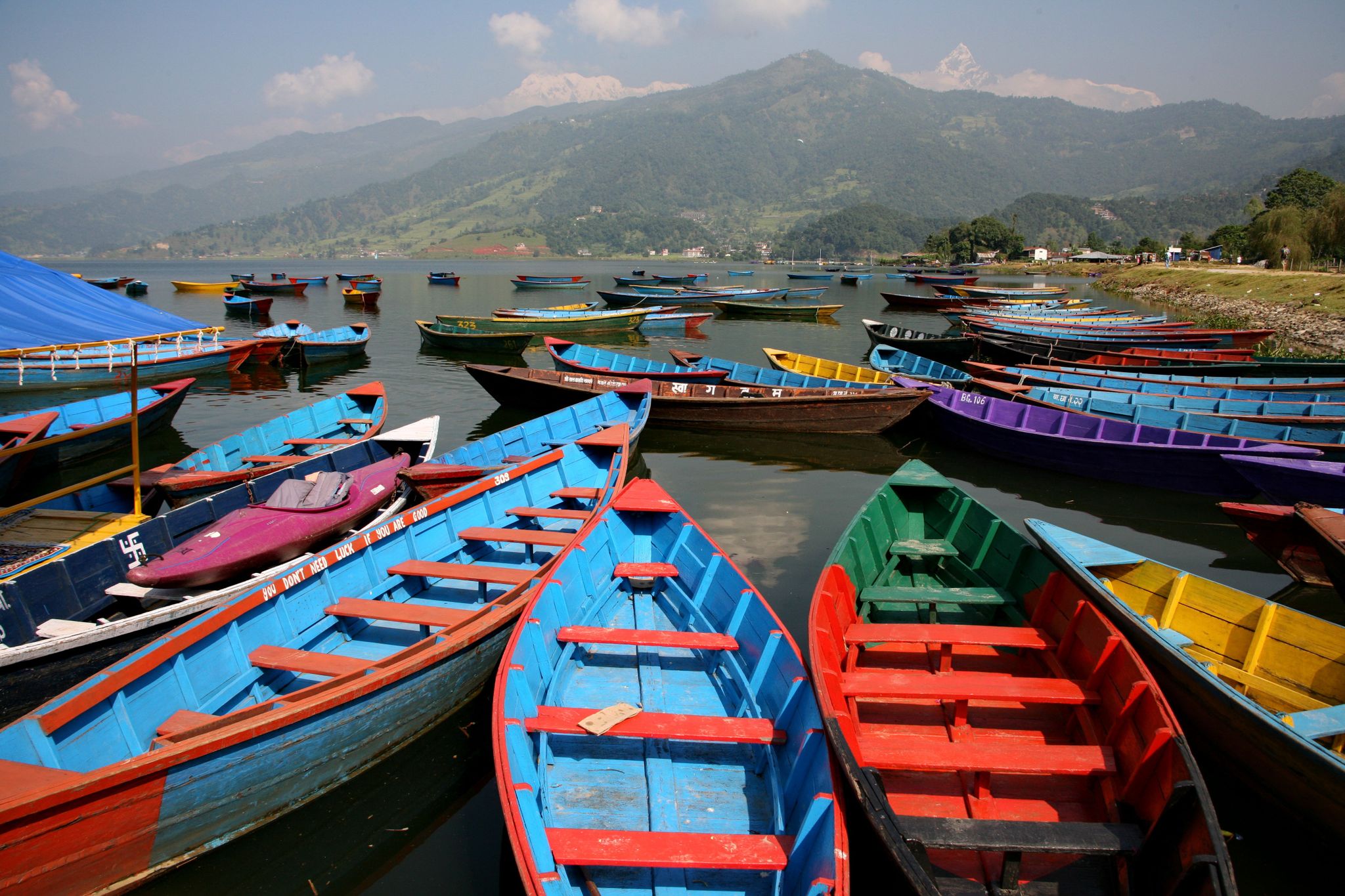

One week is the most common length for a first Nepal trip, and used well it delivers a surprising amount: medieval cities, a living goddess, a mountain sunrise, lake mornings and momos by the dozen. This itinerary balances the two essential bases, Kathmandu for culture and Pokhara for mountains and lake, with one domestic flight each way so no day is lost to the road. It says where to sleep on each night as well as what to see, because the hotel decision is the one most seven-day plans get wrong.
Overview
| Day | Base | Highlights |
|---|---|---|
| 1 | Kathmandu | Arrive, Thamel, Garden of Dreams |
| 2 | Kathmandu | Boudhanath, Pashupatinath, Durbar Square |
| 3 | Bhaktapur, back to Kathmandu | Medieval Bhaktapur day trip |
| 4 | Pokhara | Fly west, Phewa Lake, Lakeside |
| 5 | Pokhara | Sarangkot sunrise, World Peace Pagoda |
| 6 | Pokhara | Paragliding or a day hike |
| 7 | Kathmandu | Fly back, Swayambhunath, depart |
Where to sleep
| Nights | Area | Why |
|---|---|---|
| 1 to 3 | Thamel or Lazimpat, Kathmandu | Walk to dinner, gear and the sights; Lazimpat if you value sleep |
| 4 to 6 | Lakeside Centre, Pokhara | The lake, the boats and the agencies on foot |
Full area comparisons are in where to stay in Kathmandu and where to stay in Pokhara.
Day 1: Arrive in Kathmandu
Clear the visa on arrival, buy a SIM at the counter in arrivals, and take a prepaid taxi to your hotel (about 40 minutes to Thamel; the airport guide has the counters). Ease in gently: wander Thamel's maze of prayer-flag lanes, change money, then escape the noise in the Garden of Dreams, a restored neo-classical garden with a cafe, ten minutes from any Thamel hotel. Eat early; jet lag and the altitude of 1,400 metres both argue for it.
A courtyard hotel is the Thamel trick. You get the location and lose the street.
Day 2: Kathmandu's sacred sites
Start at Boudhanath before eight, when pilgrims circle the great stupa and the cafes on the ring are opening (entry NPR 400). Continue to Pashupatinath, Nepal's holiest Hindu temple on the Bagmati, where the cremation ghats face the eastern bank you can walk along (NPR 1,000; non-Hindus do not enter the main temple). After lunch, explore Kathmandu Durbar Square (NPR 1,000): the old royal palace, the Kumari's courtyard, and the lanes of Asan market to the north where the city shops. Taxi between the three; it is a full day. For the detail, see things to do in Kathmandu.
Day 3: Bhaktapur day trip
Forty minutes east lies Bhaktapur, the best-preserved of the valley's three medieval kingdoms: brick lanes, a working pottery square, the five-roofed Nyatapola pagoda and almost no traffic inside the old town. Entry is NPR 1,800 for foreigners and worth it. Try the juju dhau, the "king of yogurts", from a clay bowl, and eat lunch on a terrace over Taumadhi Square. Return to Kathmandu by late afternoon and pack a small bag for Pokhara; most hotels store the rest. The Bhaktapur guide has the squares in order.
 Nyatapola, Bhaktapur's five-roof pagoda: climb the guardian-lined steps for the view over Taumadhi Square
Day 4: Fly to Pokhara
The 25-minute flight west parallels the Himalayan wall; sit on the right side going out. Flights cost roughly USD 100 to 130 one way and leave all morning. Check in at Lakeside, rent a rowboat on Phewa Lake to visit the island temple of Tal Barahi, and end with sunset over the water. Pokhara runs at half Kathmandu's speed; let it.
Lakeside Centre puts the lake, the boats and dinner within two minutes. The strip hears music until 11 pm, so pick a courtyard or a back room.
 Phewa Lake from Lakeside: rowboats to the island temple leave from the shore all day
Day 5: Sarangkot sunrise and the pagoda
A 5 am taxi (about NPR 2,000 return, shared if your hotel arranges it) gets you to Sarangkot at 1,600 metres for sunrise over the Annapurna range, with Machhapuchhre's fishtail turning orange: the picture you came to Nepal for. Back in town by nine, breakfast, then boat across the lake and hike 45 minutes up to the World Peace Pagoda for the reverse view, the lake below and the range behind. Afternoon for the International Mountain Museum or a lakeside massage.
Day 6: Adventure day
Pokhara is Nepal's adventure capital. Pick one:
- Paragliding from Sarangkot, a 30-minute tandem flight that lands by the lake; morning thermals are the best, and the paragliding guide explains how to choose a company.
- Ultralight flight toward the Annapurnas, for a view no trek gives.
- Day hike to the Australian Camp viewpoint through rhododendron forest, the easiest mountain morning in Nepal.
- Zipline, Davis Falls and Gupteshwor Cave for a mixed day on the ground.
Day 7: Back to Kathmandu and departure
Morning flight back. If your international flight leaves late, squeeze in Swayambhunath, the Monkey Temple (NPR 200), whose hilltop stupa overlooks the whole valley ten minutes from Thamel. Last-minute shopping: pashmina, singing bowls, tea. Leave for the airport three hours before an international departure; the road is slow.
Practical notes
- Budget: roughly USD 40 to 70 a day mid-range per person plus about USD 250 for the two domestic flights, with the full breakdown in the Nepal budget guide.
- Buffer: domestic flights shift with weather. Never book the Pokhara to Kathmandu flight on the same day as your international departure if you can avoid it; this plan returns you a day early for that reason, so treat the Day 7 morning as the buffer.
- Season: the route works year-round, but October to November and March to April give the clearest mountain views. The month guides have the detail: Nepal in October, Nepal in March.
- Cash: ATMs are everywhere in Thamel and Lakeside; temples, taxis and small restaurants want rupees.
Got more time? Three extra days buy the Poon Hill trek and Chitwan in our 10-day itinerary; a full fortnight is the two-week itinerary. Not sure how to divide your days between the two cities? Start with Kathmandu vs Pokhara.