Knowing what to wear in Nepal saves you from two common mistakes: packing for a beach holiday and standing out (or causing offence) in a conservative country, or under-packing for a trek where a single day spans subtropical heat and sub-zero nights. Nepal is relaxed with tourists, but modest, practical clothing earns warmer welcomes and keeps you comfortable. Here's how to dress for the cities, the temples, and the trail.
Nepal's dress code: the general rule
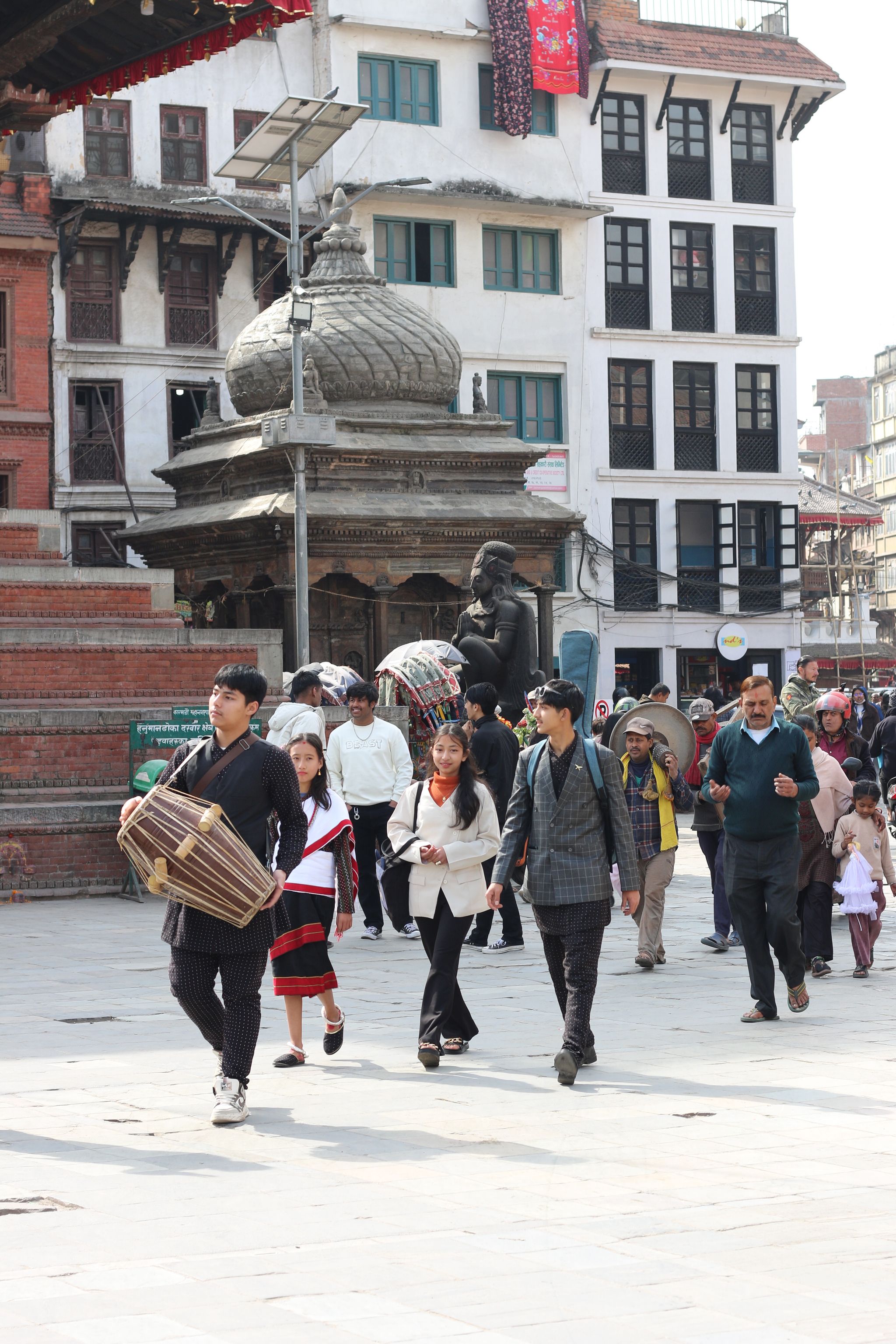
There is no formal dress code in Nepal, and no one will stop you at a border for wearing the wrong thing. What exists is a strong social norm. Nepal is a predominantly Hindu and Buddhist society, and outside the tourist bubbles of Thamel (Kathmandu) and Lakeside (Pokhara), people dress conservatively. The Kathmandu dress code in practice is relaxed in Thamel and noticeably more modest in the old-town neighbourhoods a ten-minute walk away. You don't need to cover up head to toe, but shoulders and knees covered is the simple, respectful default. Lightweight, breathable fabrics handle the heat and dust of the lowlands; darker colours hide the inevitable trail and street grime. Leave the very short shorts, low-cut tops, and beachwear for the lodge.
What to wear in temples and at religious sites
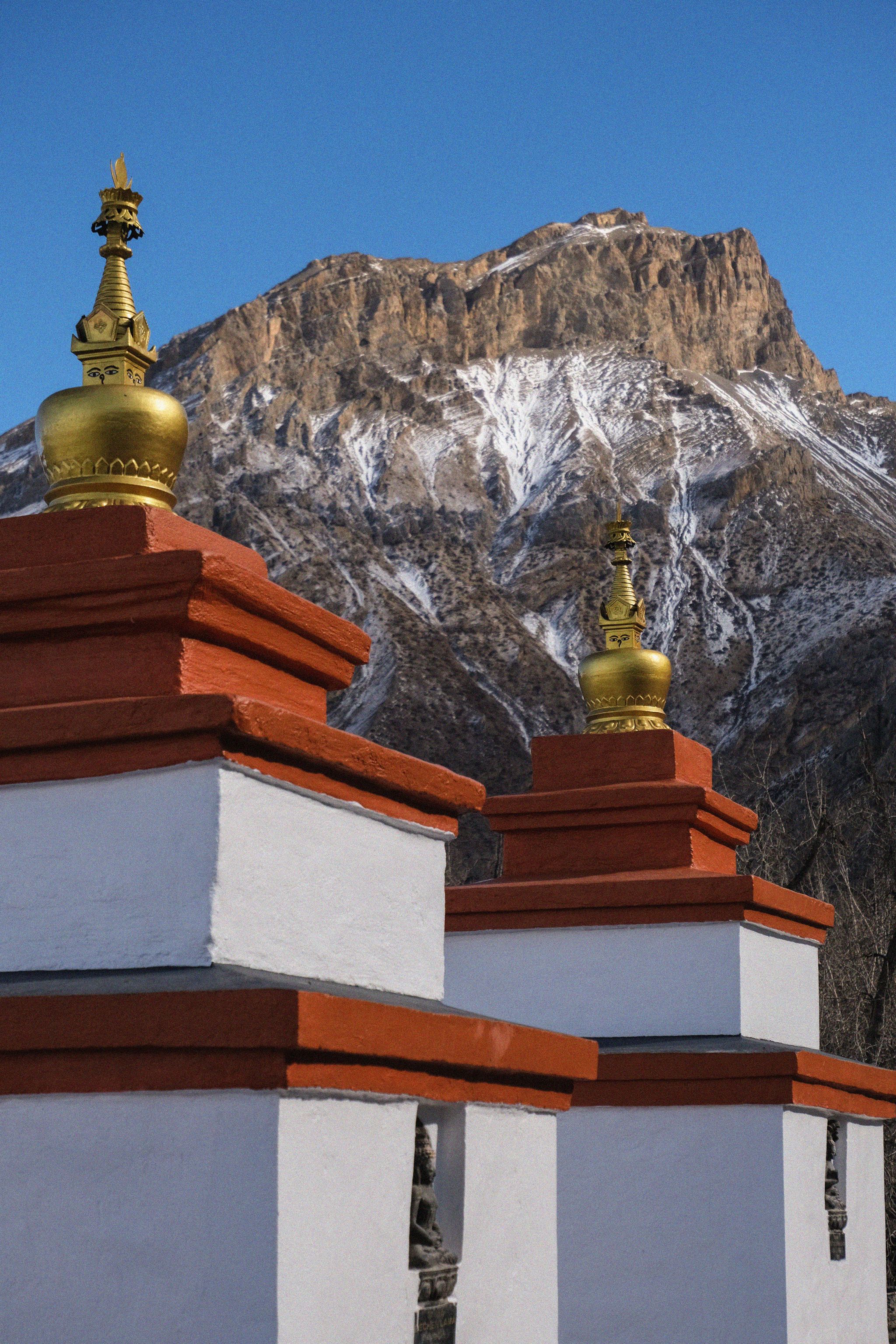
Nepal is dense with temples, stupas, and monasteries, and the etiquette matters:
- Cover shoulders and knees - carry a scarf or shawl to throw on quickly.
- Remove your shoes before entering shrine rooms and monastery halls; sometimes leather items (belts, bags) are not allowed in Hindu temples.
- Walk clockwise around stupas and mani walls (Boudhanath, Swayambhunath), and don't point your feet at altars or people.
- Ask before photographing people, priests, or rituals - see the wider etiquette in our Nepali culture and traditions guide.
Some Hindu temple inner sanctums are closed to non-Hindus no matter how you're dressed - that's normal, not personal.
What women should know
Nepal is generally welcoming to women travellers, and dressing modestly makes day-to-day life smoother and reduces unwanted attention. Long, loose trousers or a maxi skirt plus a t-shirt or kurta works everywhere. A scarf is the single most useful item - sun cover, temple shawl, bus blanket. For more on travelling comfortably and safely, see our solo female travel in Nepal guide.
What to wear trekking: the layering system
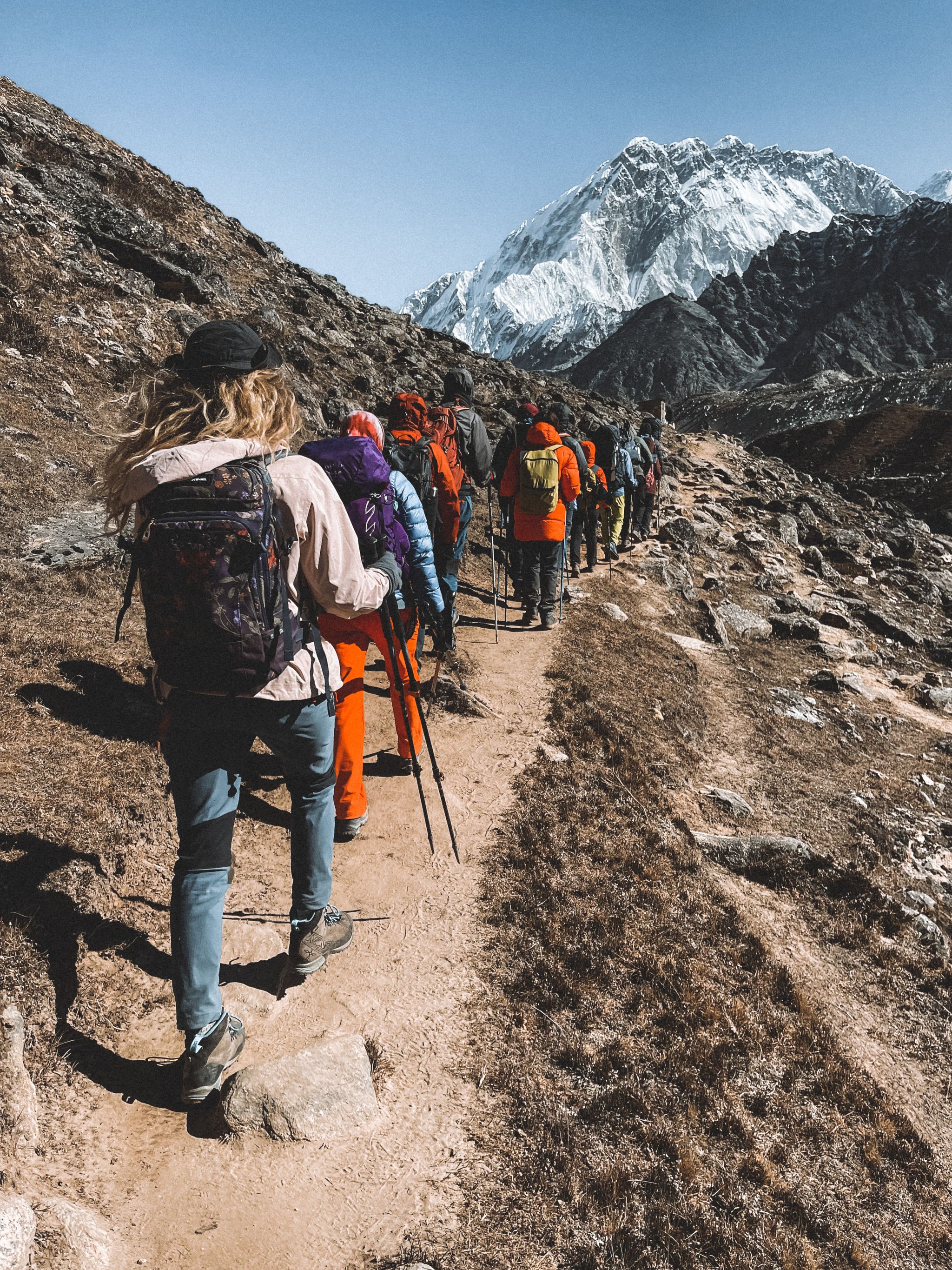
On a trek you don't dress for one temperature - you dress for a range, often within hours. The system that works:
| Layer | What | Why |
|---|---|---|
| Base | Moisture-wicking top + leggings | Pulls sweat off skin |
| Mid | Fleece and/or down jacket | Traps warmth, packs small |
| Outer | Waterproof, windproof shell | Rain, snow, ridge wind |
| Legs | Trekking trousers (convertible help) | Durable, quick-dry |
| Extremities | Warm hat, sun hat, gloves, buff | Most heat is lost here |
| Feet | Broken-in boots + wool socks | Blisters end treks |
Cotton is the enemy once you sweat or get wet - it stays damp and cold. The full kit list, including sleeping bag and first-aid notes, is in our Nepal packing list.
Dressing for the seasons
Nepal's three elevation zones mean "the weather" depends entirely on where you are, but broadly:
- Autumn (Oct-Nov) & spring (Mar-Apr): mild days, cool evenings - the easiest packing. Layers plus a warm jacket for altitude. See Nepal in October.
- Winter (Dec-Feb): cold, especially mornings and at altitude - down jacket, hat, gloves even in Kathmandu's unheated buildings.
- Monsoon (Jun-Aug): hot, humid, wet - quick-dry clothing, a real rain shell, sandals you can wade in. See Nepal in July.
Indoor heating is rare, so interiors can be colder than outside in winter - a warm layer for the evening matters even in the city.
Footwear and what to leave at home
Footwear matters more than people expect, because you'll take it off constantly - at temples, monasteries, homes, and some shops. Slip-on shoes or sandals save endless lacing. For trekking, broken-in boots with ankle support are worth their weight; never start a trek in new boots. For cities, comfortable walking shoes handle the uneven, often broken pavements better than fashion footwear.
A few things to leave at home or pack sparingly:
- Very short shorts, crop tops, and beachwear for anywhere but a pool or lodge.
- Excess "nice" clothes - Nepal is dusty and casual; you'll wear the same few practical items on rotation.
- White everything - dust, traffic, and trail mud win quickly.
- Heavy cotton for trekking - it stays wet and cold; choose quick-dry synthetics or merino.
You can buy almost anything you forget cheaply in Thamel or Lakeside, including knock-off and genuine outdoor gear, so don't over-pack.
A quick guide by trip type
| Trip | Wear |
|---|---|
| City sightseeing | Long trousers/skirt, t-shirt or top, walking shoes, scarf |
| Temple and culture tour | Shoulders and knees covered, slip-on shoes, shawl |
| Trekking | Full layering system, boots, warm hat and gloves |
| Chitwan / Terai lowlands | Light, breathable clothing, sun hat, closed shoes for safari |
A few extras worth packing
- A scarf or shawl (temples, sun, modesty, warmth).
- Slip-on shoes or sandals for temple visits and lodges - you'll remove footwear often.
- Modest swimwear if you plan on Pokhara's lake or a resort pool.
- One smart-casual outfit for nicer restaurants or a cultural evening.
Curious what Nepalis themselves wear, from the daura-suruwal to dhaka topis and saris? Our traditional Nepali dress guide covers the garments you'll see at festivals and weddings - and buying dhaka fabric or a topi as a souvenir is covered in the shopping guide.
Dress modestly in town, respectfully at temples, and in layers on the trail, and you'll be comfortable and welcome everywhere. Pair this with the full packing list and the Nepali culture guide before you zip the bag, and spend a day getting your bearings in Kathmandu where you can buy almost any layer you forgot.