
Tribhuvan International Airport (TIA) is Nepal's main gateway and, for many, a slightly chaotic first and last impression of the country. It's small, busy, and old, but entirely manageable once you know the flow. This guide walks you through arrival, the visa, getting into the city, the domestic terminal, and a stress-free departure.
Arrival: step by step
Most visitors get a visa on arrival. The sequence:
- Fill in the forms - an arrival card and the visa application; self-service kiosks in the hall can generate the visa form (a printout or QR helps).
- Pay the visa fee at the bank/cashier counter - US dollars in cash is easiest (other major currencies usually accepted). Keep the receipt.
- Queue for immigration with your passport, a passport-sized photo, and the payment receipt.
- Collect baggage, then pass a customs check on the way out.
Have a passport photo and the exact fee ready to avoid the slowest queues. Full eligibility and current fees are in our Nepal visa guide - confirm your nationality qualifies before you fly.
In the arrivals hall
Before leaving the terminal, two useful stops:
- Money - change a small amount of cash for the taxi and first day; rates are poor, so change just enough and use a city changer later (see the money guide).
- SIM card - counters sell tourist SIMs (passport + photo needed), though town shops are cheaper; details in the SIM and internet guide.
Getting into the city
Thamel, the tourist hub, is roughly 6-7 km and 30-45 minutes depending on traffic. Your options:
- Prepaid taxi - fixed price from the official counter in arrivals; simplest after a long flight.
- Ride-hailing (Pathao / InDrive) - usually cheaper, but you'll walk out of the terminal area to meet the driver.
- Hotel pickup - many hotels offer a free or cheap airport transfer; arrange it when you book.
Expect a scrum of taxi touts outside; a prepaid voucher or pre-arranged pickup sidesteps the haggling. Always agree the fare before getting in if taking a street taxi.
The domestic terminal
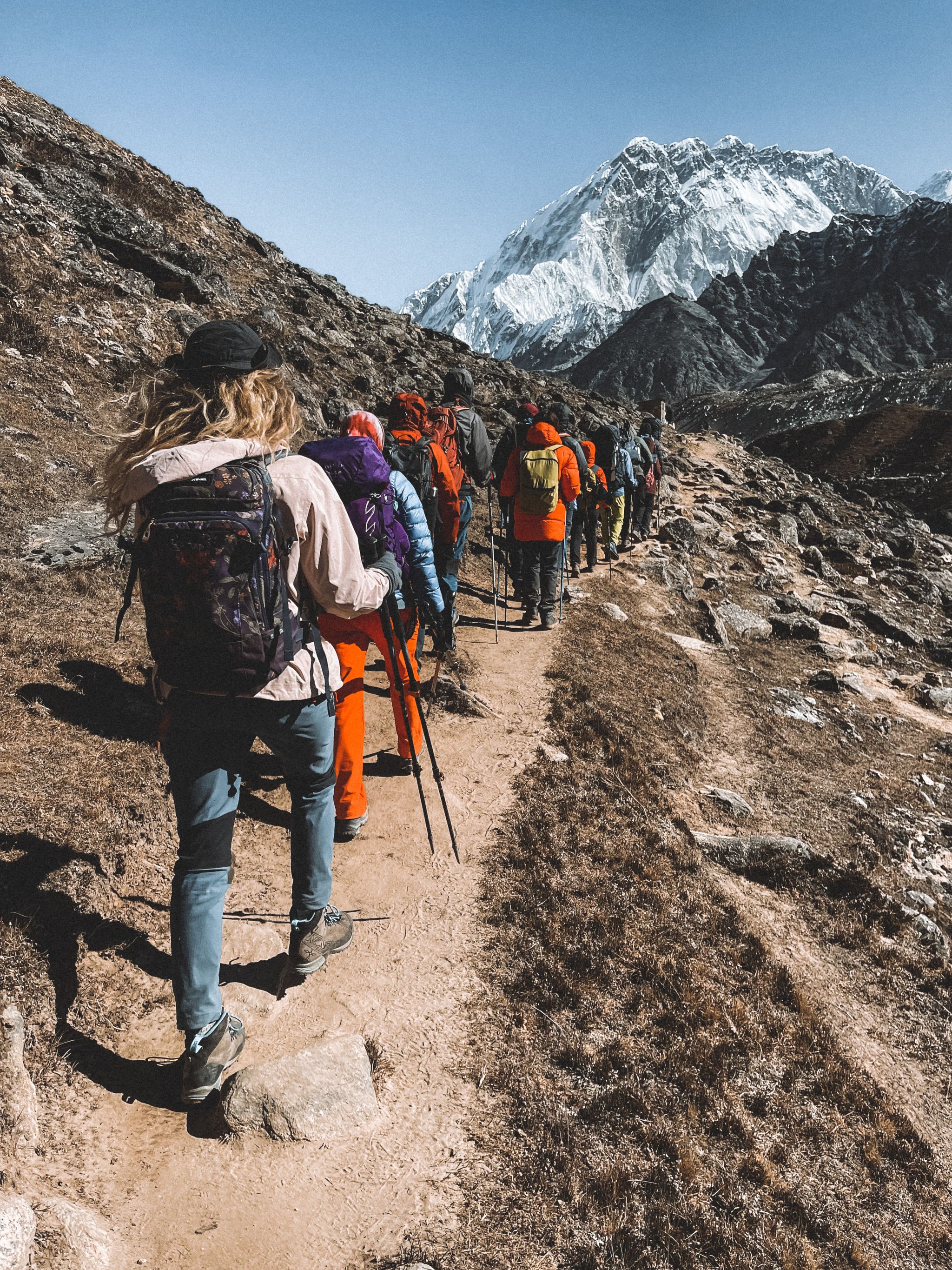
Domestic flights leave from a separate terminal a short distance away. It's busier and more freewheeling than the international side, especially for the weather-dependent mountain flights to Lukla (for Everest) and Pokhara. Arrive early, expect delays and last-minute gate changes, and keep plans flexible. As a hard rule, never book a mountain flight tight against your international departure - build in buffer days. How the wider network fits together is covered in our getting around Nepal guide.
Departure: a smooth exit
For your flight home:
- Arrive about 3 hours early for international flights - there are multiple security layers starting at the terminal door, and queues are slow.
- Departure tax is normally included in your ticket price.
- Pack souvenirs smartly - khukuri knives, large singing bowls, and anything blade-like go in checked luggage; some antiques and religious items need export clearance.
- Spend or change back your rupees before security, as it's a closed currency and harder to exchange abroad.
Can you speed up the visa?
Yes - you can complete the online visa pre-application on Nepal's official immigration portal within 15 days before you travel, then bring the printed confirmation. It doesn't skip the fee payment or immigration queue, but it removes the form-filling step on arrival and can shave time when flights land in a bank and the kiosks are busy. It's optional; the on-arrival kiosks work fine if you'd rather do everything at the airport. Either way, the photo and exact fee in cash are what keep you moving.
Facilities and what to expect
Tribhuvan is functional rather than flashy. Expect basic facilities: a few cafes and shops (limited and pricey), ATMs and money changers, and patchy free Wi-Fi that often needs a code. The international terminal has been upgraded in parts but still gets congested at peak arrival and departure banks, and processes are largely manual. There are no sprawling lounges or extensive dining like big international hubs, so eat before you arrive and bring an empty bottle to fill after security. Toilets and seating are adequate but can be stretched when several flights land together.
Common annoyances and how to handle them
A few things catch travelers out:
- Taxi touts crowd the exit - a prepaid voucher or pre-booked hotel pickup avoids the hard sell.
- Slow, manual queues at visa and immigration - having your form, photo, and exact fee ready is the single biggest time-saver.
- Power and connectivity gaps - charge devices beforehand and don't rely on airport Wi-Fi for anything important.
- Aggressive porters may grab bags for a tip; a polite, firm "no thank you" is fine if you don't want help.
- Monsoon and winter-fog delays ripple through the schedule - keep arrival expectations loose.
Staying calm and prepared turns the chaos into a non-event.
Eating near the airport
Terminal food is limited and pricey, so plan around it. The best move for any layover of a few hours: the Boudhanath area is only 10-15 minutes' drive from the airport, and its stupa-facing rooftop cafes and momo kitchens beat anything airside - a genuinely memorable meal within a short hop of your gate. Closer still, the airport-adjacent neighbourhoods (Sinamangal, Tinkune) have hotel restaurants and local eateries serving solid dal bhat and momos at city prices. Heading out with more time? The classic answer is dinner in Thamel or at one of Kathmandu's best restaurants. Whatever you choose, follow the food-safety basics and leave the traffic buffer for the return.
A few survival tips
- Bring patience and small cash - processes are manual and queues common.
- Keep documents accessible - passport, photos, visa receipt, onward ticket.
- Wi-Fi is limited; sort a SIM or download essentials beforehand.
- Buffer your schedule at both ends around domestic and mountain flights.
Handle the airport with a little patience and the right cash and documents, and you're through. Long layover? Our Kathmandu in one day itinerary turns eight ground hours into Boudhanath, Durbar Square, and a sunset stupa. Otherwise, line it up with the rest of your arrival plan in the plan your Nepal trip guide, and step straight into Kathmandu once you're in town.