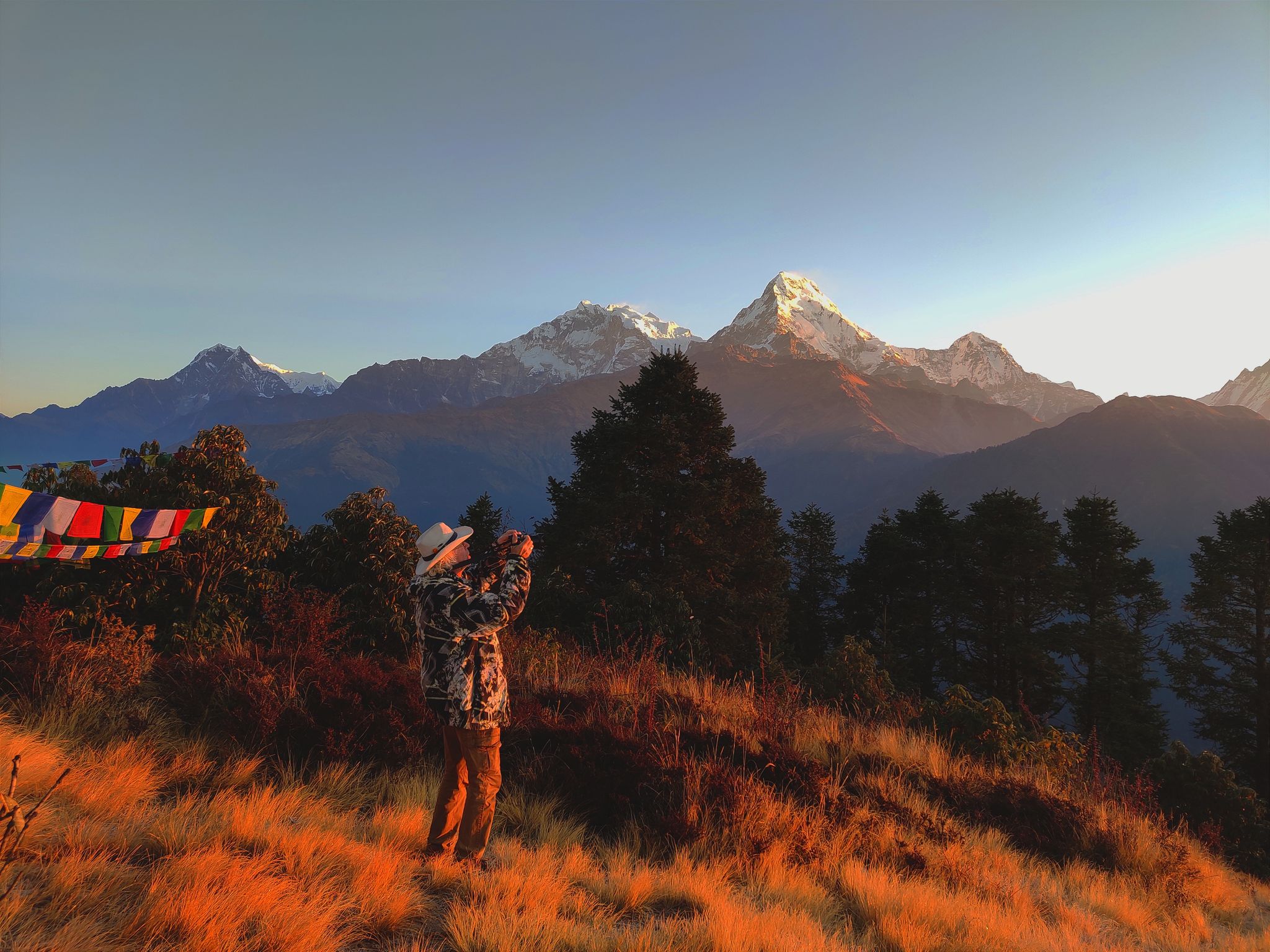

The Mardi Himal trek is the Annapurna region's best short escape - a four-to-five day ridge walk that climbs through mossy rhododendron forest onto an open spine of high meadow, directly beneath the fluted summit of Machhapuchhre, the sacred Fishtail. It only opened as a teahouse route around 2012, so it stays far quieter than nearby Poon Hill or Annapurna Base Camp, while delivering some of the most intimate mountain views in Nepal. Close to Pokhara, short, and moderately challenging, it's the thinking trekker's alternative. Route table, costs, and the case for choosing it - all below.
Quick facts
- Duration: 4-5 days walking (5-6 with travel from Pokhara)
- Highest point: Mardi Himal Base Camp, ~4,500 m (Upper Viewpoint ~4,250 m)
- Difficulty: Moderate - steady ridge climb, one long high day
- Start/end: Pokhara → Kande/Phedi (drive) → ridge → Sidhing → Pokhara
- Permits: ACAP + TIMS - see the permits guide
- Season: October-November & March-April
Why trek Mardi Himal
The appeal is concentration: in under a week you go from subtropical forest to a high alpine ridge with a wall of giants in your face - Machhapuchhre (6,993 m) so close it fills the sky, flanked by Annapurna South, Hiunchuli, and Annapurna I behind. Because it's newer and ends at a viewpoint rather than a famous base camp, the trail carries a fraction of the foot traffic of the classic Annapurna routes. The teahouses are smaller and more personal, perched on a narrow ridge with sunrise and sunset views from your dining room.
The route, day by day
| Day | Route | Altitude | Hours |
|---|---|---|---|
| 1 | Pokhara → drive to Kande → Australian Camp → Forest Camp | 2,520 m | 1 drive + 5-6 walk |
| 2 | Forest Camp → Low Camp → High Camp | 3,580 m | 5-6 |
| 3 | High Camp → Mardi Himal Base Camp → back to High/Low Camp | 4,500 m | 7-8 |
| 4 | Low Camp → Sidhing village → drive to Pokhara | 1,700 m | 4-5 + drive |
Some trekkers add a night to acclimatise or to split the long Day 3, and a Poon Hill / Ghorepani loop can be bolted on at the start for a fuller week.
Day-by-day notes
Day 1 - Into the forest. A short drive from Pokhara to Kande, a climb past Australian Camp, then a long, gentle walk along the ridge through dense oak and rhododendron forest, often wrapped in mist, to Forest Camp.
Day 2 - Out of the trees. The trail keeps climbing the ridge to Low Camp and on to High Camp, where the forest finally gives way and Machhapuchhre suddenly stands directly ahead across the valley. The light here at dawn and dusk is the trek's signature.
Day 3 - The big day. A pre-dawn start up the narrowing ridge - past the Lower and Upper Viewpoints - to Mardi Himal Base Camp at around 4,500 m, ringed by the Annapurna massif. It's a long, exposed climb and the highlight of the trek; descend the same afternoon.
This five-day trek vlog walks the whole ridge, forest to base camp:
Five days on the Mardi Himal trek (Jits into the Sunset)Day 4 - Down the back way. Drop off the ridge through terraced farmland to Sidhing village and drive back to Pokhara, closing the loop without retracing your steps.
Teahouses and life on the ridge
Mardi Himal is a teahouse trek, but a young and small-scale one. The lodges strung along the ridge - at Forest Camp, Low Camp, and High Camp - are simpler and fewer than on the busy Annapurna Base Camp or Poon Hill trails, which is part of the appeal and part of the planning. Rooms are basic twin-share with shared bathrooms; expect a warm dining room with a central stove as the social hub each evening. The menu is the standard Nepal trekking fare - dal bhat, fried rice, noodles, eggs, pancakes, endless tea - with prices climbing the higher you go, since everything is carried or mule-hauled up the ridge. In peak season (October-November) High Camp's handful of lodges can fill, so starting early in the day or having a guide phone ahead helps secure a bed. Carry enough cash from Pokhara: there are no ATMs on the trail, and card payment is not an option. Nights at High Camp are genuinely cold from autumn onward, and electricity for charging is limited and often paid per device, so a power bank earns its weight.
Side trips and extensions
Because the core trek is so short, many walkers pad it out. The most popular addition is the Poon Hill / Ghorepani sunrise loop at the start, turning the trip into a fuller 8-9 day Annapurna foothills circuit. Fit trekkers sometimes descend the long way to Sidhing and on toward Lwang for a homestay finish among tea gardens. The trek also pairs naturally as a warm-up or wind-down around a bigger objective in the same region.
Permits and cost
- Permits: ACAP + TIMS, arranged in Pokhara or Kathmandu with passport and photos.
- Cost: roughly USD 250-450 for an independent 4-5 day trek (permits, teahouses USD 25-35/day, transfers), more with a guide or porter. Cash only on the trail.
- Guide: optional but recommended for the higher ridge; permit rules for solo trekkers have tightened, so verify the current requirement.
- Pack for a real range - warm forest days to a freezing pre-dawn summit push; the packing list covers the layering.
Best time
Autumn (October-November) and spring (March-April) are the windows for clear Machhapuchhre views, spring adding the rhododendron bloom that makes the forest section glow red and pink. Winter brings snow and bitter nights at High Camp; the monsoon hides the mountains in cloud - though if you're set on monsoon trekking, the rain-shadow Upper Mustang trek is the better bet.
Deciding between the region's routes? Compare it with the longer Annapurna Base Camp trek and see every option on the Nepal trekking hub. For a short trip that still feels like a real Himalayan expedition, Mardi Himal is hard to beat - base yourself in Pokhara, sort your permits, and head for the ridge.