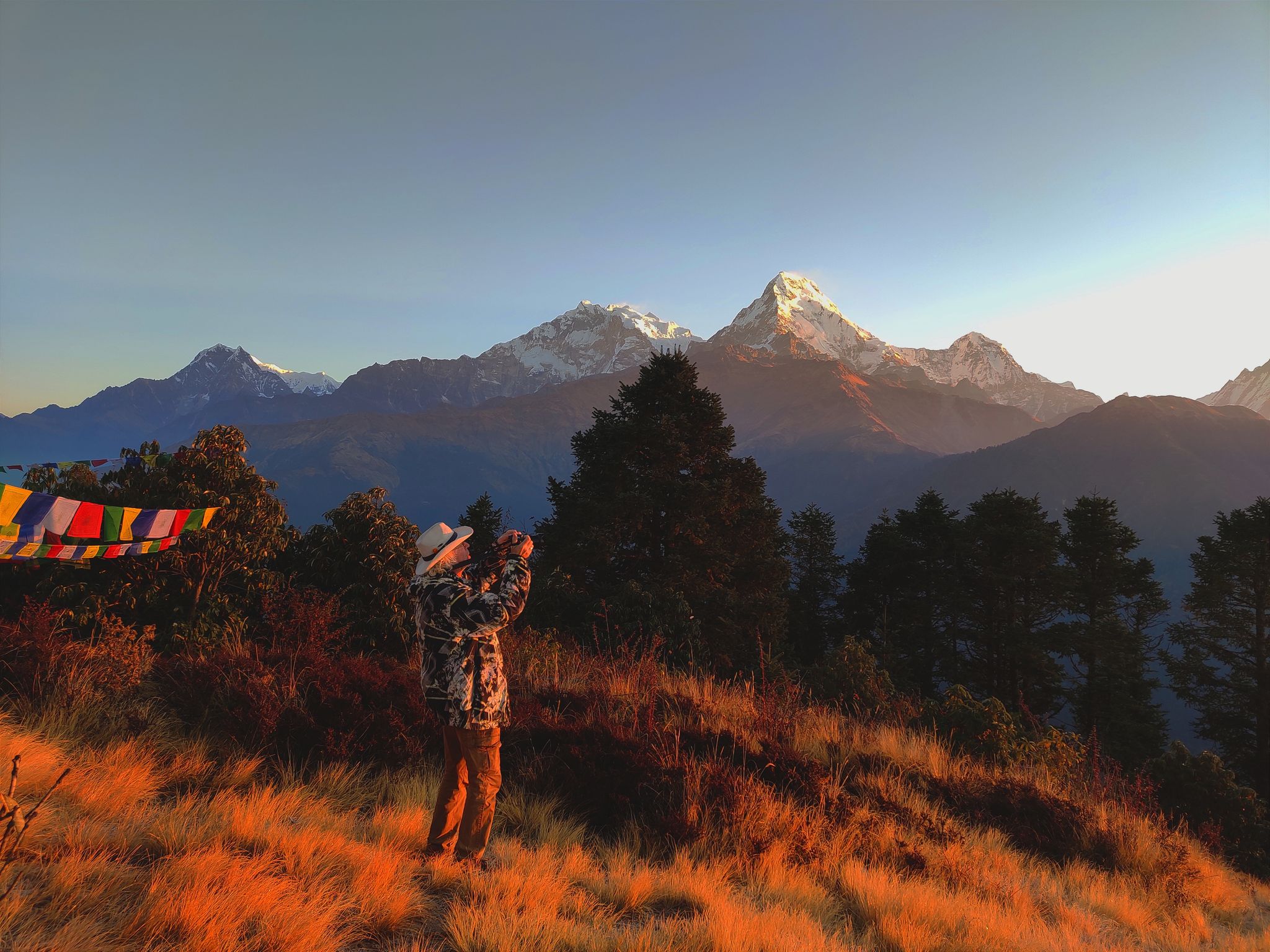

The Upper Mustang trek walks you out of green, monsoon-soaked Nepal and into a high desert that looks and feels like the Tibetan Plateau - because, culturally and geographically, it nearly is. Behind the Himalayan wall, the rain clouds never arrive. What you get instead is eroded ochre canyon country, whitewashed villages, ancient cave monasteries, and at the head of it all the walled medieval capital of Lo Manthang. This is a restricted-area trek with a steep permit, and it is worth understanding before you commit. What it costs, how the days run, and why it earns the price - below.
Quick facts
- Duration: 10-14 days from Pokhara (jeep-supported versions shorter)
- Highest point: Lo La / passes around 3,800-4,200 m; Lo Manthang ~3,840 m
- Difficulty: Moderate - high altitude and long days, but no technical sections
- Start/end: Pokhara → Jomsom (flight or drive) → trek north and back
- Permits: Restricted-area permit (USD 50/day, no minimum) + ACAP - see the permits guide
- Season: March-November, and uniquely the monsoon (July-August) in the rain shadow
Why Upper Mustang is different
Most of Nepal's famous treks climb toward snow and glaciers. Upper Mustang instead crosses a wind-carved desert of red and grey cliffs, riverbed flats, and barley terraces clinging to oasis villages. Until 1992 the kingdom of Lo was closed to outsiders entirely, and the restricted-area rules that remain have preserved a living Tibetan Buddhist culture - chortens, mani walls, monasteries painted ochre and white - that has largely vanished across the border in Tibet itself. The walk is as much pilgrimage as trek.
The rain-shadow advantage
The single most useful thing to know: Upper Mustang stays dry when everywhere else is wet. The Annapurna and Dhaulagiri ranges wring the monsoon out before it reaches Mustang, so while the July and August rains close in over the southern trails, this region is at its best - warm days, dry paths, open skies. That makes it the standout monsoon-season trek in Nepal, and a smart choice when the Annapurna Circuit or Base Camp routes are clouded out.
The route, day by day
| Day | Route | Altitude | Hours |
|---|---|---|---|
| 1 | Pokhara → fly/drive to Jomsom → Kagbeni | 2,800 m | flight + 3-4 walk |
| 2 | Kagbeni → Chele (enter restricted area) | 3,050 m | 6-7 |
| 3 | Chele → Syangboche / Geling | 3,500 m | 6-7 |
| 4 | Geling → Ghami → Tsarang | 3,560 m | 6-7 |
| 5 | Tsarang → Lo Manthang | 3,840 m | 4-5 |
| 6 | Lo Manthang - explore city + cave monasteries | 3,840 m | full day |
| 7 | Lo Manthang → Dhakmar → Ghami | 3,520 m | 6-7 |
| 8 | Ghami → Samar → Chele | 3,050 m | 6-7 |
| 9 | Chele → Kagbeni → Jomsom | 2,800 m | 6-7 |
| 10 | Jomsom → fly/drive to Pokhara | 820 m | flight/drive |
Jeep roads now shadow much of this route, so many trekkers ride sections and walk the most scenic stretches, compressing the trip. Purists walk the older trails on the valley's quieter east or west banks.
Day-by-day notes
Days 1-2 - Into the gateway. From Pokhara you fly or drive the dramatic Kali Gandaki gorge to Jomsom, then walk to Kagbeni, a medieval village of mud-brick lanes that guards the entrance to Upper Mustang. The restricted area begins just beyond.
Days 3-4 - Desert and villages. The trail climbs through wind-eroded canyons, over passes, and down into oasis settlements like Ghami and Tsarang, each with its monastery and its band of green barley fields against the bare hills.
Day 5 - Lo Manthang. Cresting the final rise to the white walls of Lo Manthang is the trek's great reveal - a compact walled city of perhaps a thousand people, still home to the former royal palace and several centuries-old monasteries.
Day 6 - The caves and gompas. Spend a full day on the painted monasteries of Lo Manthang and a side trip to the cliff-cut cave complexes at Chhoser, where thousands of man-made caves honeycomb the rock.
This episode captures exactly that - Lo Manthang's monasteries and the sky caves:
Lo Manthang's monasteries and sky caves (Eco Odysseys)Days 7-10 - The return. Loop back via the red cliffs of Dhakmar and retrace toward Jomsom, closing the circuit to Pokhara.
Permits, cost and rules
Upper Mustang's permit is what stops most people, so plan for it:
- Restricted-area permit: USD 50 per person per day with no minimum stay (the old USD 500-for-10-days flat rate was replaced in late 2025), counted from Kagbeni. A full 10-day trek still totals USD 500; shorter visits now cost proportionally less.
- ACAP permit: ~USD 30 on top.
- Licensed guide via a registered agency remains mandatory. The old minimum-two-trekker rule was scrapped in March 2026, so solo travelers can now hold the permit, walking with their guide.
- Cash on the trail, and budget more than a standard teahouse trek overall once the permit and guide are counted.
Verify all figures before booking - restricted-area fees change, and these rules are recent. The mechanics are covered in our trekking permits guide, and the wider region (jeep tours, Lo Manthang's monasteries, the sky caves, Tiji) is in our Upper Mustang regional guide.
Best time
Upper Mustang's season is long: March to November, and uniquely the monsoon months of July-August, when the rain shadow keeps it dry. Spring and autumn are mild and clear; the famous Tiji festival at Lo Manthang (lunar dates, usually May) is a spectacular reason to time a trip. Winter is harsh and many locals migrate south. Cross-check the best months overview for the wider picture.
For a different flavour of the Annapurna region - green forest and a glacial amphitheatre instead of high desert - compare the Annapurna Base Camp trek, and see every route on the Nepal trekking hub. Upper Mustang asks for budget and lead time, but it returns a corner of the Himalaya unlike anywhere else you can legally walk.