Nobody comes home from a Nepal trek raving about the food, but almost everyone comes home with an opinion about dal bhat. Teahouse eating is its own small culture, with unwritten rules, a famous slogan, and a logic driven entirely by altitude. Knowing how it works before you go makes the eating better and the budget predictable.
How teahouse food works
On the main trekking routes, every lodge doubles as a restaurant, and the menus are strangely uniform: laminated pages listing the same dal bhat, fried rice, chowmein, momos, pasta, soups, and pancakes from Lukla to Lobuche. That uniformity is deliberate. On most routes, lodge committees set standard menus and prices village by village, so lodges compete on warmth and blankets rather than by undercutting each other on food.
The etiquette that matters: eat where you sleep. Room prices are kept low (sometimes nearly free) on the understanding that you buy dinner and breakfast in the same lodge. Ordering happens early - kitchens cook on wood or gas for a full dining room, so dinner is often taken at 6 pm and orders for breakfast are written down the night before.
Dal bhat power, 24 hour
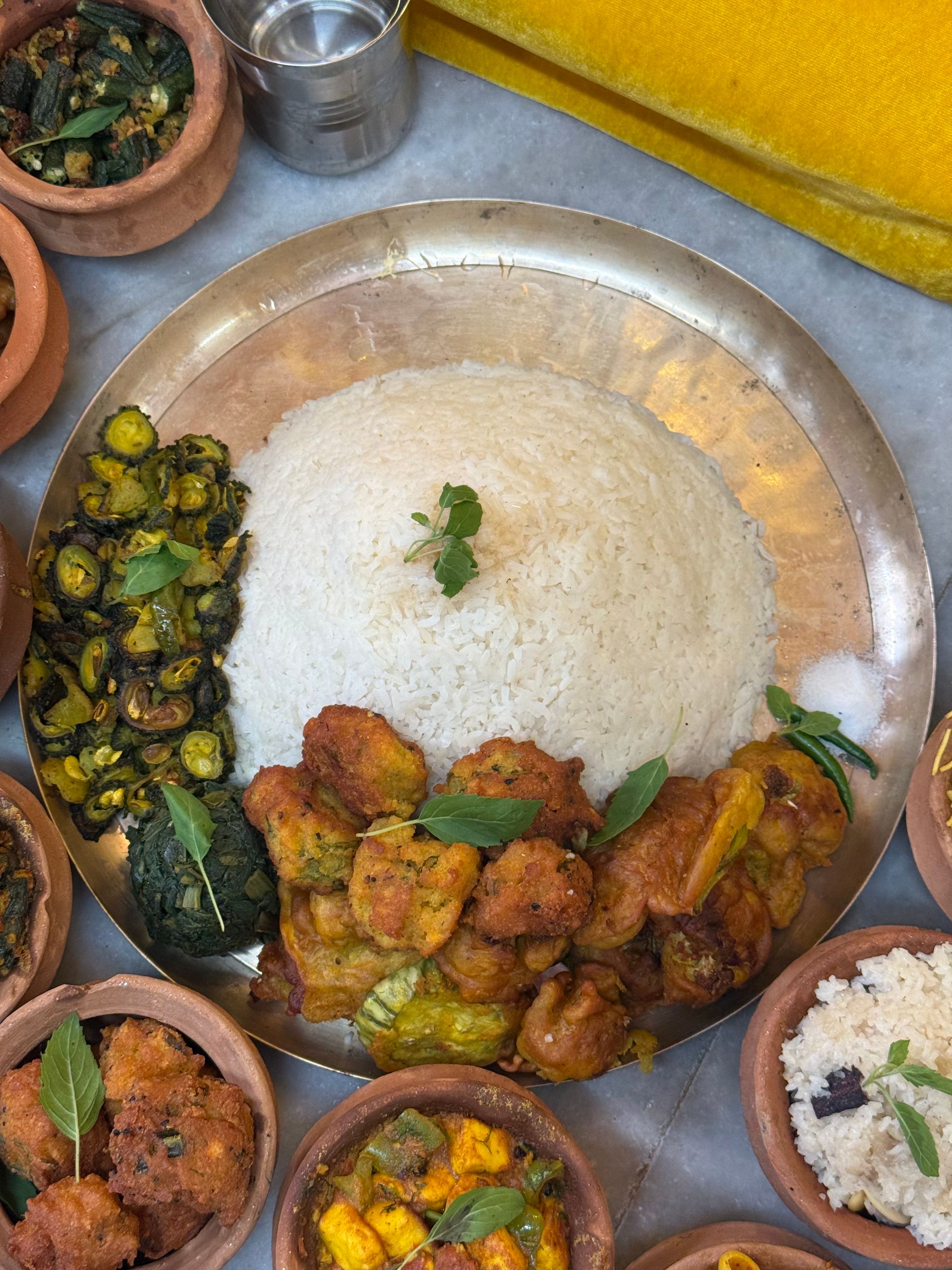
The trail slogan is on t-shirts across Thamel, and it is genuinely good advice. Dal bhat - rice, lentil soup, a vegetable curry, sautéed greens, and achar (pickle) - is the best thing to order at almost every lodge, for reasons that have nothing to do with romance:
- It is the freshest food in the kitchen. The family and staff eat it twice a day, so it is cooked in bulk from that day's pot, not assembled to order from a week-old cabbage.
- Refills are free. Rice, dal, and vegetables come around again until you stop nodding. No other menu item works this way.
- It is calorie-dense fuel with a long burn: exactly what six hours of uphill demands.
Order it at lunch, when the pots are freshest, and watch for the regional variations: Thakali sets in the Annapurna region (widely considered the best version in the country), buckwheat and barley touches in Manang, potato-heavy plates in the Everest region's Sherpa kitchens.
The rest of the menu
Breakfast is porridge, muesli, eggs any style, Tibetan bread (fried, honey-drizzled, excellent), chapati with peanut butter, and pancakes of variable ambition. Lunch and dinner beyond dal bhat run through momos (see the food guide for the full momo story), fried rice, chowmein, thukpa (noodle soup, ideal in cold weather), spring rolls, and a pasta-and-pizza section that gets braver as the lodges get bigger.
Garlic soup deserves its own line: every lodge sells it, and trail lore swears it helps with acclimatisation. The evidence is thin, but it is hot, cheap, and comforting, which at 4,400 m is medicine enough.
 Momos appear on every teahouse menu - order steamed, and expect the achar to carry the flavour
Bigger villages add bakeries. Namche Bazaar's cinnamon rolls and espresso machines are famous out of all proportion to their altitude, and Manang's bakery culture rivals it on the Annapurna side.
What altitude does to the menu
Two things change as you climb: prices rise and variety shrinks. Everything beyond local potatoes, eggs, and greens arrives on a porter's back, a mule train, or (in the Everest region) a helicopter, and the menu reflects the freight. A dal bhat that costs a few hundred rupees in the low villages can cost two to three times as much near a high pass, and a chocolate bar can reach city-cocktail prices at Gorak Shep. Verify current prices before you set your budget; they move every season with fuel costs.
Plan on roughly USD 25-35 per day for food and hot drinks on the main routes, more in the Everest region, and carry the cash in rupees - there are no card machines up there, as the money guide explains.
The meat rule
Menus list chicken and yak sizzlers all the way up. Experienced trekkers mostly ignore them above the road heads, because the high villages have no refrigerated supply chain: that chicken walked up unrefrigerated over several days. Food poisoning at altitude is miserable and can force a descent, so the standard practice is simple - eat vegetarian from roughly Namche (Everest) or Chame (Annapurna) onward, then reward yourself with a steak back in Pokhara. Lodges that butcher their own livestock are the exception; ask, and judge locally.
The same caution applies to salads and untreated water. Stick to cooked food, treat or buy safe water, and hot drinks are always fine. Our tea culture guide covers the endless glasses of milk tea that punctuate every trekking day.
Snacks worth carrying
Teahouse meals bracket the day, but the hours between are long. From Kathmandu or the trailhead bazaar, pack: nuts and dried fruit, peanut butter (a jar is trail gold), chocolate and energy bars (cheaper bought low), Wai Wai instant noodles (Nepal's cult snack, eaten dry or cooked), and electrolyte powder for the long ascents. Buying a little extra from village shops as you go also puts money into the local economy along the trail.
Trailside apples in the Annapurna region are a genuine treat - Marpha's orchards supply the whole circuit with apples, apple pie, and apple brandy.
Eating well, trekking well
Appetite often fades at altitude just as calorie needs spike, which is exactly when the free-refill logic of dal bhat earns its slogan. Eat more than you feel like, drink more than you think you need, and treat food as part of acclimatisation rather than an afterthought. The lodges' teahouse system means you never carry more than snacks, and the kitchens, for all their laminated sameness, keep several thousand trekkers moving uphill every day of the season.
Dal bhat power. It is on the t-shirts because it is true.