Every Nepal trek is built on one basic choice: sleep in the tea houses - the family-run lodges lining the popular trails - or bring the whole show with you and camp. For most trekkers on most routes the answer is settled before they know they're asking it, but understanding both styles explains a lot about how trekking here works, what it costs, and which trails are open to you. This is how the two actually differ - from your wallet's point of view, and your knees'.
Tea house trekking: Nepal's great invention
The tea house network is what makes Himalayan trekking here uniquely accessible. On the classic routes - Everest Base Camp, the Annapurna Circuit, ABC, Langtang, Poon Hill - villages every couple of hours offer beds, cooked meals, and a stove-warmed dining room. You walk with a daypack; everything else is waiting at the next lodge.
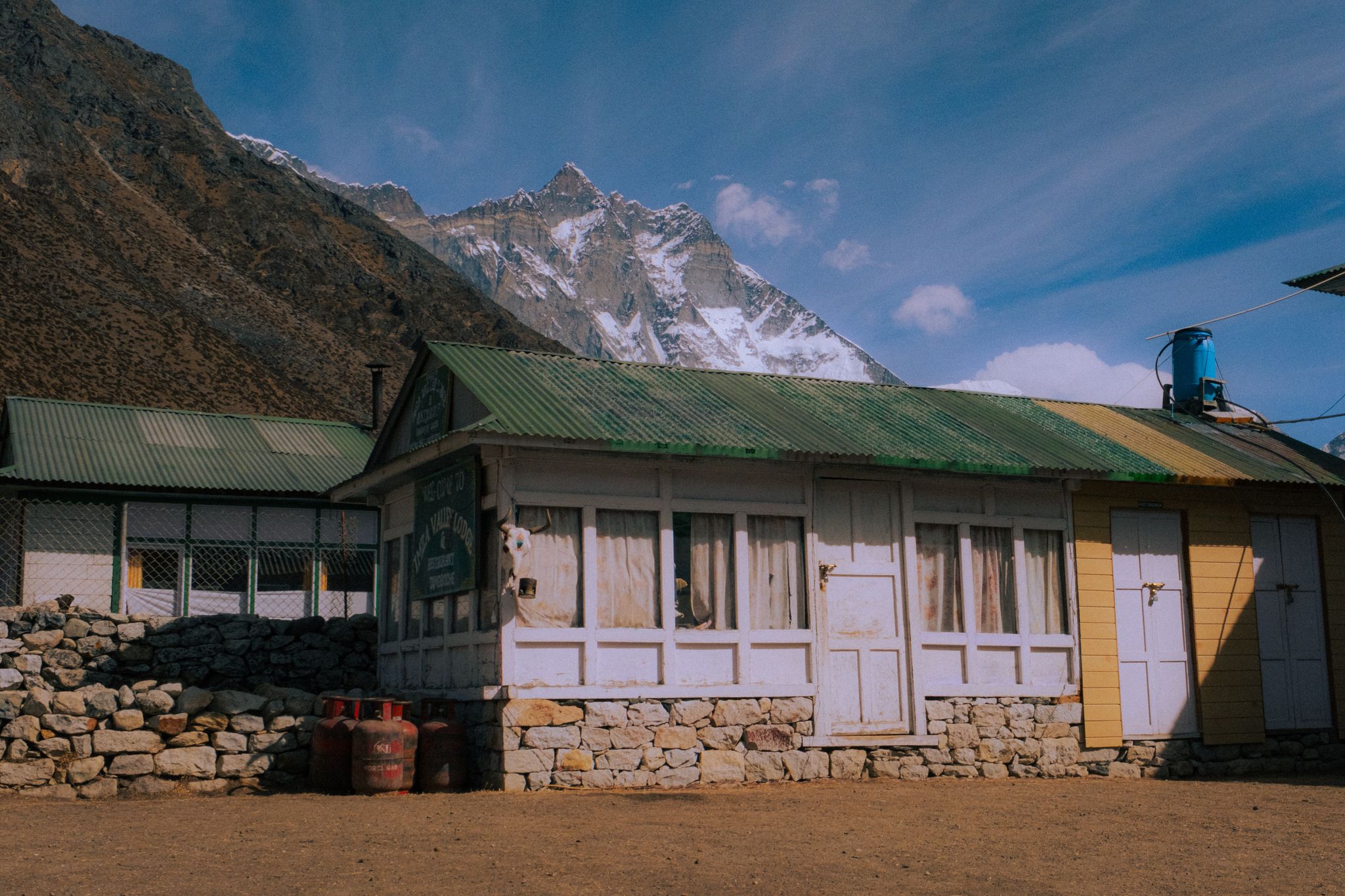
 Dawn at a Khumbu teahouse - bed, dal bhat, and a stove-warmed dining room, no tent required
What it's really like: simple twin rooms, blankets (bring a sleeping bag for altitude), shared bathrooms, and a menu that repeats - dal bhat, fried rice, noodles, pancakes - cooked fresh and served hot. Evenings are the charm: trekkers from everywhere around one stove, comparing blisters and tomorrow's route. Wi-Fi and charging cost extra and thin out with altitude. Higher up, rooms get colder and prices rise - everything is carried there on someone's back.
The economics: roughly USD 25-40/day for bed and board on most routes (more in the high Khumbu), cash only - figures in the budget guide. There's an unwritten contract: sleep where you eat, and the room stays cheap.
Camping trekking: the expedition style
Before lodges, every trek was a camping trek - and in the regions lodges haven't reached, it still is. An agency assembles the caravan: tents, dining shelter, cook, kitchen crew, porters or mules, and food for the whole route. You walk; camp appears around you each afternoon.
Where it's the only way: the remote and restricted regions - Dolpo, Kanchenjunga, much of far-west Nepal, off-route side valleys, and climbing objectives. Parts of Upper Mustang and Manaslu now have lodges, but thinner comfort than the classics.
What it costs: several times tea-house rates once crew, gear, food, and permits stack up - this is organised-expedition territory, booked through an agency, usually with the restricted-area rules (guide, minimum group) on top. See the permits guide.
A day in each style
Tea house rhythm: wake to tea, pack your daypack, walk the morning with a lunch stop at a trailside lodge, arrive by mid-afternoon, claim a room, wash, then settle into the dining room as the stove is lit - order dinner from the menu, charge your power bank (paid), swap route notes with strangers who become friends, and sleep under blankets plus your own bag. Repeat, higher.
Camping rhythm: wake to a crew member's tea at the tent flap and a wash bowl, breakfast in the dining tent while camp folds up around you, walk while the crew overtakes you to pitch the next camp, arrive to tents already standing, snacks waiting, and a cooked multi-course dinner in the mess tent. It's slower to organise and richer in ritual - an expedition, not a hike between hotels.
The difference in feel is real: tea houses connect you to village life and other trekkers; camping wraps you in your own travelling bubble with the crew, in country where villages may be days apart.
Head to head
| Factor | Tea house | Camping |
|---|---|---|
| Cost/day | ~USD 25-40 | Several times more |
| Pack weight | Daypack only | Daypack (crew carries camp) |
| Comfort | Bed, stove, menu | Tent, camp food (often excellent) |
| Social life | Dining-room camaraderie | Your group + crew |
| Freedom of route | Fixed to lodge villages | Anywhere legal to camp |
| Where it works | All classic routes | Remote/restricted regions |
| Logistics | Book-as-you-go possible | Full agency expedition |
So which should you choose?
For 95% of trekkers, tea house wins without a contest - it's cheaper, lighter, warmer, more social, and it's how the classic routes are designed to be walked. It's also where your money lands most directly: every bed and dal bhat goes straight to a mountain family whose village the trail passes through, which is a quiet part of why the lodge system endures. First-timers should read trekking in Nepal for beginners and not overthink this.
Choose camping when the destination demands it: Dolpo's wilderness, Kanchenjunga's far-east trails, exploratory routes, or the simple wish to be somewhere lodges aren't. Treat it as an expedition - agency-organised, crew-supported, budgeted accordingly - and it opens the Nepal most trekkers never see.
The hybrid worth knowing: some agencies run "comfort camping" add-ons on lodge routes (private dining tents, better food), and conversely the remote routes are slowly gaining basic lodges - the line moves every season, so verify current conditions for your specific trail.
Whichever style, the mountains are the same and the rules are too: acclimatise properly (altitude guide), insure yourself for altitude and evacuation (insurance guide), and pick your season with the best time to visit guide. Browse every route on the Nepal trekking hub - the tea houses will be waiting on most of them.