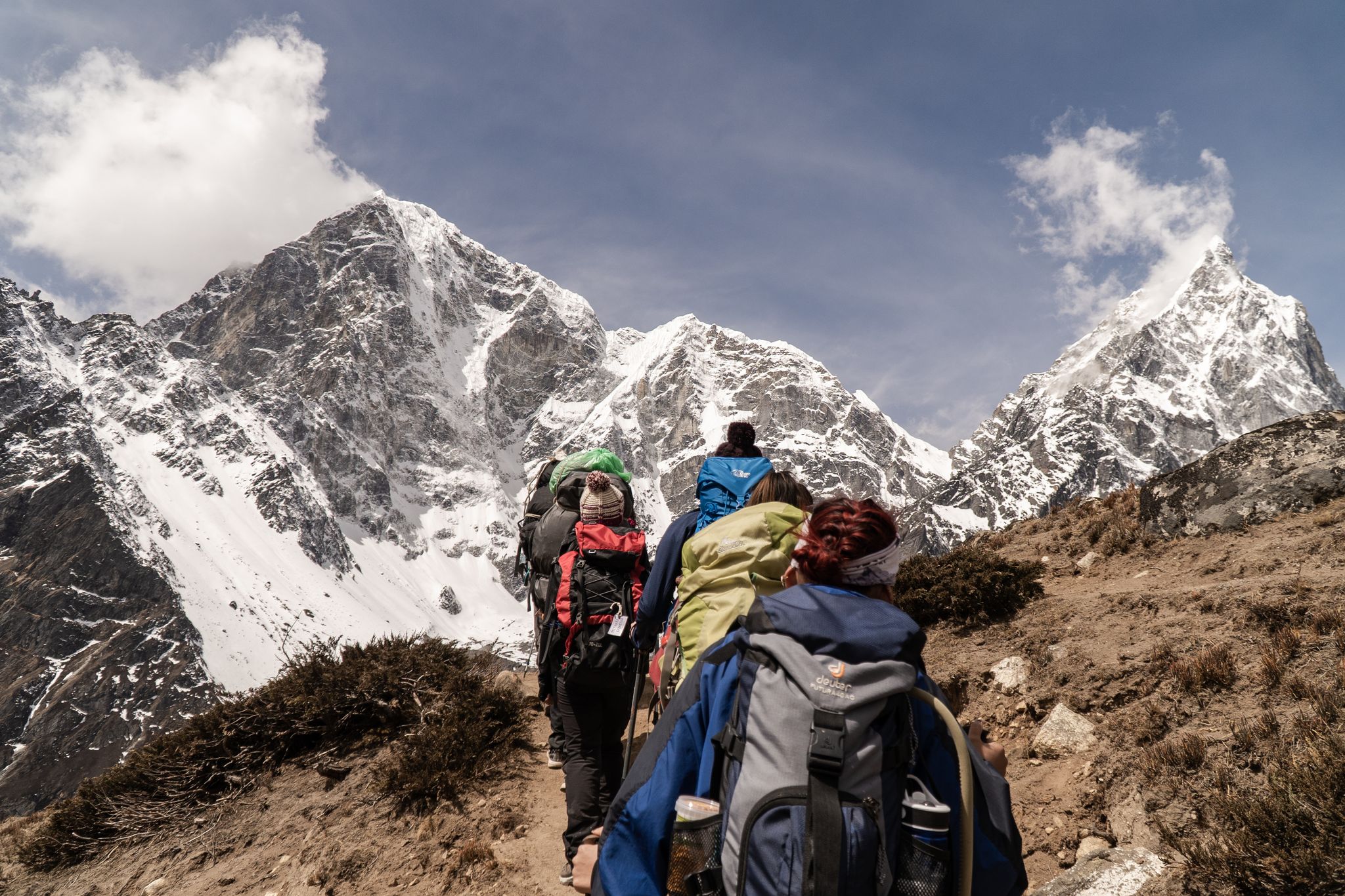
Eight of the world's fourteen 8,000-metre peaks stand in Nepal, and between them runs a web of village paths that traders and pilgrims walked long before anyone called it trekking. Trekking in Nepal means following those paths lodge to lodge with a daypack, sleeping in family-run teahouses and refuelling on dal bhat, on routes that last anywhere from four days to four weeks. This guide covers the whole system: the regions and how they differ, 14 treks compared by days and altitude, permits and the guide rule, seasons, costs, and staying well at altitude. Each trek it names has its own day-by-day guide on this site.
How trekking in Nepal works
Almost every popular trek in Nepal is a teahouse trek. Lodges sit every one to three hours along the main routes, so a normal day is five or six hours of walking, arrival by mid-afternoon, a twin room for a few dollars, and dinner around the dining-room stove. Nobody carries a tent. You carry water and layers; a porter, if you hire one, carries the duffel, usually splitting a load between two trekkers. The tea house trekking guide covers the rooms and the unwritten rules.
None of the classic routes are technical. They are footpaths and stone staircases joined by suspension bridges, with a glacier or a scree slope on a few high passes. What makes a trek hard is altitude and repetition: day after day of climbing, with a little less oxygen each night.
Camping treks survive where lodges are thin, mainly in Dolpo and the restricted side valleys. They cost several times more and need a crew; tea house vs camping sets out when that trade is worth making.
Nepal's trekking regions
| Region | Gateway | Best-known treks | What it's like |
|---|---|---|---|
| Everest (Khumbu) | Flight to Lukla (from Ramechhap in peak months) | Base Camp, Gokyo, Three Passes | Sherpa villages and the highest trails; busiest in October |
| Annapurna | Pokhara, then jeep to the trailhead | Annapurna Circuit, ABC, Poon Hill, Mardi Himal | Easiest logistics and every trek length |
| Langtang | Road from Kathmandu (Syabrubesi or Dhunche) | Langtang Valley, Gosaikunda | Big mountains within a day's drive of Kathmandu, no flight |
| Manaslu | Road via Arughat to Machha Khola | Manaslu Circuit | Restricted area: agency and guide required, far quieter than Annapurna |
| Mustang | Jomsom, by flight or road from Pokhara | Upper Mustang | Rain-shadow desert and walled Lo Manthang; permit USD 50 a day |
| Kanchenjunga | Flight to Bhadrapur, long drive to Taplejung | North and south base camps | Restricted, and three weeks or more |
| Dolpo | Flight to Juphal via Nepalgunj | Phoksundo Lake, Upper Dolpo | Partly restricted, with some camping |
| Far west | Flight to Talcha or Jumla via Nepalgunj | Rara Lake | Pine forest and Nepal's largest lake, very few foreigners |
Most first trips go to Everest or Annapurna. Everest has the name and the highest walking; the Everest region guide covers the villages you'll sleep in. Annapurna has the shortest transfers and the widest choice, from a four-day sunrise walk to a two-week circuit, all reached from Pokhara (the Annapurna region guide is the overview). Langtang is the one to pick when you want big mountains without a domestic flight. The far-east and far-west regions are for second and third trips, when the logistics are part of the appeal.
The treks compared
Days count walking from the trailhead. Add two or three for Kathmandu and the transfer to the start, plus one or two buffer days on any route that depends on a mountain flight.
| Trek | Region | Walking days | High point | Difficulty |
|---|---|---|---|---|
| Poon Hill | Annapurna | 4-5 | 3,210 m | Easy |
| Mardi Himal | Annapurna | 4-5 | ~4,500 m | Moderate |
| Gosaikunda | Langtang | 4-6 | 4,380 m | Moderate |
| Rara Lake from Jumla | Far west | 5-7 | ~3,700 m (Murma Top) | Moderate |
| Langtang Valley | Langtang | 7-10 | 3,870 m (sleeping) | Moderate |
| Annapurna Base Camp | Annapurna | 7-12 | 4,130 m | Moderate |
| Upper Mustang | Mustang | 10-14 | ~4,200 m | Moderate |
| Gokyo Lakes | Everest | 11-12 | 5,357 m (Gokyo Ri) | Strenuous |
| Everest Base Camp | Everest | 12 | 5,545 m (Kala Patthar) | Strenuous |
| Annapurna Circuit | Annapurna | 10-14 | 5,416 m (Thorong La) | Strenuous |
| Manaslu Circuit | Manaslu | 12-14 | ~5,100 m (Larke La) | Strenuous |
| EBC and Gokyo via Cho La | Everest | 16 | 5,545 m | Very strenuous |
| Three Passes | Everest | 18-21 | 5,545 m | Very strenuous |
| Kanchenjunga North Base Camp | Kanchenjunga | 20-23 | ~5,140 m (Pangpema) | Very strenuous |
The grades are about altitude and length more than terrain. Langtang's optional climbs (Kyanjin Ri at about 4,770 m, Tserko Ri at about 4,985 m) push it toward strenuous if you take them, and Gosaikunda gains height fast enough that it catches out people who expected an easy week.
Choosing your trek
Start with the days you actually have. With only a day or two, skip trekking and take one of the day hikes near Kathmandu and Pokhara. With a week, walk from Pokhara: Poon Hill if you want comfort and a sunrise, Mardi Himal if you want a ridge and fewer people. With ten days to two weeks, the choice is Annapurna Base Camp, Langtang, or Everest Base Camp, and the deciding question is whether you mind flying to Lukla. With two to three weeks you can take on the Annapurna Circuit, Manaslu, or the Everest loops over the passes.
Then be honest about altitude. On a first Himalayan trek, stay under about 4,500 m unless you have hiked at altitude before; trekking in Nepal for beginners narrows the field to the four routes that suit a first-timer. Fitness helps, but it doesn't predict who gets altitude sickness.
Crowds are the last filter. Base Camp and Annapurna Base Camp are busy in October, with lodges booked ahead and queues at the viewpoints; Manaslu, Mardi, and the Gokyo valley are much quieter in the same weeks. If you are torn between the two famous long ones, EBC vs the Annapurna Circuit compares them side by side. Our pick for a single two-week trip is still Everest Base Camp. People complain about the flight and the cold, and almost nobody regrets going.
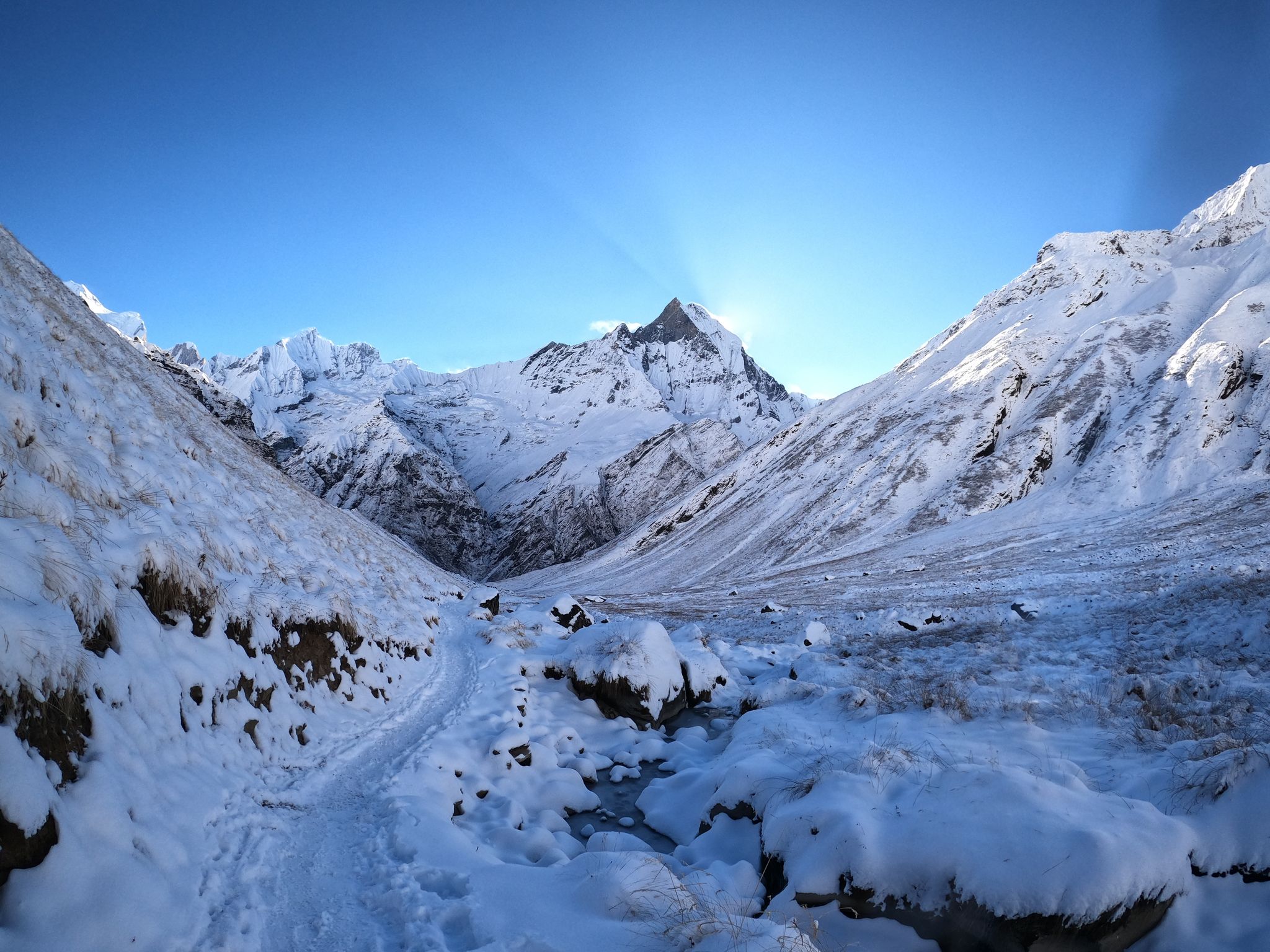
 High in the Modi Khola valley on the Annapurna side: the kind of open, non-technical trail most Nepal treks follow
Permits for trekking in Nepal
Any one trek needs two or three pieces of paper, not a stack. The building blocks:
- Protected-area entry fee. Almost every route crosses a national park or conservation area (Sagarmatha, Annapurna, Langtang, Manaslu), each around NPR 3,000 per visit for foreigners.
- TIMS card. About NPR 2,000, required in the Annapurna and Langtang regions among others, issued in Kathmandu or Pokhara.
- Khumbu municipality fee. The Everest region's local fee (NPR 3,000 for most foreigners) replaces TIMS there and is paid at Lukla or Monjo.
- Restricted-area permit. Upper Mustang (USD 50 per person per day, no minimum), Manaslu (a weekly fee that rises in autumn), Kanchenjunga, Upper Dolpo, and Nar Phu. Only a registered agency can issue one, and a licensed guide is mandatory. Since March 2026 a single trekker can get one; the old two-person minimum is gone.
The trekking permits guide has the route-by-route list and where to buy each, and it is the page we update first when a fee moves. Carry the permits somewhere dry and reachable. Checkpoints at Monjo, Birethanti, Besisahar, and Dhunche stamp every trekker through.
Guides, porters, and the rules
Since April 2023, Nepal's rules have required foreign trekkers to hire a licensed guide on trails inside national parks and conservation areas. The Everest region is the main holdout: the Khumbu municipality still sells its permit to independent walkers. Elsewhere enforcement has been uneven, firm at some checkpoints and loose at others, and the rule has been debated every season since, so confirm the position for your route when you book rather than relying on a forum post from last year.
A licensed guide costs around USD 25-35 a day and a porter USD 18-25, with their food and beds paid by you. The tip on the last evening is usually USD 5-10 per day for a guide and 3-7 for a porter (tipping in Nepal has the etiquette). Booking through an agency costs more than hiring a guide directly, but the agency handles the permits and is the office you call when the Lukla flight collapses. The guide vs no guide breakdown weighs the options, including porter-only and guide-porter combinations.
Is solo trekking allowed in Nepal? The mandatory guide rule and permits explained (The Men Who Stare At Mountains)A guide's value isn't only legal. On the high routes the guide is the person who notices your headache getting worse, and who turns you around when you won't turn yourself around.
When to go trekking in Nepal
Autumn wins. From early October to late November the monsoon has cleared the air and the views are as sharp as they get all year. It is also when every popular trail is at its busiest. October has the warmest days and the biggest crowds; November is colder at night and a little calmer.
Spring, from March to May, is the second season. The rhododendron forests flower on the Annapurna and Langtang trails while Base Camp fills with expedition tents, though afternoon cloud and haze soften the views. Some trekkers prefer it; spring vs autumn lays out the trade.
Winter (December to February) is cold and clear. Lower treks like Poon Hill and Mardi Himal work well, and the high passes can close for days after snow; Nepal in winter has a trek-by-trek verdict. The June to September monsoon brings rain most afternoons, leeches below 3,000 m, landslides on the roads, and cancelled Lukla flights. Upper Mustang sits in the rain shadow and is the classic monsoon exception. The full calendar is in the best time to visit Nepal.
What a trek costs
Teahouse trekking is cheap per day and expensive in the extras. On the trail, a room costs USD 3-8 (lodges expect you to eat where you sleep) and each dish USD 4-8, climbing with every few hundred metres because porters carry the food up. Hot showers and charging cost a few dollars each, Wi-Fi too. Most independent trekkers spend USD 25-45 a day, more in the upper Khumbu.
Typical totals for an independent trekker, before a guide or porter:
- Poon Hill (4-5 days): about USD 200-400
- Annapurna Base Camp (7-10 days): about USD 500-900
- Annapurna Circuit (12 days): about USD 700-1,200
- Everest Base Camp (12 days plus flights): about USD 1,100-1,500, with the return Lukla flight alone around USD 400-450
Add a guide at USD 25-35 a day and the gap between independent and supported trips closes faster than people expect, especially when two or three trekkers share one guide. The EBC cost breakdown shows every line for the most expensive common trek. Above the roadheads it is cash only, in rupees, and the ATM in Namche is the last one on the Everest side and an unreliable one; take everything you'll need from Kathmandu or Pokhara.
Altitude: the real difficulty
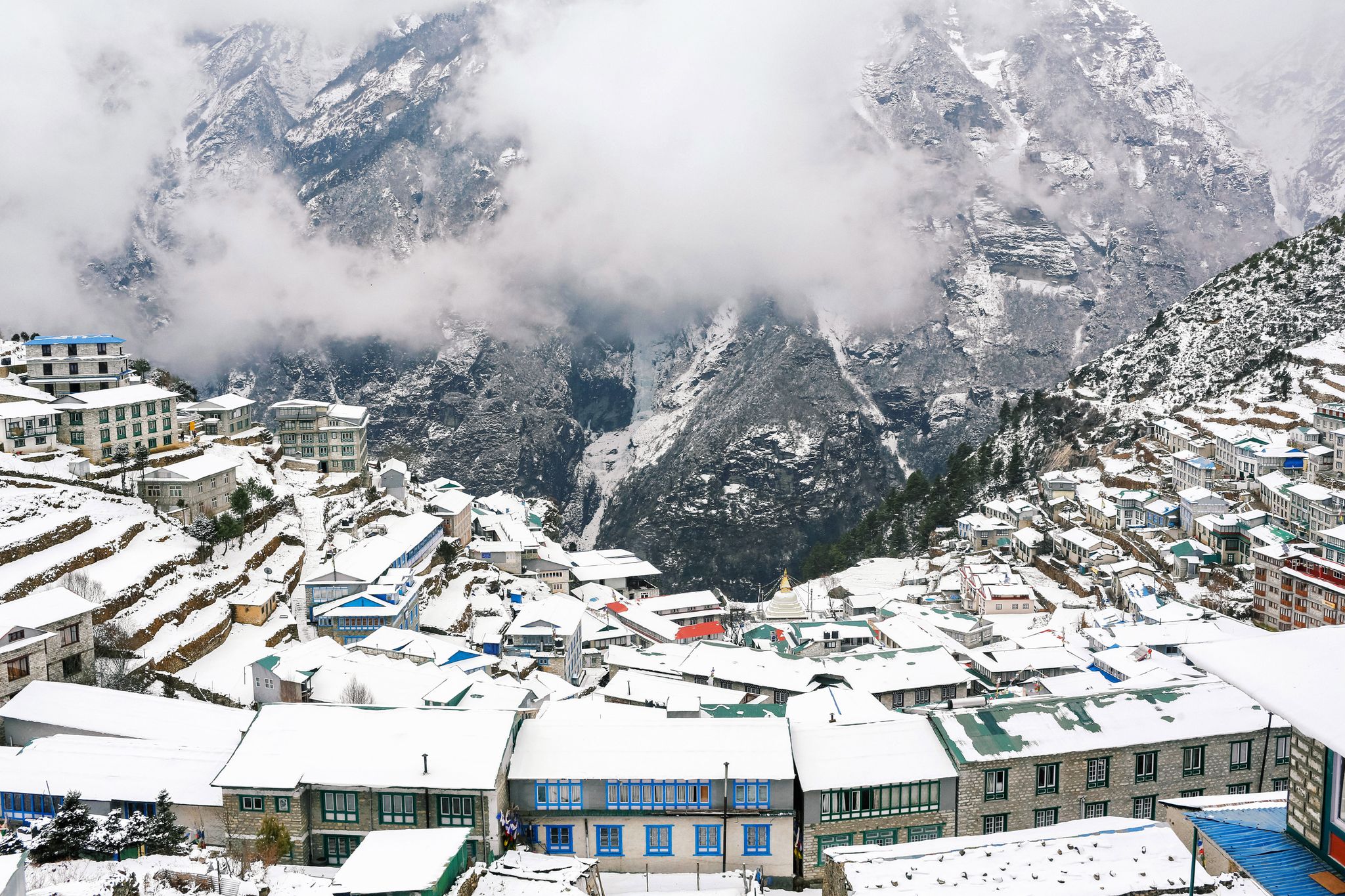
Altitude sickness is the main reason trekkers turn back in Nepal, and it has nothing to do with fitness. Above about 3,000 m, raise your sleeping altitude by no more than 300-500 m a day, take the scheduled acclimatisation days, and climb higher in the afternoon than the place you sleep. Every good itinerary on this site is built that way, which is why the Everest routes spend two nights in Namche and again in Dingboche.
 Ama Dablam from the hillside above Dingboche, a standard acclimatisation hike on the Everest trail
Headache and nausea are the early signs, often after a bad night. Breathlessness at rest, a wet cough, confusion, or stumbling are emergencies, and the treatment for all of them is the same: go down. Diamox (acetazolamide) helps many people acclimatise faster; talk to a travel doctor about it before you leave. The altitude sickness guide covers the symptoms and when to call a helicopter.
Life on the trail
Days start early. Breakfast is porridge or Tibetan bread with eggs at about seven, walking by eight, lunch at a teahouse on the way, and arrival by two or three before the afternoon cloud comes in. Dinner is dal bhat for most people because the refills are free and it keeps you going, as the Nepal trekking food guide explains. Lights out by nine.
Treat all water: a filter bottle or purification tablets save money and plastic. Bring a power bank, because charging costs more the higher you go. The Nepal packing list covers the layering for a route that starts in shorts and ends in a down jacket. And train for back-to-back days on hills rather than for single long ones; the EBC training plan works for any of the longer routes.
Getting to the trailheads
Everest treks start with the short, famous flight to Lukla. In the autumn and spring peaks most departures are moved to Ramechhap (Manthali), a four-to-five-hour pre-dawn drive from Kathmandu, and weather holds of a day or more are routine. Annapurna treks start with a bus or a 25-minute flight to Pokhara, then a jeep to Nayapul, Ulleri, Kande, or Besisahar depending on the route. Langtang and Manaslu are reached by road from Kathmandu on long, rough drives. Getting around Nepal compares the options.
Two regions need a current check this season. The August 2026 flood on the Bhote Koshi damaged the road into Syabrubesi; a Bailey bridge at Betrawati restored the road link on October 11, but Syabrubesi still waits on its own bridge, so Langtang groups go in via Dhunche and Thulo Syabru. On Manaslu, a flash flood on the Budhi Gandaki on October 11 badly damaged the lower trail between Machha Khola and Jagat and took out several bridges, and the Manaslu Conservation Area Project told trekkers to suspend trips into the Tsum Valley. Don't plan a Manaslu start this autumn until the project or your agency confirms the lower trail has reopened. The Rasuwa flood update and the autumn 2026 trekking updates carry the latest.
Safety and insurance
Buy travel insurance that names trekking and covers your route's high point (6,000 m covers every trek in the table) and helicopter evacuation. Standard policies often stop at 3,000 or 4,000 m; the insurance guide explains what to check. Rescue scams, where a helicopter is pushed on a trekker who didn't need one, were the subject of arrests in 2026, and the defences are a reputable agency and honest reporting of symptoms (travel scams in Nepal). Women trekking alone will find route and guide advice in the solo female travel guide.
The trails themselves are safe and well used. The serious risks are altitude and the road journeys at either end.
Pick a route from the table and open its guide for the day-by-day plan and the route table with altitudes; every trek guide and region page on the site is also collected on the trekking hub. The first one decides whether there's a second, so pick it with altitude in mind.