Every autumn season opens with a stack of small rule changes, price adjustments, and trail notes that decide whether your plan works as booked. Going into autumn 2026 the stack is bigger than usual - a major permit reform, a scheduled airport squeeze, and flood damage in two regions. Each item below carries the same caveat: verify the current status when you book, because several of these are moving targets.
Upper Mustang: the $500 wall came down
The headline reform: Upper Mustang's restricted-area permit switched from the old USD 500 flat fee for 10 days to USD 50 per person per day with no minimum stay. A four-day jeep visit to Lo Manthang now costs USD 200 in permit fees; the classic 10-14 day trek costs what it always did. The change opens the walled kingdom to short-stay travelers - including the growing pilgrimage traffic continuing north from Muktinath - without discounting the long trek. Our full Upper Mustang guide covers the region itself.
Restricted areas: solo is now possible (guide still mandatory)
Quieter but broader: in March 2026, the Department of Immigration scrapped the minimum-two-trekker rule for restricted-area permits across Nepal - Upper Mustang, Manaslu, Nar-Phu, Kanchenjunga, and the rest. Solo travelers no longer need an agency to pair them with a stranger or to buy a "ghost permit" for an imaginary companion. The part that has not changed: a licensed guide through a registered agency remains compulsory in every restricted area. Solo means you and your guide; genuinely alone remains off the table in these regions.
Kathmandu airport works: the Lukla squeeze
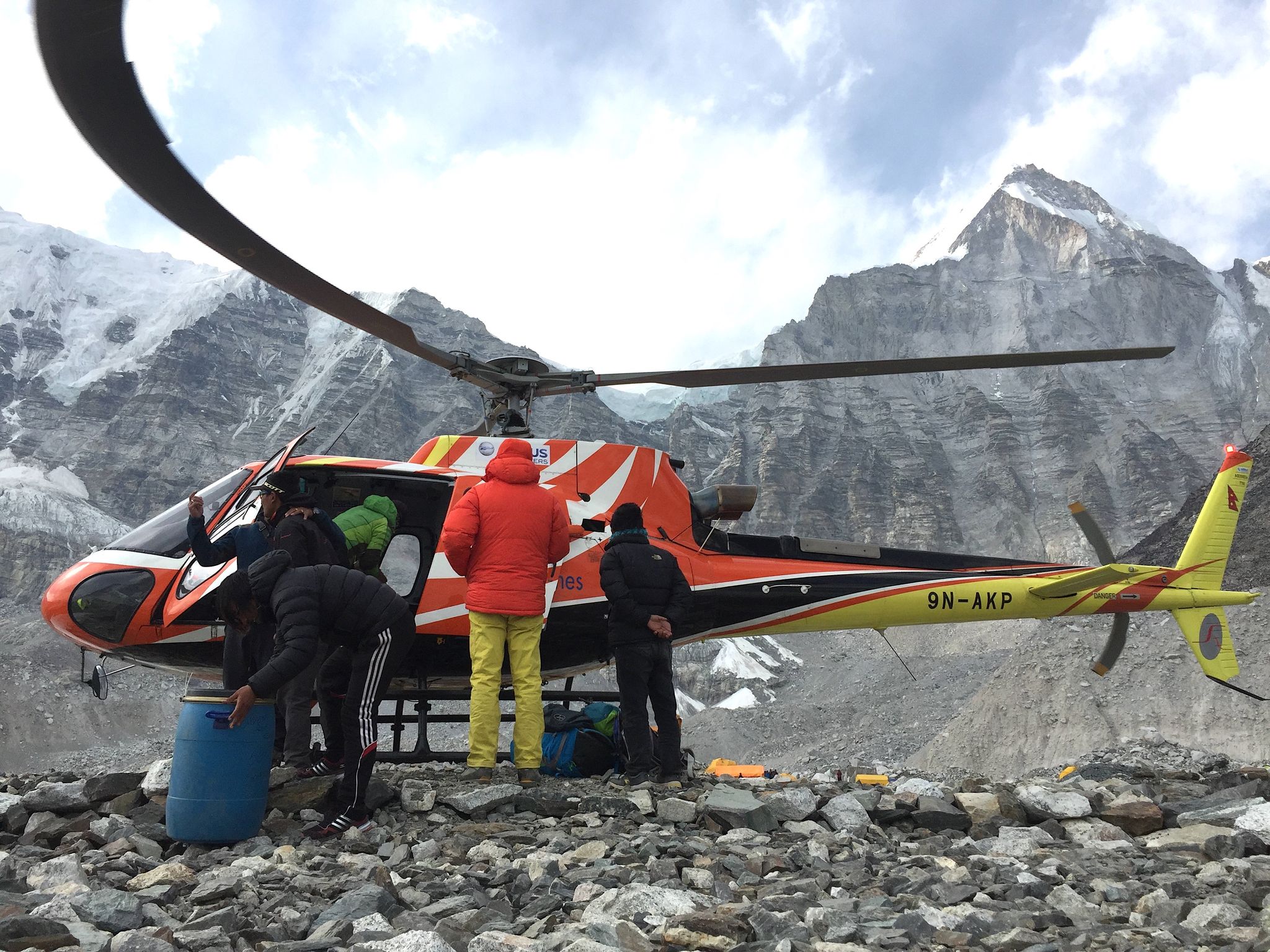
Runway maintenance at Tribhuvan is expected to compress domestic schedules through the October-November peak - and the Kathmandu-Lukla route, already the most weather-fragile link in Nepali aviation, absorbs schedule pressure worst. Recent peak seasons have already moved many Lukla departures to Ramechhap/Manthali, a 4-5 hour pre-dawn drive from Kathmandu; expect that pattern to hold or intensify, and plan the classic defences: book the flight leg through your agency (they get rebooking priority in practice), keep two buffer days before your international flight, and read the EBC itinerary with those buffers already drawn in.
Trail advisories: Langtang corridor and the Larke Pass
The August 26 Bhote Koshi flood devastated Rasuwa district - Syabrubesi and Timure worst of all - and with it the road access for the Langtang Valley and Gosaikunda treks. Reopening timelines were unclear at the time of writing; our travel update covers the situation and the substitution logic for autumn bookings.
Separately, TAAN advised trekkers off the Dharapani-Larke Pass section of the Manaslu Circuit after early-August flood damage destroyed trail sections and a suspension bridge near Tilche. Repairs may well be complete before the season peaks - Nepal rebuilds trail fast when the season depends on it - but confirm with your agency before locking a September or early-October Manaslu departure.
Update, September 23: limited road access into Rasuwa is back. The Kathmandu-Dhunche road is open but rough, Syabrubesi's lower town and the Timure stretch remain wrecked, and agencies are routing Langtang groups Dhunche to Thulo Syabru to Lama Hotel, where the trail was never flooded; most are still steering clients toward late-October or later departures. By September 27, operators were running treks on that jeep route while the Syabrubesi road stayed closed, and as of early October it still was, with Bailey bridges planned at Syabrubesi but no reopening date. On Manaslu, a second flash flood on September 6 in the Therang Khola near Namrung swept away two bridges, including the Budhi Gandaki suspension bridge, and the Gorkha district administration briefly suspended trekking on the circuit; a temporary wooden bridge and a detour trail restored movement within days. Treat both corridors as open-with-conditions and confirm the state of the crossings with your agency the week you go. Update, October 12: the army was finishing a 74 m Bailey bridge at Betrawati on the road to Dhunche on October 9, and the Department of Roads expected regular transport to reach Dhunche within days; Syabrubesi still waits on a separate Bailey bridge over the Bhote Koshi. On the Manaslu exit, the Besisahar-Chame road reopened on October 3. The flood update has the detail.
Update, October 13: a new Manaslu flood. Early on October 11 a flash flood on the Budhi Gandaki, possibly from a landslide dam near Chumchet, swept away houses at Jagat Bagar, Salleri, and Ghattikhola and destroyed the Nyakchet-Sirdibas and Machhakhola-Kerauja suspension bridges, the Soti road bridge, and the Arughat bridge. More than 100 foreign trekkers were stranded at Jagat and about 97 were flown out by helicopter; trekkers higher up at Namrung, Samagaun, and the Larke area were reported safe. The Manaslu Conservation Area Project has told trekkers to suspend journeys into the Tsum Valley and says the lower routes from Machha Khola to Jagat are severely damaged, with reopening expected to take time. If you have a Manaslu or Tsum booking this autumn, talk to your agency now about switching regions. On the Langtang side the news is better: the Betrawati Bailey bridge opened on October 11, restoring the Nuwakot-Rasuwa road link.
The Everest, Annapurna, and Mustang regions came through the late monsoon undamaged, and their season preparations are normal.
 The unaffected majority: Everest, Annapurna, and Mustang enter autumn 2026 with trails in normal condition
Small print worth knowing
- Flights, two pieces of good news: flydubai's daily Dubai-Pokhara service began on September 23, 2026, the first scheduled international route into Pokhara's new airport, so Annapurna-bound travelers from Europe, the Gulf, or Australia can skip the Kathmandu transfer entirely (the route is new; verify schedules). And domestic fares fell roughly 15% in July after the Nepal Oil Corporation cut aviation fuel prices, trimming the Kathmandu-Pokhara and Lukla legs a little.
- Jomsom road: a September 26 landslide blocked the Beni-Jomsom road, the route to Muktinath and the Upper Mustang trailhead. It reopened on the evening of October 9, with some sections one-way only; check passenger bus and jeep services before you book, and treat the morning Pokhara-Jomsom flights as the fallback.
- Lukla flights from Manthali: Ramechhap (Manthali) to Lukla flights stepped up from about September 29, nine in a single day at one point, as the autumn diversion took hold. No official end date has been published; plan on the 4-5 hour pre-dawn drive from Kathmandu unless your agency confirms otherwise.
- Online permit portals: the e-permit and e-visa systems continue to have reliability problems, and the conservation-area portal adds a card-processing surcharge for individuals. The boring fix works: get permits through your agency at the counter rate, and treat visa-on-arrival as the dependable option (visa guide).
- Free trekking apps: rescue services keep reporting incidents traced to crowd-sourced map apps routing hikers onto abandoned trails. Use the apps for position, not route-finding; carry the paper map; and on a first Himalayan trek, the guide is the navigation system (teahouse trekking explained).
- Rescue-scam cleanup: Nepal's long-running fake-helicopter-rescue problem saw major arrests earlier in 2026. The traveler-side defences are unchanged - reputable agency, honest symptom reporting, insurance bought from home (the scam guide has the full picture).
- Manaslu paperwork: the permit stack for the circuit now runs to as many as six documents depending on route (restricted-area, MCAP, ACAP, local municipality fee, TIMS, Tsum Valley add-on). Agencies handle it; independent-minded trekkers should budget the admin time.
What hasn't changed
For orientation amid the updates, the stable parts of the system: the Everest region still runs on the Sagarmatha National Park permit plus the Khumbu municipality fee, bought on the way in, with no TIMS required there. The Annapurna region still wants ACAP plus TIMS, arranged in Kathmandu or Pokhara. Teahouse economics, the dal bhat logic, the October crowd patterns, and the acclimatisation arithmetic are all exactly as they were. And the perennial guide-requirement question - Nepal has moved back and forth in recent years on whether independent trekkers in the open regions need one - remains worth a fresh check at booking time, since enforcement has varied by season and region.
Your pre-departure checklist for this season
- Confirm your route is outside the affected corridors, or has confirmed repairs.
- Book Lukla legs through the agency and pad two buffer days.
- Get permits at the counter through the agency; skip the flaky portals.
- Check your insurance altitude ceiling against your route's high point.
- Re-verify the permit numbers above a week before you fly - this is the season of moving targets.
The season outlook
None of this changes the fundamentals: autumn 2026 bookings were tracking ahead of previous years before the floods, the October and November windows remain the best in the calendar, and the affected corridor - however severe locally - is one river system in a country of eight thousand trails. Book the buffers, verify the moving parts, and go.