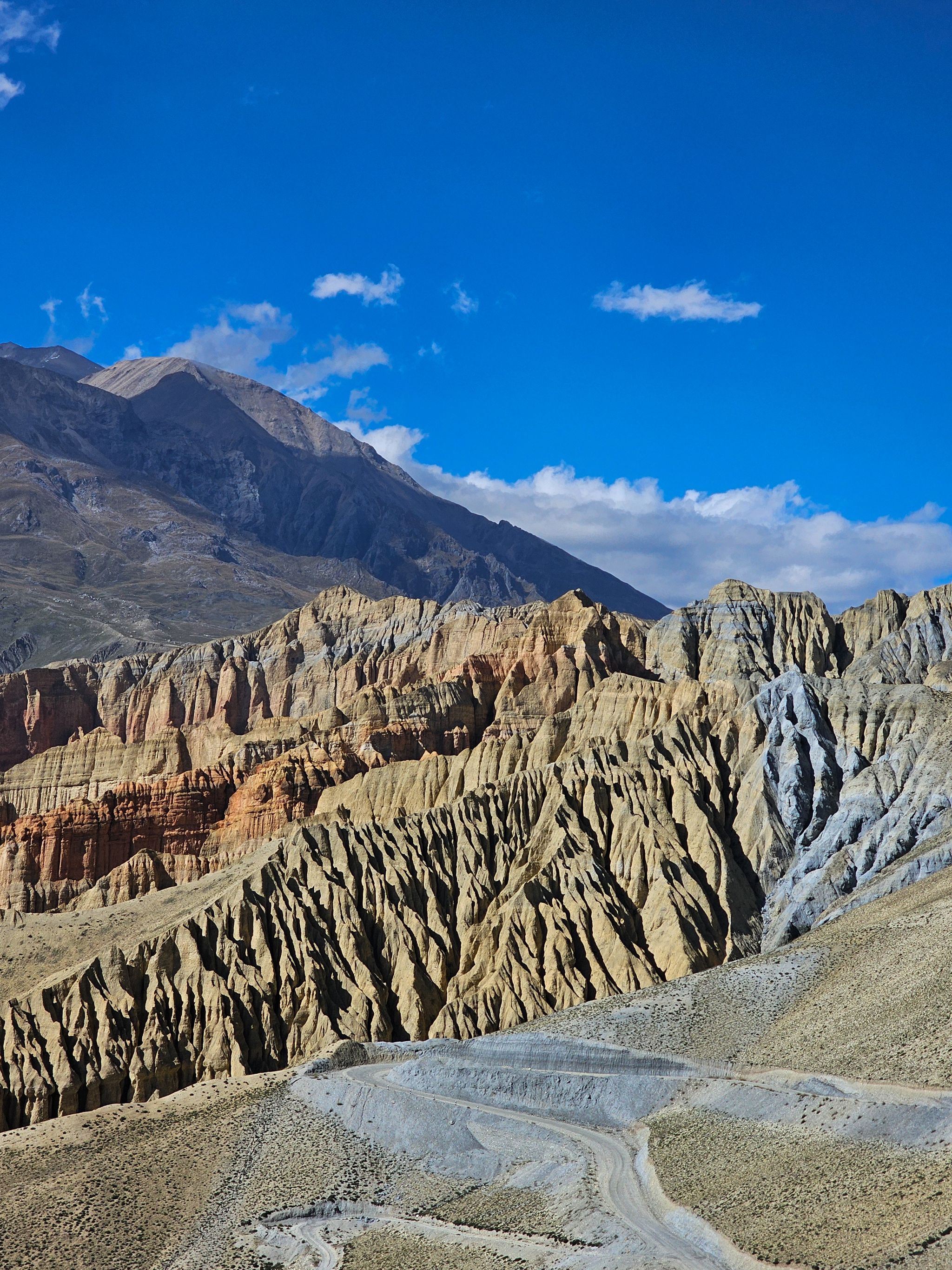
North of the Annapurna wall, Nepal stops looking like Nepal. The monsoon clouds break against the high peaks and never arrive; what lies beyond is high desert - eroded cliffs banded in red and grey, villages the colour of the earth they stand on, and a walled city that ruled itself into the twenty-first century. Upper Mustang is the country's most otherworldly corner, and its most protected: entry runs through a restricted-area permit that keeps the crowds out and the culture intact.
A kingdom, recently
Upper Mustang, the old Kingdom of Lo, was a Tibetan Buddhist state controlling the salt-trade corridor of the upper Kali Gandaki, semi-independent under Nepal since the 18th century and closed to foreigners entirely until 1992. Its kings reigned in Lo Manthang until 2008, when Nepal's new republic retired the title; the royal palace still stands inside the city walls, and the last king's family remains part of local life. That short history explains what makes the region singular: cut off by geography, politics, and altitude, it preserved a Tibetan Buddhist culture that the twentieth century erased almost everywhere else.
The permit: expensive on purpose (but newly flexible)
Entry beyond Kagbeni requires the restricted-area permit, and the rules have recently loosened in two ways worth knowing. The fee switched from the old USD 500-for-10-days flat rate to USD 50 per person per day with no minimum stay, counted from Kagbeni - so a 4-day jeep visit now costs USD 200 in permits rather than 500, while a full 10-day trek lands at the same 500 as before. And in March 2026 the Department of Immigration scrapped the minimum-two-trekker rule across Nepal's restricted areas, so solo travelers can now hold the permit - still only with a licensed guide through a registered agency, which remains mandatory for everyone. The ACAP permit applies on top. Verify current rules when booking; this is a region where they genuinely change. The price remains a filter, and it works: Upper Mustang receives a few thousand foreign visitors a year, not a few hundred thousand, and the fee funds conservation in one of Nepal's most fragile cultural landscapes.
Trek or jeep - the honest comparison
The classic trek runs 10-14 days from Jomsom or Kagbeni: up the Kali Gandaki's wind-scoured gorge through Chele, Syangboche, and Ghami, over passes lined with the longest mani wall in Nepal, to Lo Manthang, returning either the same way or via the eastern villages and Luri Gompa's cave monastery (the day-by-day itinerary maps the walking version in full). Days are moderate (the altitude stays between 2,800 and 4,000 m), but the wind and the barrenness give it a severity the green treks lack.
The road changed the equation: 4-5 day jeep tours from Jomsom to Lo Manthang now carry a growing share of visitors, including Indian pilgrims continuing from Muktinath. The honest trade: the jeep gets you to the walled city and the major gompas with limited time, and the trek earns the landscape - the silence between villages is most of what the permit buys. A middle path is increasingly standard: drive the road sections, walk the side valleys.
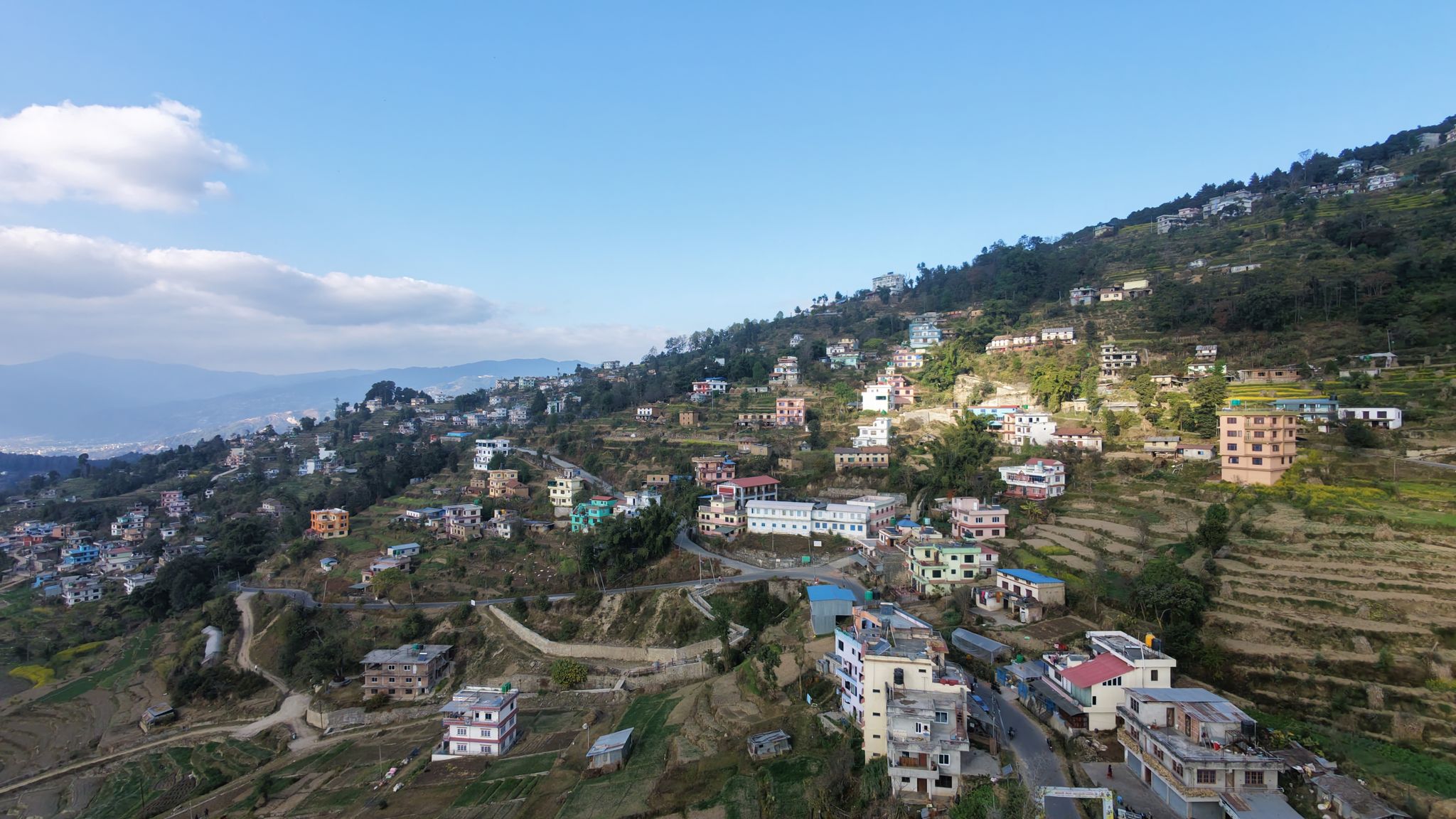
 Mustang's villages are built from the pale earth they stand on - lanes of stone, wind, and prayer flags
Lo Manthang and the sky caves
The destination deserves its reputation. Lo Manthang (3,840 m) is a genuinely medieval walled city: a few hundred whitewashed houses packed inside earthen ramparts, alleys threading between them, and three great 15th-century monasteries - Jampa, Thubchen, and Chodey - whose murals rank with the finest Tibetan Buddhist art surviving anywhere. Restoration teams have worked on them for decades; seeing them by butter-lamp light is the trip's core memory for most visitors.
North of the city, the Chhoser caves honeycomb the cliffs - multi-storey dwellings carved into rock faces, some inhabited within living memory, some holding shrines. Mustang's cliffs hold thousands of such caves, many unexcavated, some yielding manuscripts and murals that pushed the region's known history back millennia. Between them stand chortens banded in ochre and grey, and the eroded canyons that make the landscape look hand-sculpted.
The Tiji festival (usually May; lunar calendar, so verify the dates) is the year's cultural summit: three days of masked dances in Lo Manthang's square, re-enacting the myth of a deity defeating a demon that brought drought - Mustang's oldest concerns, water and wind, danced in costume.
The monsoon secret
Upper Mustang's practical superpower: it sits in the rain shadow. When the June-September monsoon soaks every classic trekking region, Mustang stays dry, blue-skied, and walkable - which has made it Nepal's premier monsoon trek and the answer to "I can only come in July." May-October is the season; the monsoon months that are wrong almost everywhere else are right here. Winter empties the region - many families migrate south, and the wind turns punishing.
Practicalities
- Getting there: Pokhara → Jomsom by morning flight (or the long road), then north through Kagbeni, where the restricted zone begins.
- Costs: the permit dominates the budget; add agency, guide, transport or porters, and simple lodges throughout. Nights are cold at every season - pack accordingly (packing list).
- Altitude: gentler than the high passes - but Lo Manthang sits at 3,840 m, and the usual acclimatisation rules apply, especially for jeep travelers gaining height fast.
- Connectivity and cash: patchy and none, respectively. Carry rupees from Pokhara (money guide).
- Culture: monasteries welcome respectful visitors - fees fund restoration; photography inside is often restricted, and clockwise remains the direction of everything.
Nepal has bigger mountains and easier treks. What Upper Mustang has is a door: pay the permit, cross at Kagbeni, and walk into a landscape and a culture that the rest of the century forgot to change. Few places anywhere reward the trouble so completely. And if the far-flung corners are your kind of Nepal, the country's other great remoteness, Rara Lake in the far west, makes the natural next trip.