Most travelers never make it east of Everest. That is exactly why Ilam works so well: Nepal's tea country runs along the far eastern hills near the Indian border, a region of plantation rows, mist, and small bazaar towns where you may be the only foreigner on the bus. If Darjeeling across the border built its name on tea tourism, Ilam is the quieter cousin that kept farming.
Why Ilam is worth the detour
Ilam has grown orthodox tea since the 1860s, when seeds and know-how crossed over from Darjeeling. Today the district produces some of Nepal's best-regarded leaf, much of it exported, and the hills between Fikkal and Ilam bazaar are covered in the pruned waist-high rows that make tea country so photogenic. Domestic tourists come in numbers for exactly this scenery. Foreign visitors remain rare, which keeps prices low and conversations genuine.
The draw is not one single sight. It is the combination: garden walks at Kanyam, a sunrise over Kanchenjunga from Antu Danda, a mossy pilgrimage lake at Mai Pokhari, and the everyday theatre of a hill bazaar going about its business.
Getting there
The practical route is a flight from Kathmandu to Bhadrapur in the southeastern plains (about 50 minutes, Buddha Air and Yeti Air both fly it), then a jeep or bus uphill. The road climbs from the Terai through Birtamod and Fikkal, and reaches Kanyam in roughly two hours, Ilam bazaar in about three. Shared jeeps leave Bhadrapur and Birtamod regularly; a private hire costs more but lets you stop at viewpoints. Verify current fares on arrival, since they shift with fuel prices.
A direct bus from Kathmandu exists for the committed: 14 or more hours on the highway. Most people fly one way at minimum. If you are already traveling the eastern Terai, Ilam pairs naturally with a stop in Janakpur further west along the plains.
Kanyam and Fikkal: the postcard gardens
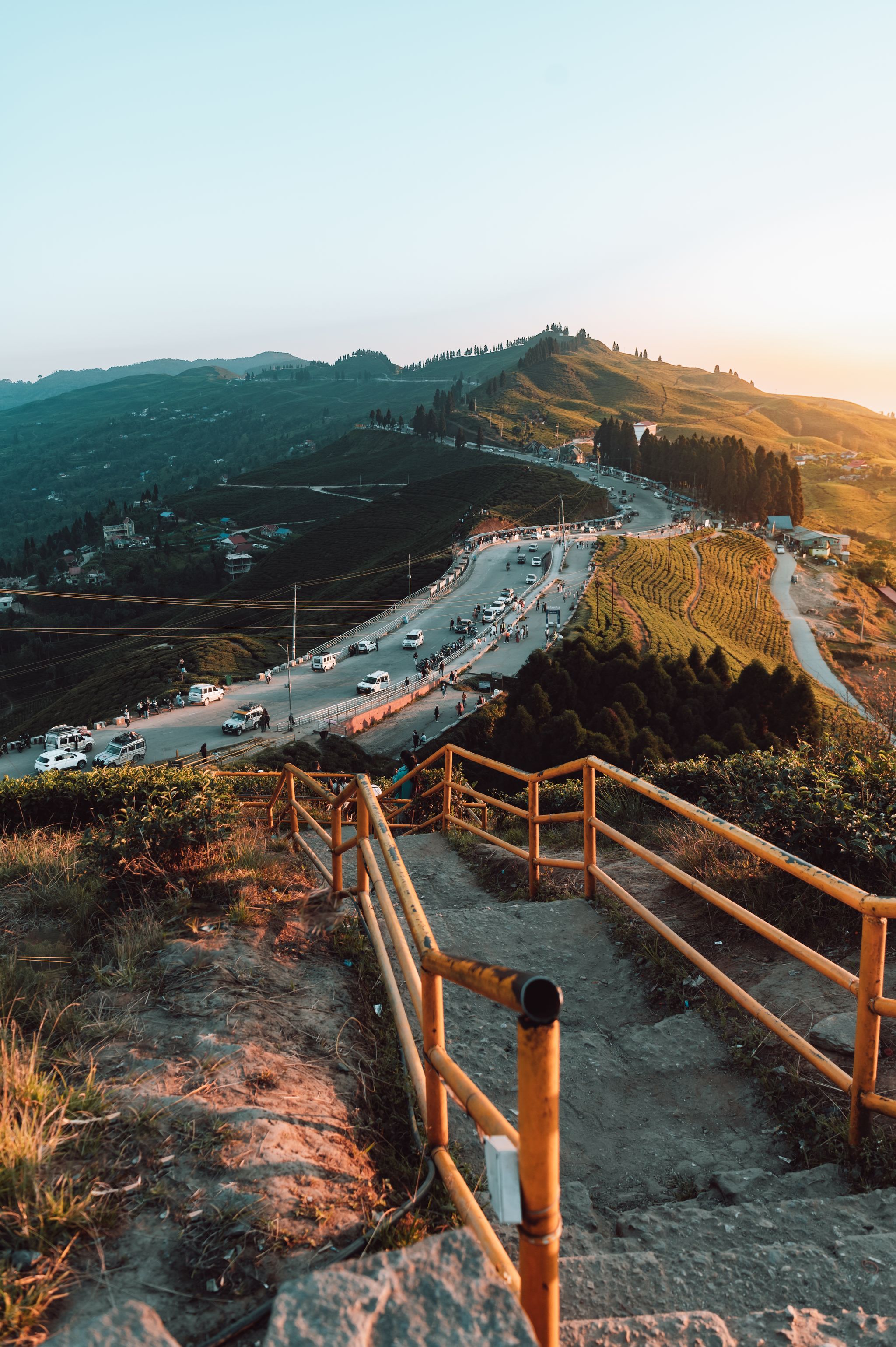
Kanyam is the most photographed tea garden in Nepal, and on winter weekends it is genuinely busy - Nepali families picnic, rent traditional dress for photos among the rows, and queue for sukuti and corn at the stalls along the road. Come on a weekday morning and you get the same scenery nearly alone: neat terraces rolling over the ridgelines, cypress windbreaks, pickers moving through the rows in season.
 Picking season in the eastern hills - Ilam's gardens are working farms first, scenery second
Fikkal, twenty minutes downhill, is the junction town where the Pashupatinagar road branches toward the Indian border. It is less pretty and more useful: a market town with hotels, jeep stands, and tea shops selling local leaf at farm-gate prices. Between the two, side roads wander into working estates where nobody minds a polite visitor walking the edges.
Some factories around Kanyam and Ilam bazaar accept visitors for a look at withering, rolling, and drying, particularly in picking season. Arrangements are informal: ask at your hotel a day ahead rather than expecting a ticket counter.
Antu Danda: sunrise over Kanchenjunga
An hour and a half east of Fikkal, Antu Danda (Shree Antu) is the region's sunrise ritual. From the viewpoint tower at roughly 2,000 m, the dawn light comes up over the Darjeeling hills and, on clear days, lands on Kanchenjunga - the third-highest mountain on Earth, filling the northern horizon. October through December gives the best odds of a clean view. Basic lodges and homestays cluster below the viewpoint so you can walk up in the dark rather than drive from Fikkal at 4 am; both approaches are common.
The Antu area is also tea country in its own right, with small-holder gardens supplying some well-regarded specialty producers. Mornings here, with mist pooling in the valleys below the ridges, are the best light of the whole trip.
Mai Pokhari and the quieter corners
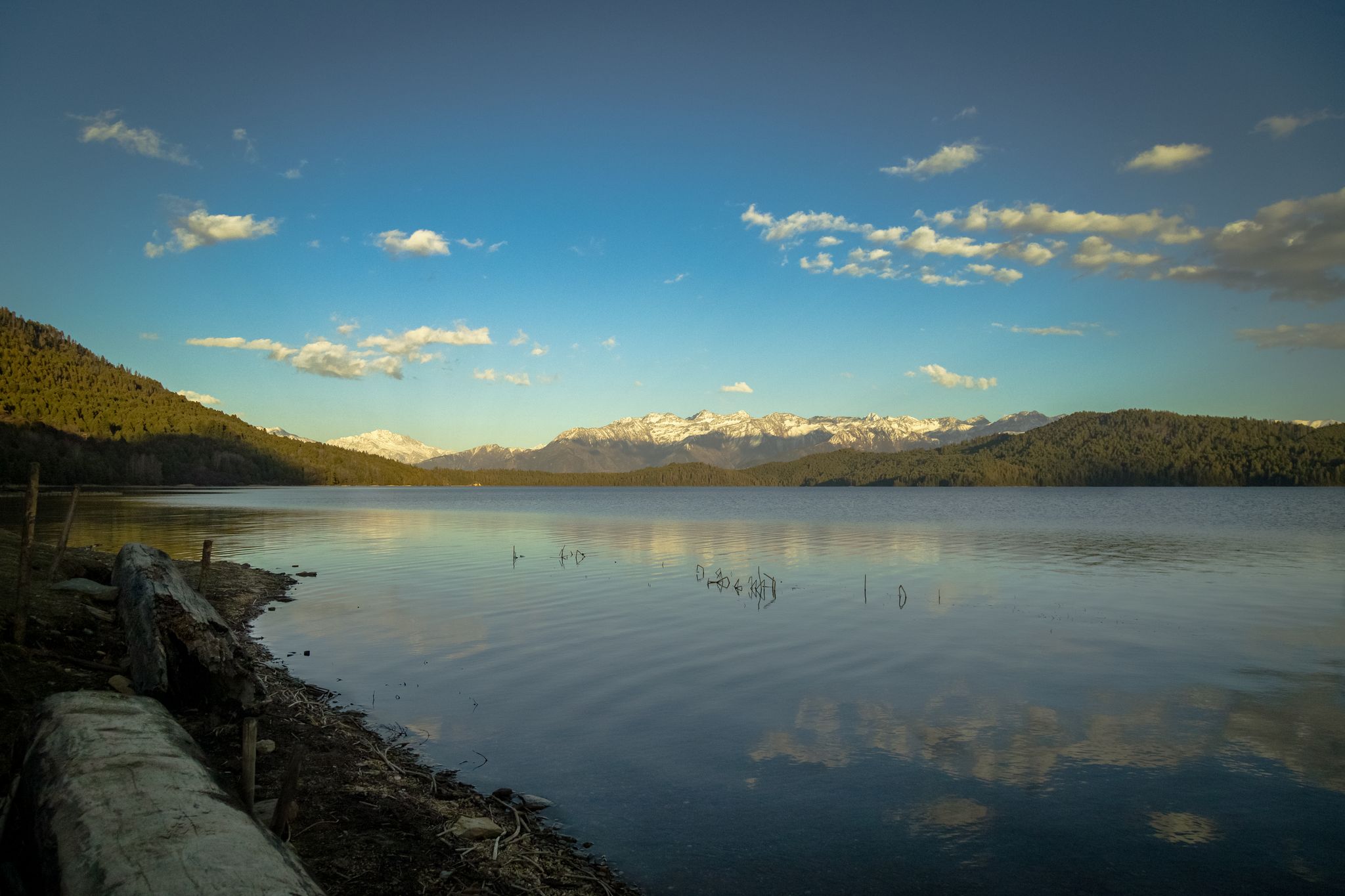
Mai Pokhari, about 12 km above Ilam bazaar, is a nine-cornered pond ringed by mossy forest, a Ramsar-listed wetland, and a pilgrimage site sacred to the goddess Bhagwati. The walk around the lake takes half an hour under old rhododendron and fir, and the birdlife is rich. It is a gentle half-day from the bazaar by jeep.
Ilam bazaar itself deserves an unhurried afternoon: a genuine hill market town with a view over its own tea garden, dairies selling churpi (the famously hard chewing cheese) and fresh ghee, and cafes pouring the local leaf. Nothing here is staged for tourists, which is the appeal.
Tasting and buying tea
Ilam produces orthodox tea: whole-leaf, hand-processed styles closer to Darjeeling than to the CTC dust in most Nepali kitchens. First flush (spring) is light and floral; autumn flush is rounder. Shops in Ilam bazaar, Fikkal, and Kanyam sell directly, and prices for good leaf are a fraction of what the same quality costs abroad. Smell before buying, ask which flush and which estate, and favour sealed recent stock over dusty display jars. For the wider story of how Nepal drinks its tea, see our tea and coffee culture guide.
When to go and where to stay
- October-December - clearest mountain views, green gardens, cool nights. Peak domestic season at weekends.
- March-April - picking season, mild weather, rhododendrons in the higher forest.
- June-September - monsoon. Deep green and atmospheric mist, but views vanish and roads suffer.
Accommodation is simple everywhere: budget and mid-range hotels in Ilam bazaar and Fikkal, garden-view hotels and homestays at Kanyam, and basic lodges at Antu Danda for the sunrise. Book ahead around Dashain and Tihar, when the region fills with domestic visitors. Homestays around Shree Antu, many run by Limbu families, add a cultural layer the hotels can't: expect farm food, local raksi, and early nights.
Practicalities
Carry cash; ATMs exist in Ilam bazaar and Fikkal but are best treated as backup. Mobile coverage is decent along the highway and patchier in the folds. Warm layers matter from November to February - these are 1,300-2,000 m hills, and unheated rooms get cold. Three days covers the core circuit (gardens, Antu sunrise, Mai Pokhari) at a comfortable pace; two is possible with a private jeep. Our 7-day itinerary shows how an eastern add-on fits a longer trip, and the packing list covers the layers question.
Ilam rewards the kind of traveler who liked Nepal's main circuit and wants to see the country running at its own pace. Go before everyone else figures that out.