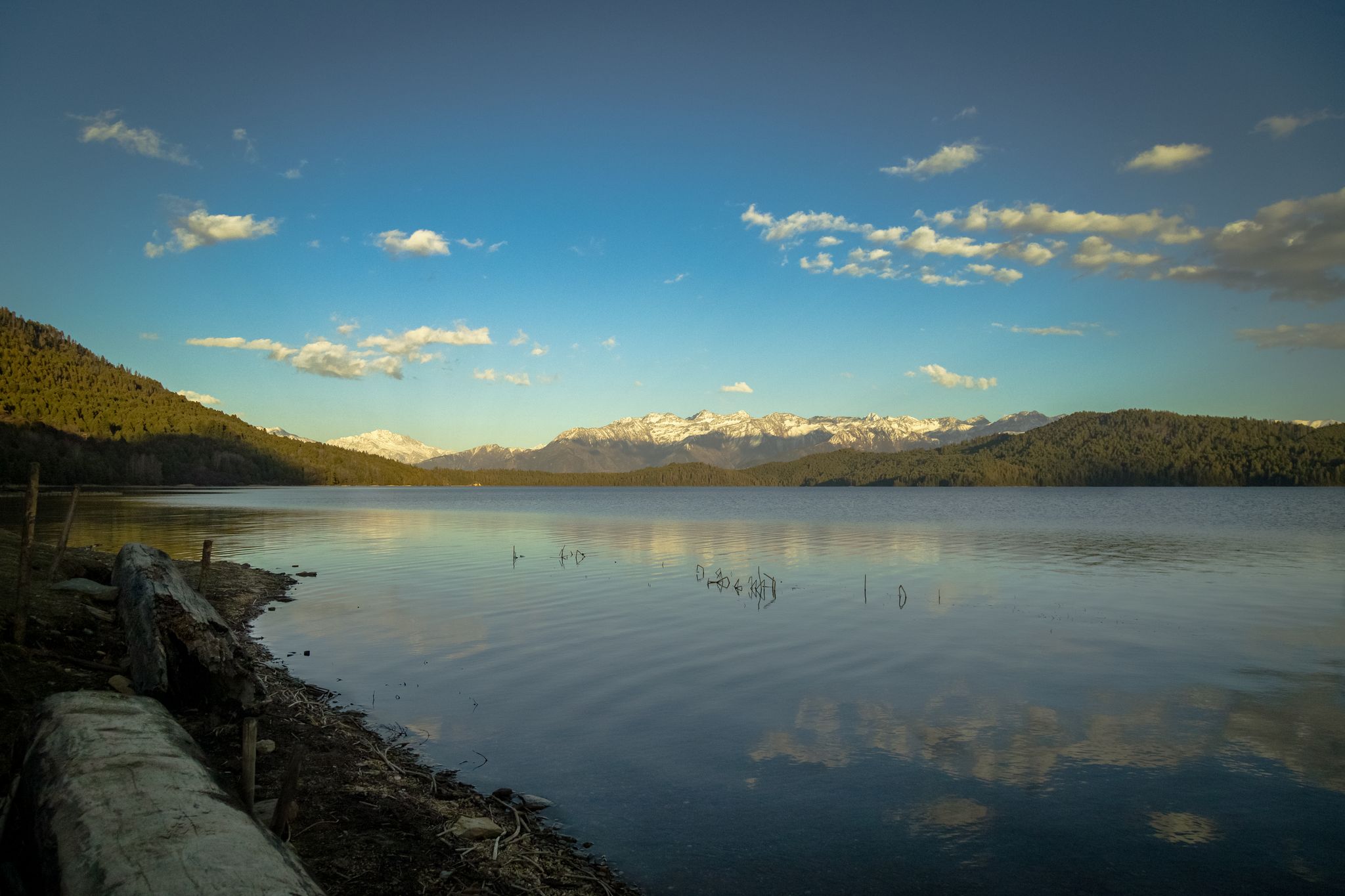
Ask well-traveled Nepalis for the most beautiful place in their country and a surprising number skip Everest entirely and name a lake most foreigners have never heard of. Rara, far out in the Karnali hills near the border with Humla and Jumla, is Nepal's largest lake and its best-kept open secret: a sheet of improbable blue at 2,990 m, ringed by pine forest and snow ridges, inside the country's smallest national park. Getting there takes effort. That effort is the entrance fee that keeps it empty.
What you find when you arrive
The lake is the whole show, and it is enough: about 10.8 square kilometres of water so blue it looks retouched, changing shade through the day, with the Chuchemara ridge behind it and forest running to the shoreline. Rara National Park protects the basin, and its scale stays human: a few army posts, a scatter of lodges near the Milichaur meadows, red panda and musk deer in the woods (seen rarely, tracked often), and the danphe, Nepal's rainbow-feathered national bird, common enough here that you will likely meet one on the trail.
The classic half-day is the climb to Murma Top (about 3,700 m), the viewpoint that produces every postcard: the whole lake below, ringed by forested ridges, with the snows of the Api-Saipal ranges on the western horizon. Boating on the lake itself is limited and low-key; walking the shoreline trail, a full circuit takes most of a day, is the better way to earn the views.
 Evenings at Milichaur: a handful of lodges and camps, woodsmoke, and a lake that empties of sound at dusk
Getting there: the honest logistics
Rara's remoteness is real, and the route decides the trip.
By air (the standard way): fly Kathmandu to Nepalgunj (about an hour), overnight there, then take the small morning flight to Talcha, the airstrip serving Mugu, roughly 25 minutes of proper mountain flying. From Talcha, the walk to the lake takes 2-3 hours on a good trail; porters and pack horses wait at the strip. Talcha flights are small aircraft, morning-only, weather-dependent, and heavily booked in October-November: reserve early, carry a buffer day on each side, and book through an agency that can rebook you when the schedule shuffles, which it will. Verify current schedules; carriers and frequencies change by season.
By trek (the classic way): the old approach walks in from Jumla over 2-3 days of ridge and forest trail through Sinja Valley country, the heartland of the old Khas kingdom whose dialect became the Nepali language. It is a genuine cultural corridor, simple homestays included, and turns Rara from a destination into a journey. The trekking in Nepal guide has Rara in its table of 14 treks. Jumla itself is reached by flight from Nepalgunj or a long drive.
By road (the hard way): roads now reach Mugu, and jeeps make it from Surkhet in one to two brutal days. It is the cheapest route and the roughest riding in this guide; treat it as an adventure in its own right and verify conditions, especially after monsoon.
Where to stay and what it costs
Lodges around the lake and at Milichaur are simple: wooden rooms, thick blankets, dal bhat kitchens, solar power that fades with the evening. A notch below the teahouse standard of the Annapurna trails, and part of the charm; book nothing in advance except October weekends, when domestic tourism fills the rooms. Costs on the ground are modest; the flights are the budget line that matters, and the Rara National Park entry permit (standard national-park fee, no restricted-area permit needed) is paid at the gate. Verify current fees. Carry cash from Nepalgunj; there is nothing resembling an ATM out here.
When to go
October-November is the season: stable flights, the lake at maximum blue, cold nights and bright days. April-May trades a little clarity for rhododendron bloom in the forests. Winter is beautiful and harsh, with snow around the basin and flights operating only in clear spells; at nearly 3,000 m, nights bite hard, as the December guide explains for high country generally. The monsoon makes Talcha flights a lottery and is best avoided. Whatever the month, remember the altitude is respectable: arriving by air from Nepalgunj's plains to nearly 3,000 m in a morning deserves an easy first day.
Visiting well
Rara's fragility is part of the deal. The park is small, its lodges run on carried-in supplies, and there is no waste system worth the name: pack out everything you pack in, refuse single-use plastic where you can (treat lake and stream water instead of buying bottles), and keep soap and washing away from the lake itself, which is a protected water body, not a bathing ghat. Firewood pressure on the surrounding forest is real, so wear the extra layer rather than asking for a bigger fire. And hire locally: porters at Talcha, homestays on the Jumla trail, boat and horse operators at the lake all put money directly into one of Nepal's poorest and most beautiful regions.
Why Rara now
Nepal's far west runs years behind the tourist economy of the Everest and Annapurna regions, and Rara is its flagship argument: the emptiness that vanished from the famous trails decades ago survives here intact. Travelers chasing the quieter Nepal, the same instinct that leads to Ilam's tea country or Upper Mustang, will find Rara the purest version of it. Go shoulder-season, pack layers (the packing list covers the cold-night kit), give the logistics their buffer days, and you will have Nepal's most beautiful lake very nearly to yourself. The Queen of Lakes has no crowds to manage yet. That is precisely the reason to go.