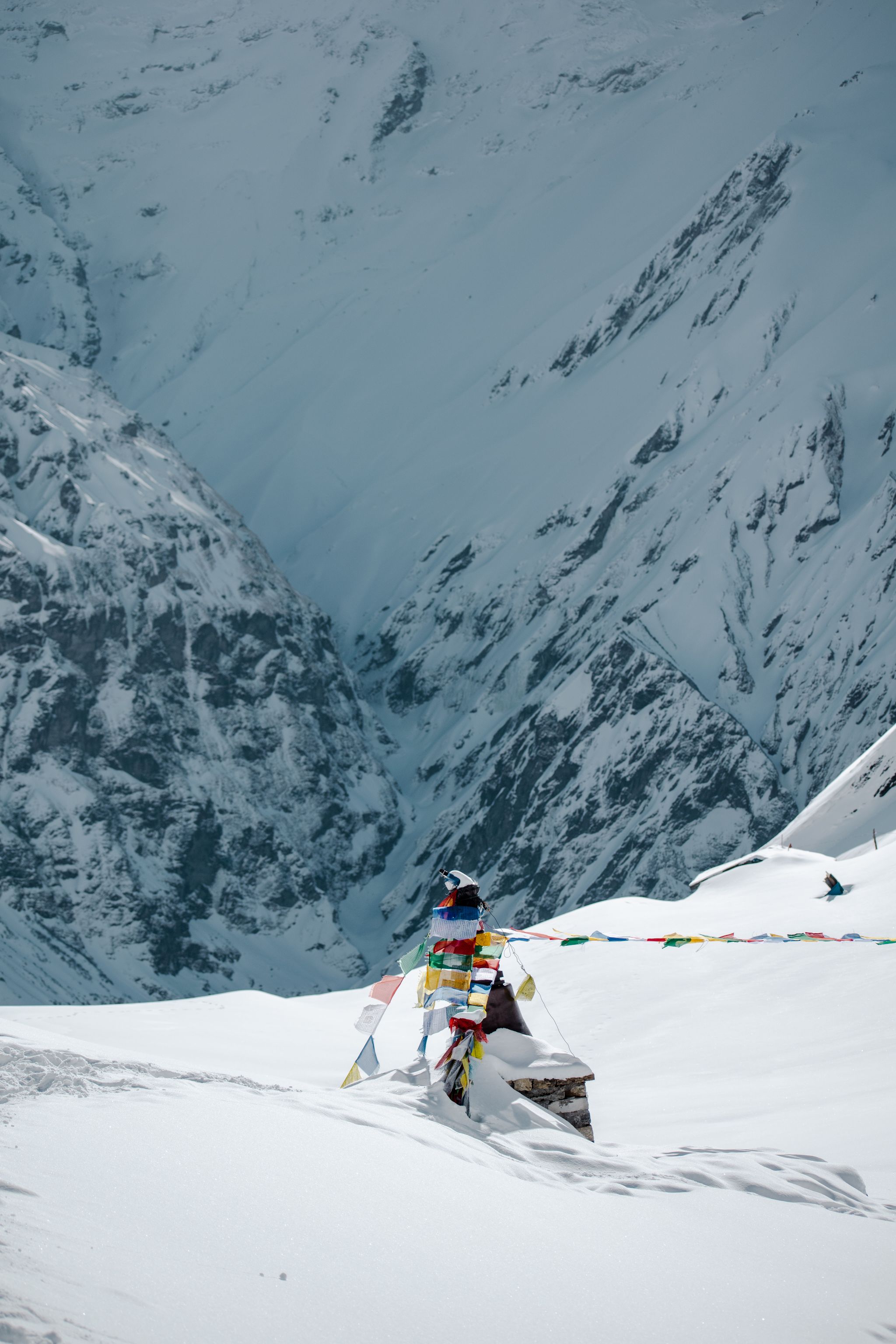
December is the month Nepal quietly rewards people who do their reading. The monsoon is a memory, the air is at its driest and clearest, and the autumn crowds have flown home, leaving trails and temple squares to those willing to pack a warmer bag. The mountains rarely look better; you just meet them in gloves.
Nepal weather in December: clarity with a price tag
Post-monsoon high pressure holds through December, delivering long runs of blue-sky days. Kathmandu manages spring-jacket afternoons around 17-19°C and cold nights near 2-5°C; morning fog is common, burning off by mid-morning, and unheated guesthouses mean evenings feel colder indoors than out. Pokhara is gentler by a few degrees, and the Annapurnas over Phewa Lake hold their winter sharpness for days at a stretch. Chitwan and the Terai stay mild by day, though foggy mornings can push safari starts later, and the year's densest fog occasionally delays flights and highway travel in the plains.
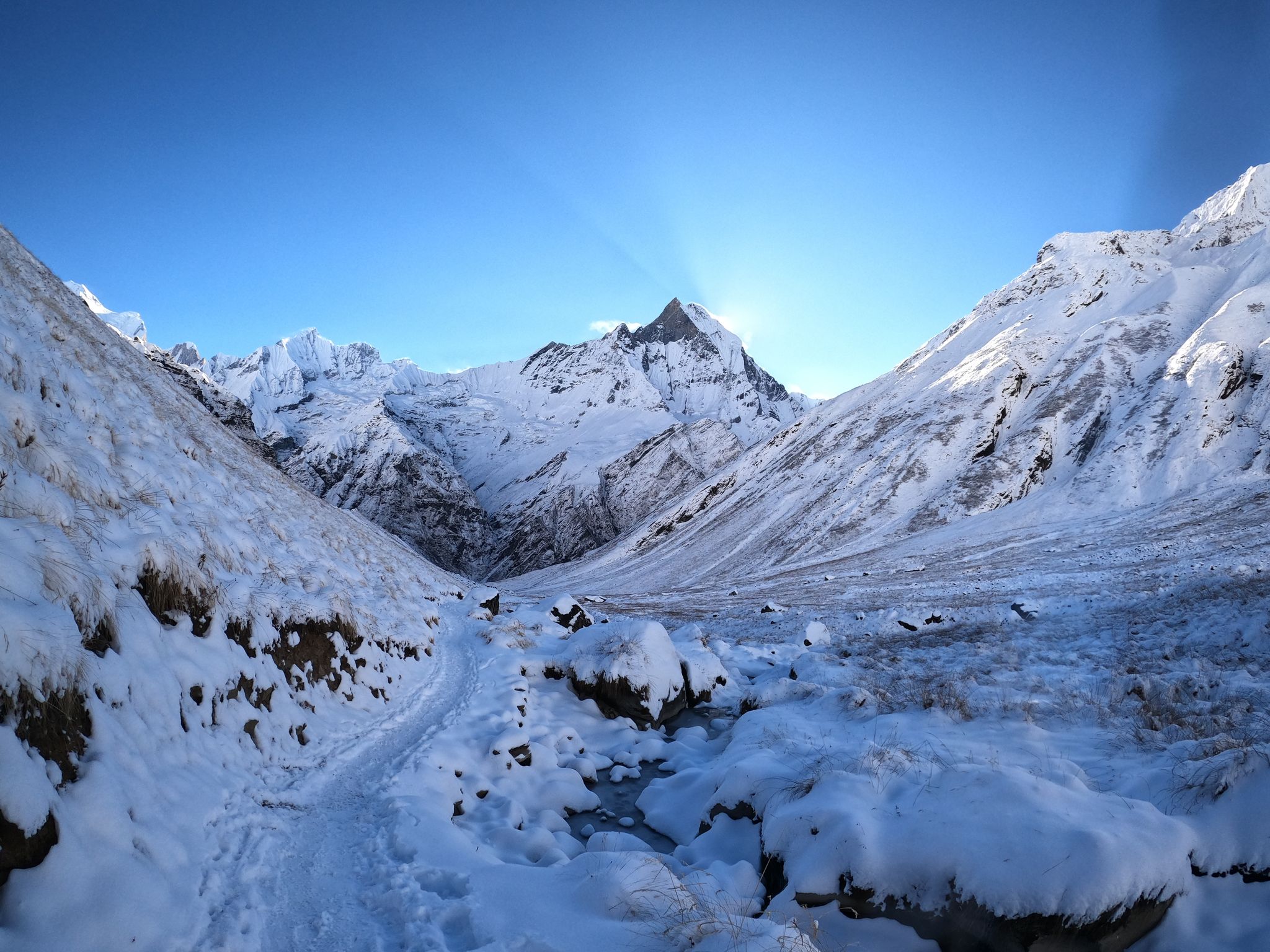
At altitude, the arithmetic is stricter: sunny trekking days in the 5-12°C range, then hard freezes after sunset, with the high lodges around Everest Base Camp or the Annapurna Sanctuary dropping to minus 15 and below. Daylight is short, roughly 10 hours, which compresses walking schedules.
| Place | Altitude | Afternoon | Night | What to expect |
|---|---|---|---|---|
| Kathmandu | 1,400 m | 17-19°C | 2-5°C | Blue-sky days, fog until mid-morning |
| Pokhara | 820 m | 20-22°C | 6-9°C | The warmest base, with crisp lake mornings |
| Chitwan (Terai) | ~150 m | 22-25°C | 8-11°C | Mild days, fog building late in the month |
| Namche Bazaar | 3,440 m | 6-10°C | -5 to -10°C | Sunny walking weather, hard frost overnight |
| Gorak Shep (near EBC) | 5,164 m | around 0°C in sun | -15°C and below | Dry trail most days, bitter nights |
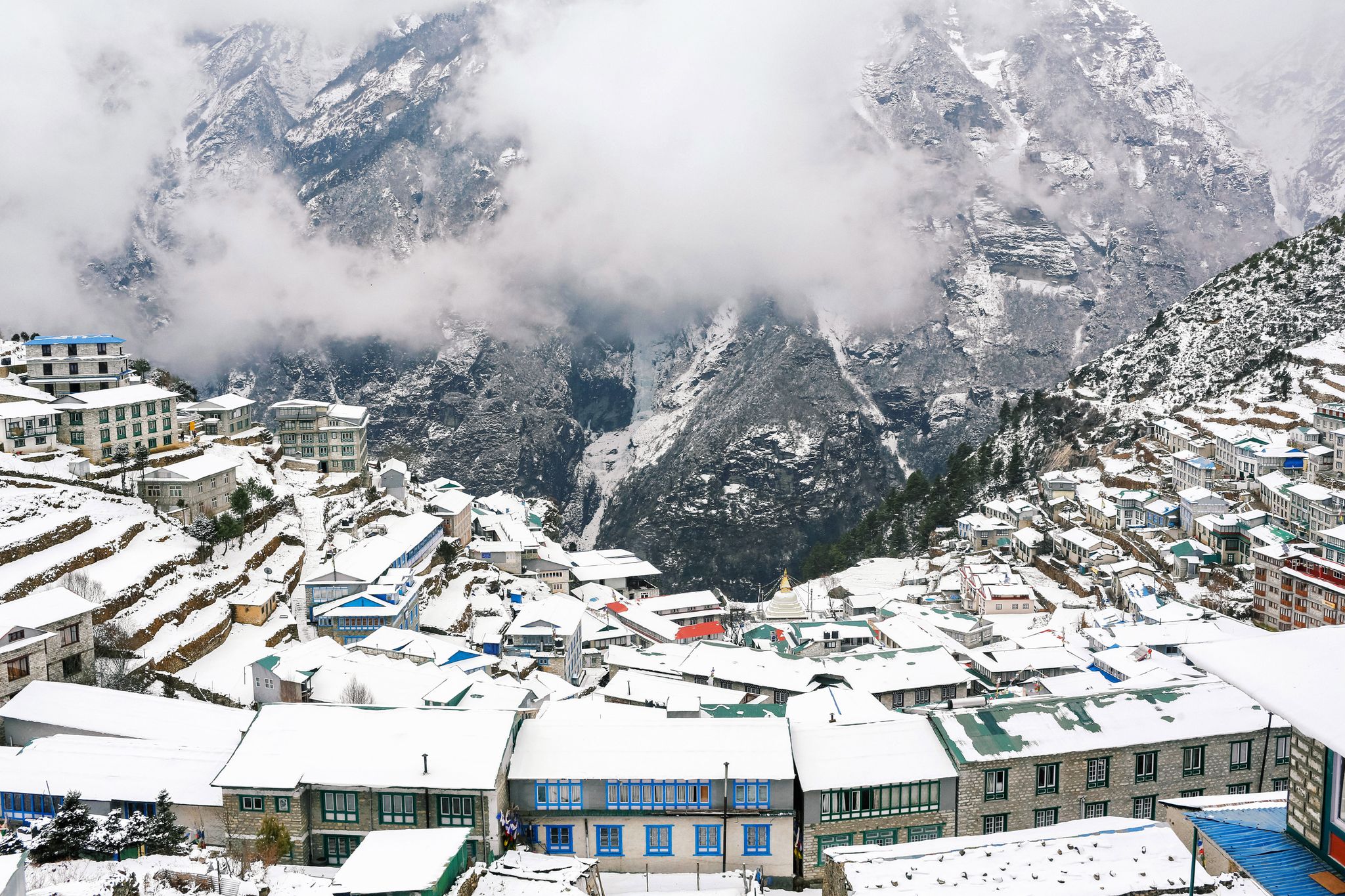
Snow is the question people ask most. It does not fall in Kathmandu or Pokhara; it arrives in the mountains with the occasional winter storm, dusting villages above about 3,500 m and sometimes closing passes like Thorong La or Cho La for a day or two. Treat the figures as typical ranges, not forecasts.
Nepal in December: weather, roads, and what to pack (tlow TV)Trekking: pick your altitude honestly
- The winter sweet spot sits below about 3,500 m: Poon Hill (arguably at its best in December, with frosted rhododendron forest and empty lodges), Mardi Himal to its lower camps, the Everest valley as far as Namche and Tengboche, and the Kathmandu Valley rim walks around Nagarkot.
- Everest Base Camp (the winter guide) stays open and doable for well-equipped trekkers: the reward is the clearest Everest views of the year and lodges at a fraction of October's bustle; the price is serious cold and some upper lodges winding down. The training and acclimatisation logic is unchanged.
- The high passes (Thorong La, Cho La, Larke) carry genuine winter risk: snow closures, ice, and thin margins. Cross in another season, or go with a guide who makes the call daily.
 Winter compresses the margins at altitude: the views sharpen, the nights bite, and judgment matters more than fitness
Trails themselves are at their emptiest: lodge owners have time to talk, and the teahouse stove becomes the social center it was built to be.
The holiday bump
December is low season with one exception: the Christmas-New Year fortnight. Thamel strings up lights, Lakeside restaurants run holiday menus, and travelers escaping northern winters fill the comfortable hotels. Flights and rooms for late December deserve advance booking; New Year's Eve in Thamel or by Phewa Lake is loud, warm-spirited, and worth experiencing once. A quieter cultural marker usually lands just before it: Tamu Lhosar, the Gurung community's new year, typically December 30 (lunar calendar, so verify), brings processions and dress-up gatherings, at their most visible in Pokhara and Kathmandu's Tundikhel.
Beyond the trails
December suits the whole non-trekking menu. City sightseeing across the Kathmandu Valley happens under crisp light with thin crowds; the great stupas at dusk come with woodsmoke and butter-lamp glow. Chitwan's wildlife viewing is strong as animals concentrate near water in the dry season, and cooler air makes long jeep days pleasant. Lumbini and the Terai circuit are at their most comfortable. Even the Everest mountain flight stacks the odds in your favour, December air being among the year's clearest.
 Snow reaches the mid-hill forests a few times each winter; below 3,000 m it decorates more than it obstructs
Practical notes for the month
A few December specifics save friction. Terai fog is the month's main travel disruptor: morning flights out of Bharatpur, Nepalgunj, and Bhadrapur can slip hours, and highway journeys across the plains start late, so build slack into any Terai leg. Kathmandu's winter haze starts building late in the month; mountain viewpoints reward early starts before the valley inversion thickens. Hotel heating is worth paying for at this time of year: a room with a heater (or at least an electric blanket) costs a little more in Thamel and Lakeside and repays it nightly. And hot showers in cheaper guesthouses run on solar; a sunny afternoon shower beats a frigid morning one. Prices outside the holiday fortnight are as negotiable as they get all year, and this is the season when budget travelers find the country at its cheapest.
Packing for the split personality
December days and nights belong to different seasons, so the layering system earns its keep: sun protection and a t-shirt base for afternoons, then a genuine down jacket, warm hat, and gloves for the moment the sun drops. City travelers should remember that restaurants and guesthouses are largely unheated; the warm layer comes to dinner. Trekkers want a sleeping bag rated well below freezing, and a hot-water bottle trick (fill your drinking bottle at the stove, take it to bed) that veterans swear by.
Who December suits
Choose December for clear mountains without crowds, for city-and-culture trips in crisp light, for safaris, or for a holiday-season trip with a difference. Choose November instead if you want the same clarity with milder nights, or spring if high passes are the goal. As with every month, the full calendar comparison shows the trade-offs side by side. December asks a little more of your packing list and gives back the Himalaya at its sharpest; plenty of returning travelers quietly call it their favourite month.
For the whole cold season in one place, with the trek-by-trek verdicts and the Lhosar dates, see Nepal in winter.