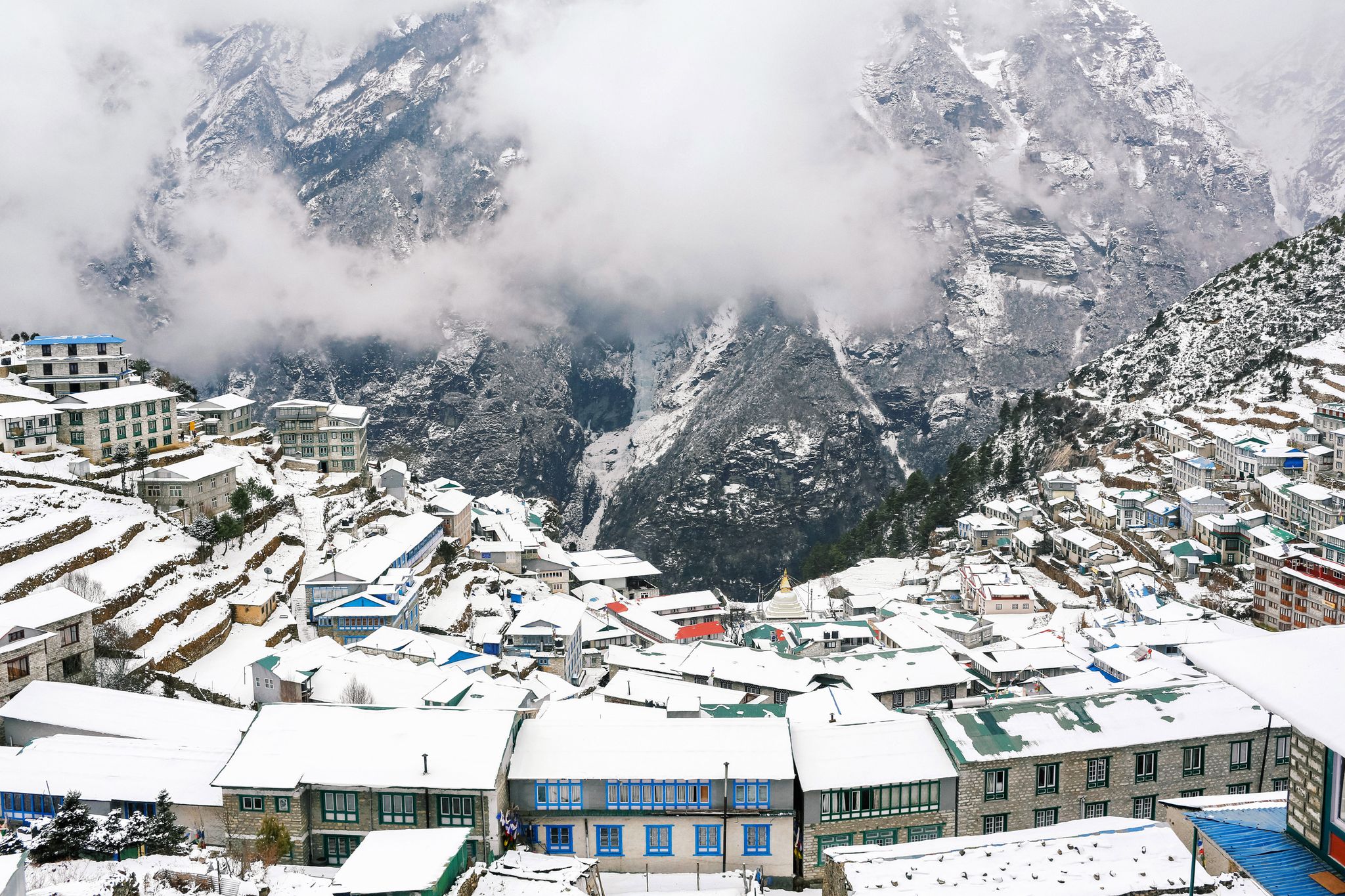
Winter is the season Nepal's own guidebooks skip over, and it is the one that quietly suits a lot of travelers. The monsoon is three months gone, the air above the valleys is as clear as it will be all year, and the October crowds have taken their prices home with them. What is left is cold, and a question of how much of it you are willing to meet. This page answers that question for the whole of December to February; the month pages (December, January, February) carry the week-by-week detail.
Winter at a glance
| December | January | February | |
|---|---|---|---|
| Kathmandu afternoons | 17-19°C | 15-18°C | 18-20°C |
| Kathmandu nights | 2-5°C | 0-3°C | 2-6°C |
| Mountain views | Excellent | The clearest of the year | Still good; haze builds late |
| Crowds and prices | Low, except Dec 20 to Jan 2 | Lowest of the year | Low, rising in the last week |
| Festivals | Tamu Lhosar (Dec 30) | Maghe Sankranti (Jan 15) | Sonam Lhosar (~Feb 7) |
| Best for | Clear-sky treks, holidays | Solitude, culture, safari | Festivals, pre-spring treks |
Figures are typical ranges for 2026-27 planning; treat them as a guide.
Weather by altitude, which is what matters
Winter in Nepal is a single, stable pattern: dry high pressure, long runs of blue sky, and cold that is set almost entirely by how high you sleep.
The Terai (Chitwan, Lumbini, 100-200 m) stays mild by day, 20-25°C, with dense morning fog that lifts late and sometimes delays flights and road travel. Wildlife is easier to see because animals gather near water and the grass is burned low in late winter.
The cities (Kathmandu 1,400 m, Pokhara 820 m) do sunny afternoons in a light jacket and nights that sit near freezing in Kathmandu and a few degrees above in Pokhara. The number that matters is indoor: almost no guesthouse has heating, so a 3°C night is a 6°C bedroom. Ask for a room with an electric blanket or heater, or bring a sleeping-bag liner for cheap places.
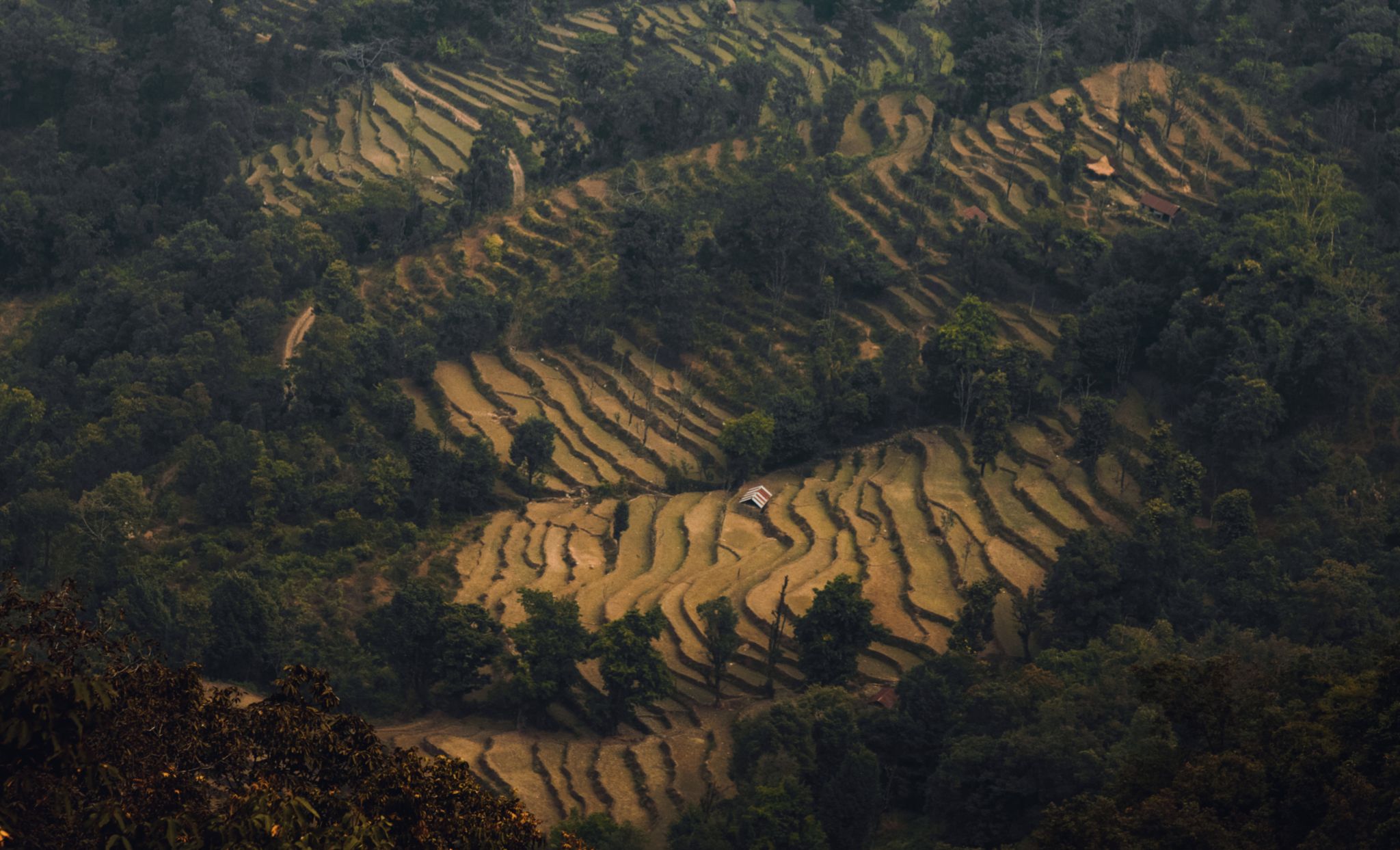
The mid-hills (Nagarkot, Poon Hill, Ghandruk, 1,500-3,200 m) are winter's sweet spot. Frost at dawn, warm sun by nine, the full Himalaya on the skyline all day, and lodge dining rooms with a stove in the evening.
The high lodges (above 4,000 m) are a different proposition: sunny days that feel warm in still air, then minus 15 to minus 20°C once the sun drops. Water bottles and phone batteries give up overnight, and some lodges close for the season.
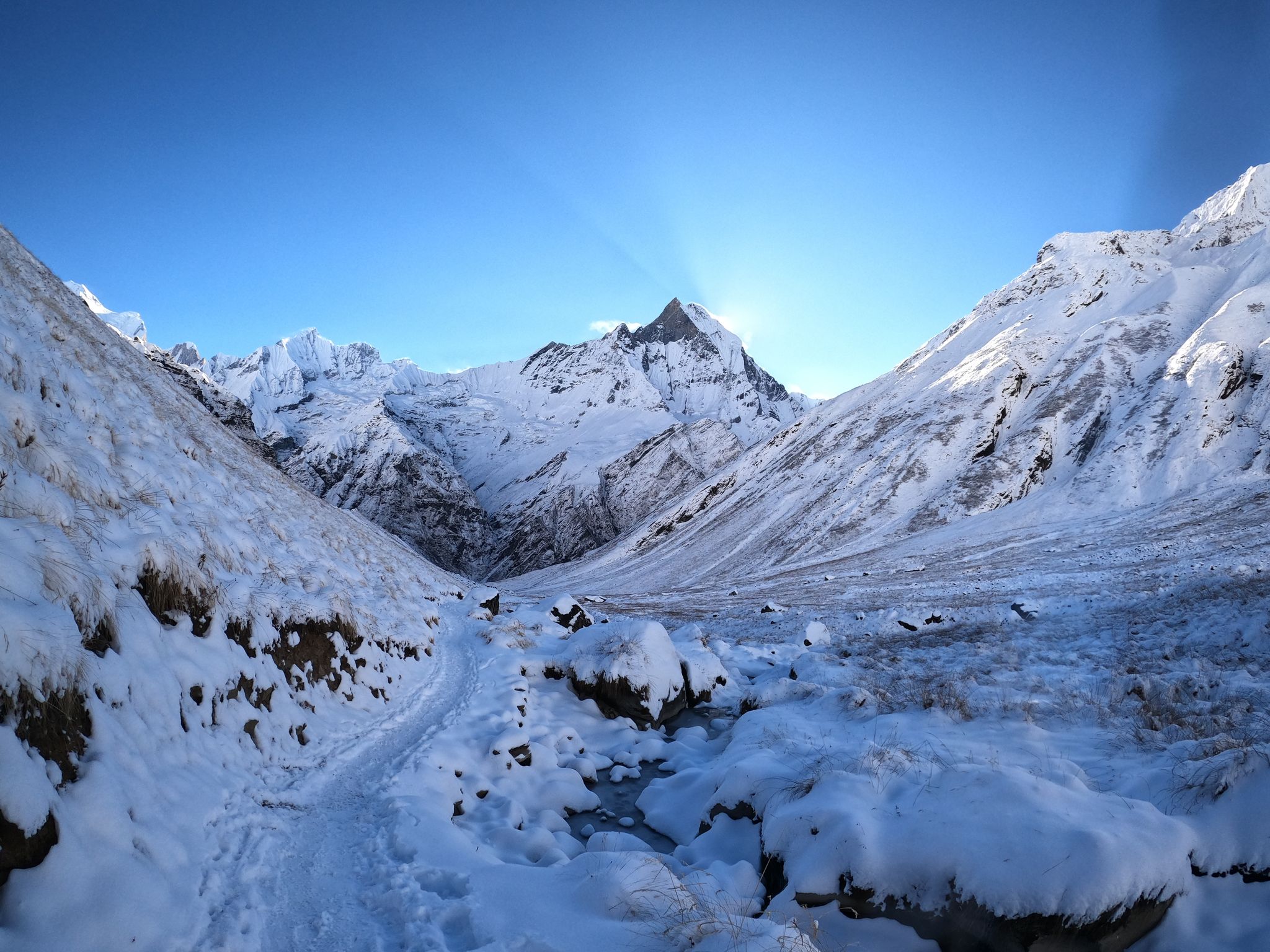
Storms are the wildcard. A winter front crosses every two or three weeks, dumps snow above roughly 3,500 m and closes passes for a day or two, then leaves behind the sharpest views of the year.
Which treks work in winter
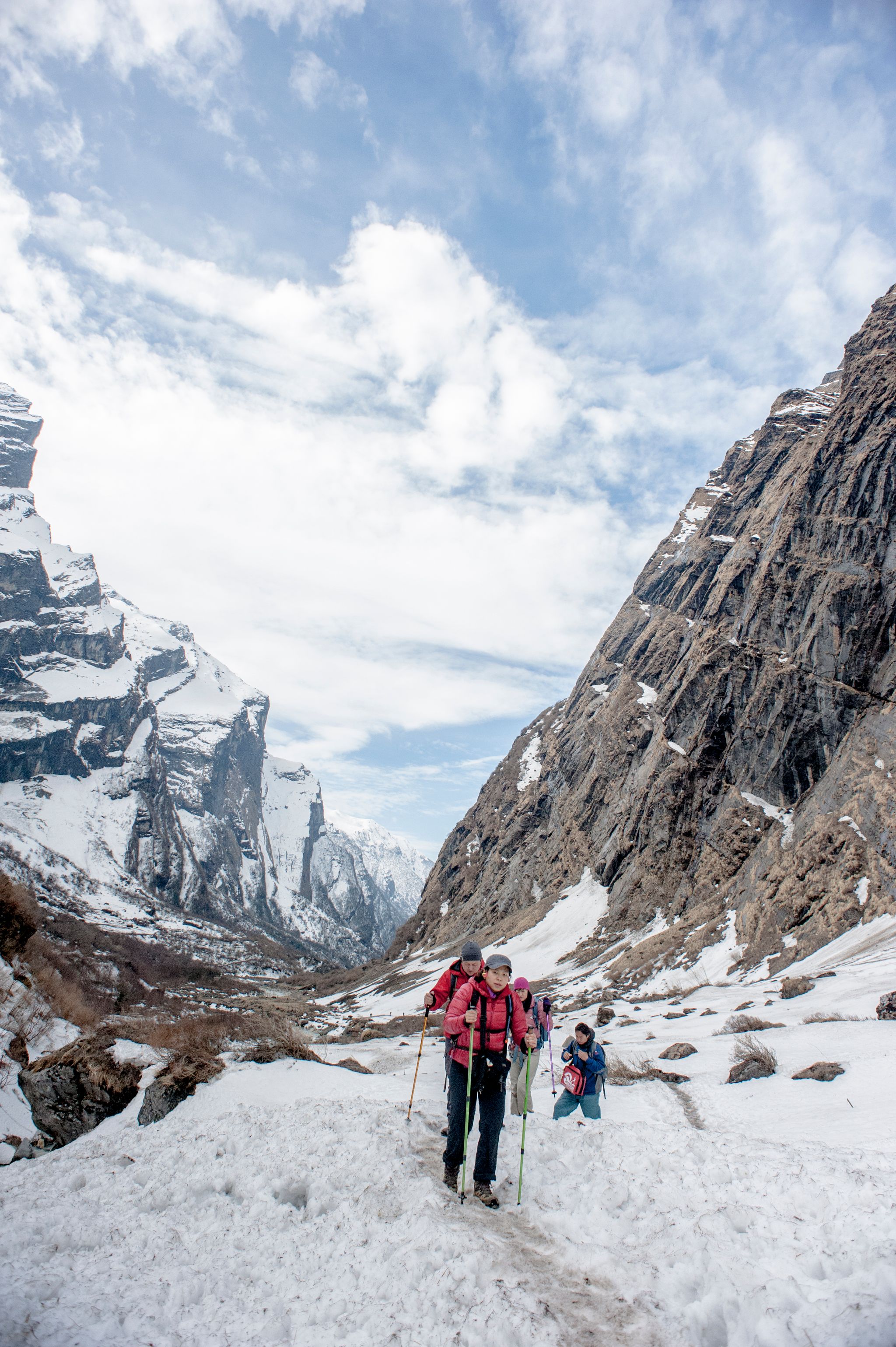
The rule is altitude under about 4,000 m with confidence, 4,000 to 5,400 m with equipment and flexibility, and no high passes without a guide who has crossed them in winter.
| Trek | Winter verdict | Notes |
|---|---|---|
| Poon Hill | Yes, the best winter trek | 3,210 m top; frost, not snow, most years |
| Mardi Himal | Yes, to High Camp | Base camp section can hold snow after storms |
| Langtang Valley | Yes, with an access check | Kyanjin at 3,870 m is cold but open; road status after the 2026 flood matters |
| Everest to Namche and Tengboche | Yes | The Khumbu with no queues on the bridges |
| Everest Base Camp | Possible, for the prepared | Minus 20°C nights, some Gorak Shep lodges closed in January |
| Annapurna Base Camp | Possible, check avalanche notices | The sanctuary approach above Deurali has avalanche risk after heavy snow |
| Annapurna Circuit | No, unless Thorong La is confirmed open | The pass closes after storms; jeep sections work |
| Upper Mustang | Mostly closed | Many families and lodges leave for the winter |
Two practical notes. Lukla flights are more reliable in winter mornings than in any other season, and they usually leave from Kathmandu rather than Ramechhap. And lodges that stay open above 4,000 m may be one or two per village, so a guide who phones ahead earns their fee; our tea house guide explains how that system works.
 After a winter front: snow to the valley floor, blue sky by morning, and a trail that is yours
The festivals of winter
Nepal's lunar calendars put three new years into the cold months. Tamu Lhosar on December 30, 2026 is the Gurung new year: Pokhara fills with dancing in traditional dress, and Kathmandu's Tundikhel parade ground hosts the capital's gathering. Maghe Sankranti on January 15, 2027 marks the sun's turn north with sesame-and-molasses sweets, yam, spinach, and ritual bathing at river confluences; Devghat near Chitwan is the big one. Sonam Lhosar, the Tamang new year, is expected around February 7, 2027, with masked dances and fresh prayer flags at Boudhanath. Maha Shivaratri, Pashupatinath's night of bonfires and sadhus, falls just outside winter on March 6, 2027. All of these shift year to year, so verify before planning around one. The culture guide covers how to attend respectfully.
The other winter event is imported: the Christmas to New Year fortnight, when Thamel and Lakeside fill with holidaying travelers and prices briefly behave like October. Book that window ahead; outside it, winter is a buyer's market.
Costs and crowds
Hotels discount openly from early December to mid-February, trekking agencies drop their rates, domestic flights have seats, and Lukla runs from Kathmandu rather than Ramechhap. Budget travelers can run 20-30% under autumn prices on rooms and treks, with the Christmas fortnight the exception. The budget guide has the baseline figures to discount from.
Where Nepal goes to see snow
Nepalis have their own winter ritual: driving to Kalinchowk, a 3,842 m hilltop four to six hours' drive east of Kathmandu, where a cable car (or a 30-90 minute walk from Kuri) reaches the temple and the first big snowfall of the season sends the whole of Kathmandu up for selfies. Go midweek after a storm for the quiet version; the hiking in Nepal guide has it alongside the valley's other day walks. Closer in, Nagarkot and Chandragiri get frost and, every few years, a dusting; the sunrise viewpoints guide covers both.
 Kuri, below the Kalinchowk temple, after the first big snowfall of the season
Cities and safaris in the cold
Winter is the culture season by default. The Kathmandu Valley's heritage squares sit under crisp light with short queues, Bhaktapur's brick lanes hold the afternoon warmth, and the mountain flight from Kathmandu runs on its most reliable mornings of the year. In the Terai, December to February is the best wildlife window in Chitwan and Bardia: animals concentrate at water once the grass is cut and burned, and rhino and tiger sightings rise. Budget for fog delays on the morning safari and on any Terai flight.
What to pack
A four-season sleeping bag if you sleep above 3,000 m, a down jacket for any evening anywhere, a sleeping-bag liner for city guesthouses, microspikes if a pass or snowy section is in your plan, sun protection (winter sun at altitude burns), and a power bank kept warm in your sleeping bag. The packing list has the full layering system.
The verdict
Choose winter for clear mountains, empty trails below 4,000 m, festivals that few tourists see, and prices that reward patience. Skip it if your heart is set on a high pass or a long high-altitude trek, or if unheated rooms would ruin the trip. For how winter stacks against the rest of the year, the best time to visit Nepal guide weighs all twelve months, and spring vs autumn covers the two peak seasons winter sits between.