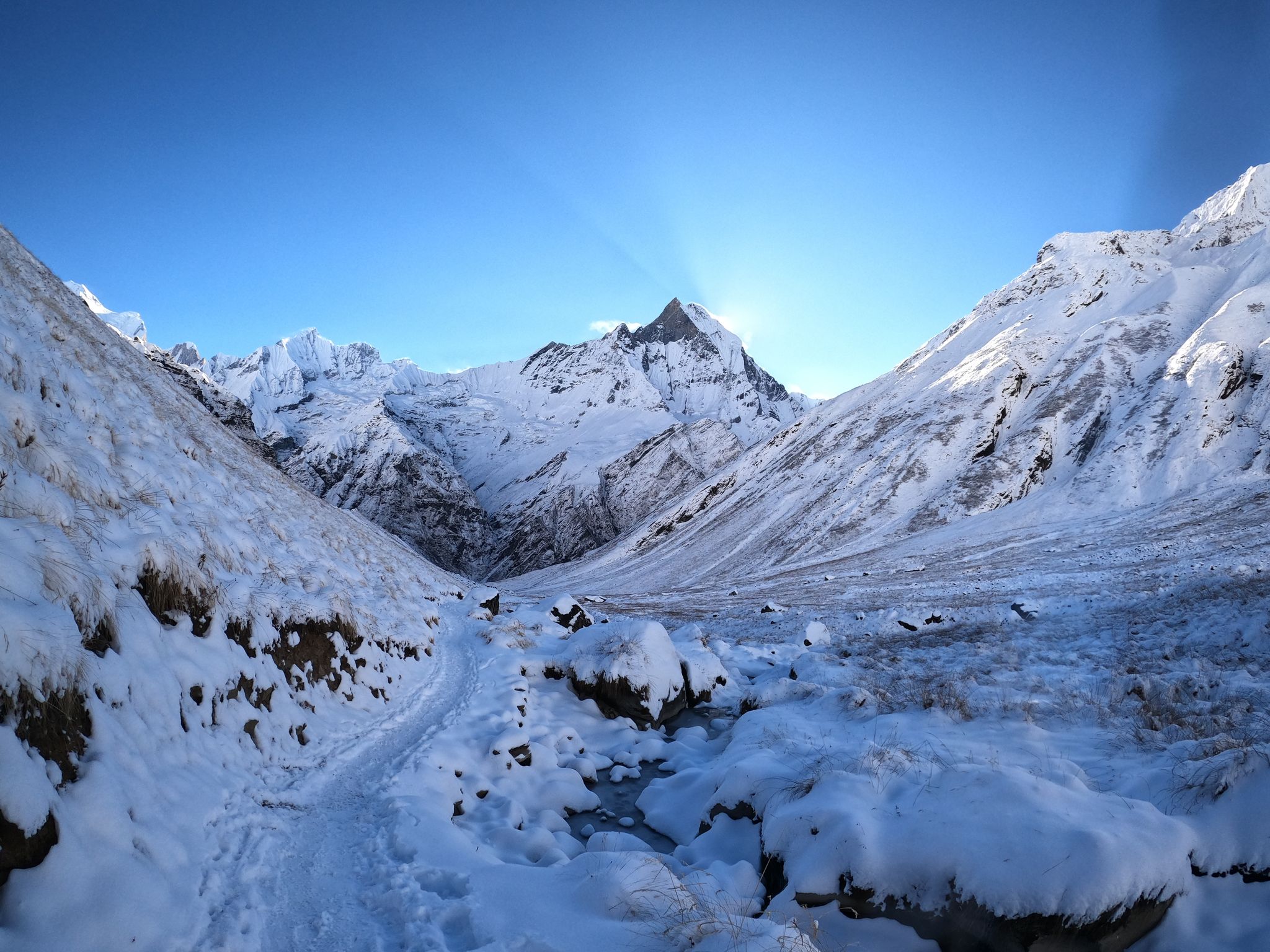
January is when Nepal belongs to the people who live there, plus the handful of travelers who figured out the secret. The trekking industry hibernates, flights and hotels stop pretending to be full, and the winter air holds the kind of clarity that October visitors pay peak prices hoping for. Come prepared for cold, and the quietest month on the calendar quietly over-delivers.
Nepal weather in January: cold, dry, and lucid
Winter high pressure gives January the driest air of the year. Kathmandu runs sunny 15-18°C afternoons against 0-3°C nights, with morning fog that burns off by ten; the city's unheated interiors mean you feel January most at dinner, not on the street. Pokhara is milder and the Annapurnas stand over Phewa Lake with engraved-looking sharpness. The Terai does mild days and foggy dawns, with the fog occasionally tangling flight schedules in the plains.
In the mountains, the equation is simple: brilliant days, brutal nights. Mid-altitude villages freeze lightly; the high lodges see minus 15 to minus 20. Snow lies wherever the sun doesn't reach, and daylight stays short.
| Place | Altitude | Afternoon | Night | What to expect |
|---|---|---|---|---|
| Kathmandu | 1,400 m | 15-18°C | 0-3°C | Sunny, morning fog, unheated interiors |
| Pokhara | 820 m | 18-20°C | 5-8°C | Milder, with the sharpest Annapurna views of the year |
| Chitwan (Terai) | ~150 m | 20-23°C | 7-10°C | Mild days, thick dawn fog |
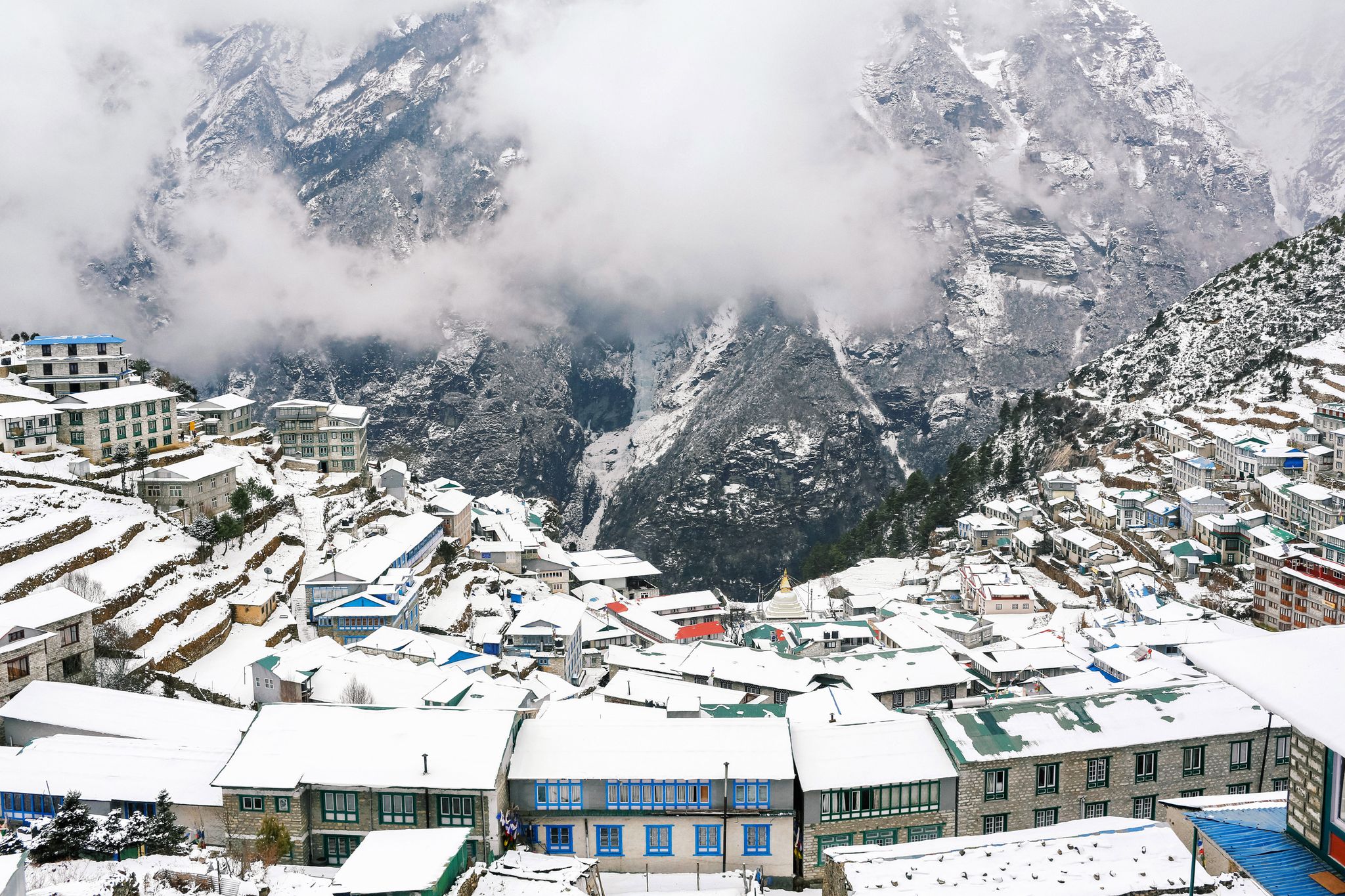
| Namche Bazaar | 3,440 m | 4-8°C | -8 to -12°C | Bright and cold; lodges heat only the dining room |
| Gorak Shep (near EBC) | 5,164 m | around 0°C in sun | -15 to -20°C | Snow in shaded sections, short days |
Rain is close to zero all month. The risk is the occasional winter storm, which can dump snow on high passes such as Thorong La and close them for a few days. Figures are typical ranges, not forecasts.
Why January travelers swear by it
- Emptiness. The famous trails carry a fraction of their autumn traffic. Lodges have their pick of rooms and time to talk; sunrise at Poon Hill might be yours and a dozen others', not four hundred.
- Visibility. Winter air rivals or beats late autumn. Mountain flights, viewpoint sunrises, and high panoramas all stack the odds in your favour, as the Everest flight guide notes about winter mornings.
- Prices. This is the bottom of the market: city hotels negotiate, agencies discount, and the budget traveler finds Nepal at its cheapest.
Trekking: the altitude line
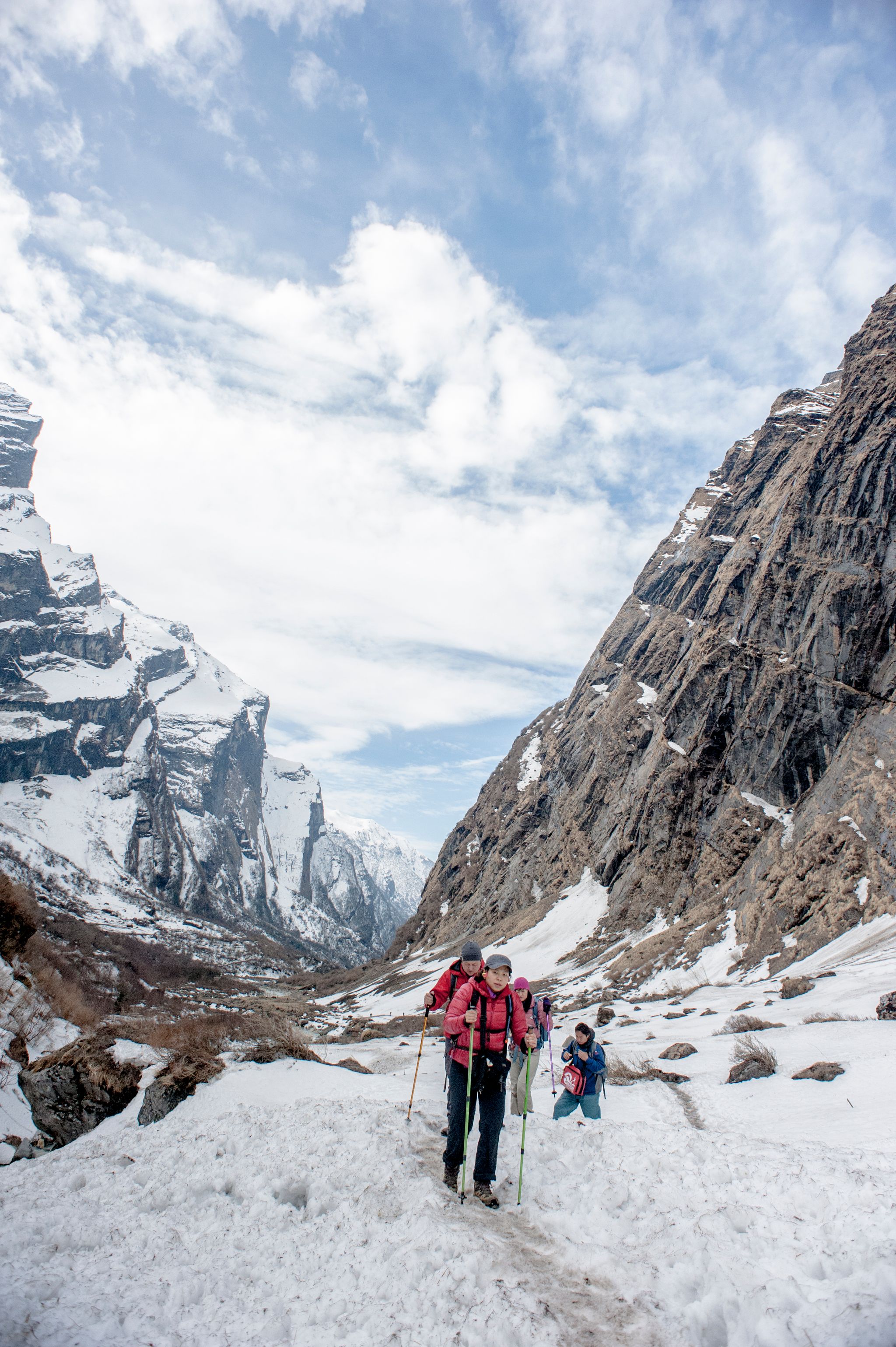
The rule from the December guide holds and hardens: pick routes by altitude. Poon Hill in January is a winter classic, frosted forest and clear summits with nearly nobody on the steps. The Everest valley to Namche and Tengboche works for the warmly dressed, and full Everest Base Camp remains achievable for experienced, well-equipped trekkers who accept the cold as the price of solitude. The high passes are effectively closed: snow depth and ice make Thorong La, Cho La, and Larke expert territory at best. Guides earn their keep in winter; this is the season to hire one even if you usually don't.
Lower still, the Kathmandu Valley rim shines: Nagarkot sunrises, the Chisapani ridge, and day hikes that end at a hot meal by dark. Domestic tourism has its own January ritual worth knowing about: snowfall at Kalinchowk draws crowds of Nepalis for their first-ever snowball fights, a charming scene if your trip overlaps a cold snap.
Cities, safaris, and the winter menu
January suits the culture circuit. The Kathmandu Valley's heritage sites sit under crisp light with short queues; Boudhanath's evening kora happens in woodsmoke and down jackets, at its most atmospheric all year. Chitwan stays strong: dry-season wildlife concentration, comfortable jeep temperatures, foggy river mornings that turn canoe trips cinematic. And Nepal's winter food logic reveals itself: this is the season for thukpa, sekuwa around open grills, hot tongba (millet beer) in Tibetan-leaning neighbourhoods, and the sesame-and-molasses sweets of Maghe Sankranti, the mid-January festival that marks winter's turning point. Some years, Losar celebrations begin in late January; dates follow the lunar calendar, so verify.
The practical winter kit
Layering rules everything (the packing list): t-shirt afternoons, down-jacket evenings, and a sleeping bag rated well below freezing for any trek. Book a city room with heating; the small surcharge is January's best money. Solar hot water means afternoon showers beat morning ones. Fog can delay morning flights in the Terai and occasionally Kathmandu, so keep buffer time around domestic connections. And carry a headlamp: load-shedding is history, but winter evenings in trekking villages still run dim.
A one-week January shape
A sample itinerary that plays to the month's strengths rather than fighting its weaknesses:
- Days 1-2: Kathmandu's heritage circuit in crisp light, with an early Swayambhunath morning before the fog burns off and Boudhanath's kora at dusk.
- Day 3: the Everest mountain flight on a clear morning, then Patan's museum and bronze quarter.
- Days 4-5: Nagarkot or Dhulikhel overnight for a winter sunrise panorama, walking a stretch of the valley-rim trail between viewpoints.
- Days 6-7: either two nights in Chitwan for foggy-river safaris, or a quick hop to Pokhara for lakeside calm and the sharpest Annapurna reflections of the year.
Trekkers with more time swap the second half for Poon Hill's five-day loop, frost, empty lodges, clear summits, and all. The whole shape books late and cheap; January is the one month where winging it works.
Who January suits
Choose January for solitude, clarity, and value: photographers, budget travelers, city-and-culture trips, safari-plus-viewpoints itineraries, and cold-hardy trekkers on the classic mid-altitude routes. Skip it if high passes are the goal or if unheated rooms sound miserable rather than atmospheric. February softens the same virtues slightly; the full calendar guide weighs every month side by side. January asks for a warmer bag and gives back the Himalaya with the volume turned all the way down.
For the whole cold season in one place, with the trek-by-trek verdicts and the Lhosar dates, see Nepal in winter.