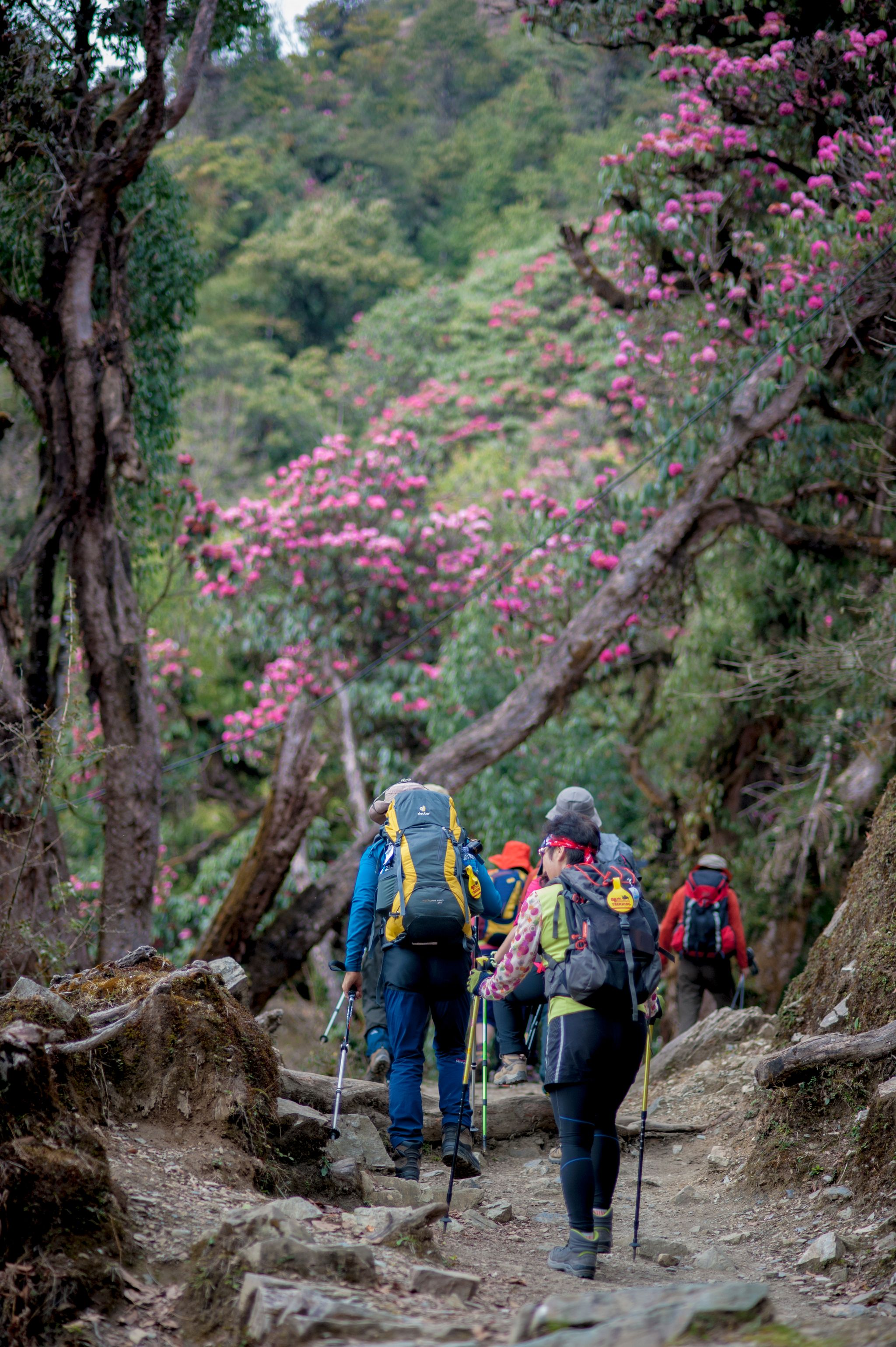
April is Nepal at full spring: warm trails, forests dressed in rhododendron bloom, expedition trains rolling toward Everest, and a New Year festival that involves several tonnes of chariot being hauled through medieval streets on ropes. It is the second of the year's two peak months, and it earns the status honestly, with one caveat about haze worth understanding before you book.
The weather: warm, stable, hazier
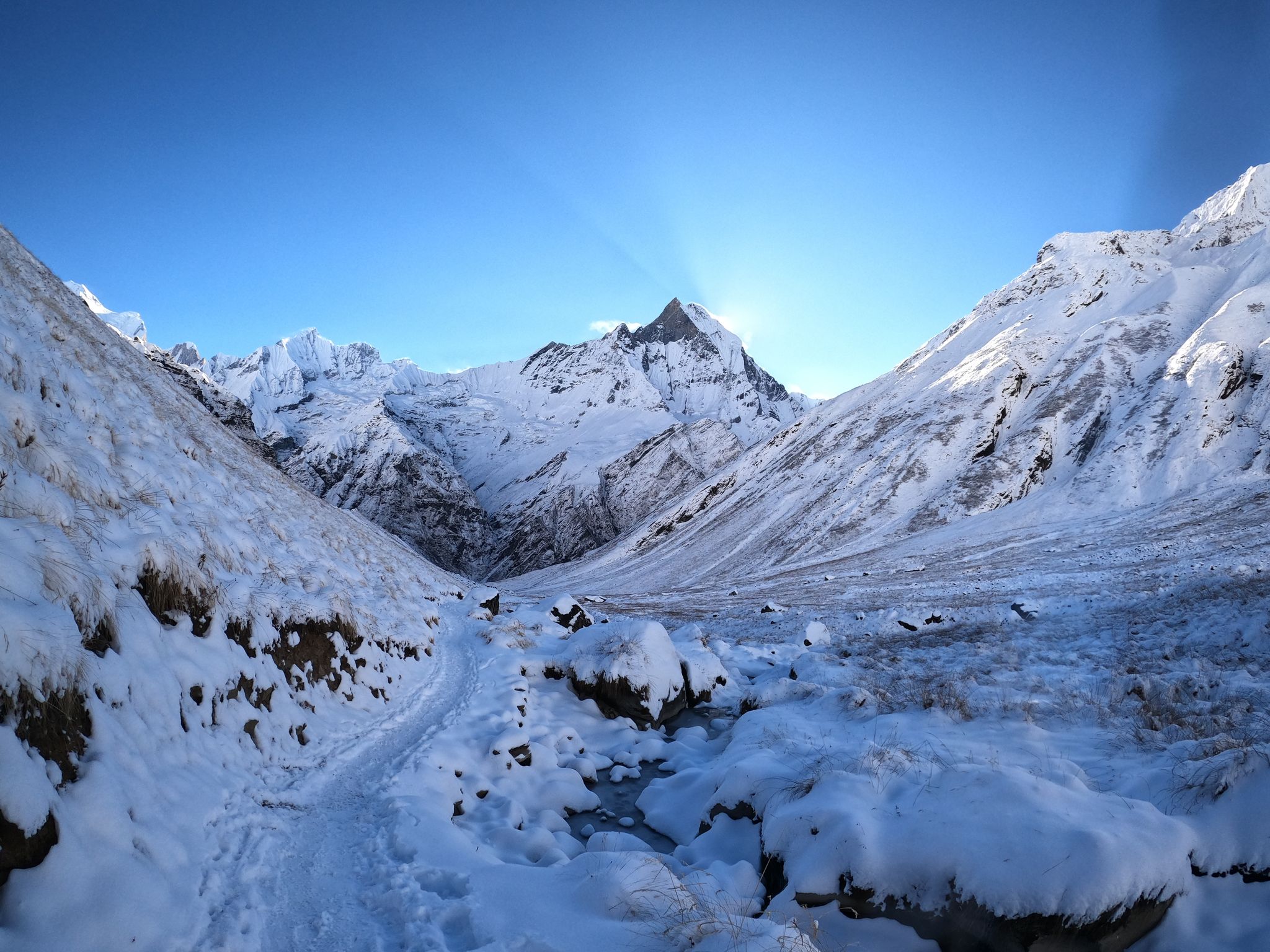
Spring's high pressure delivers reliably walkable weather. Kathmandu sits at 25-28°C afternoons; Pokhara matches it with lusher surroundings; the Terai turns hot, mid-30s and climbing, making early-morning safari starts the smart pattern. At trekking altitudes April is the year's most comfortable month: mild days, tolerable nights, and a snowpack consolidating enough to open the high passes, Thorong La and the Everest-region crossings coming properly back into play.
The caveat: spring haze. Months of dry warmth fill the lower air with dust and, in some weeks, plains smoke, softening mountain views from low viewpoints. Above roughly 3,000 m you climb out of most of it, and the late-April showers rinse the sky beautifully for a day or two after each pass. Plan mountain views from altitude or after rain, and temper expectations from city rooftops; the autumn-vs-spring comparison covers this trade in detail.
The rhododendron show
Nepal's national flower runs the best forest display in the Himalaya, and April is its month. The bloom climbs with the warmth: by now the 2,500-3,500 m band is peaking, meaning whole hillsides of crimson lali gurans, pink, and white. The classic gallery walk is Ghorepani-Poon Hill, where the trail passes through genuine tunnels of bloom; the lower Everest valley, the eastern ridges, and (access permitting) Langtang's forests all stage their own versions. Photographers should build in forest time as well as summit time; the show is beside the trail rather than above it.
Everest season and the spring trails
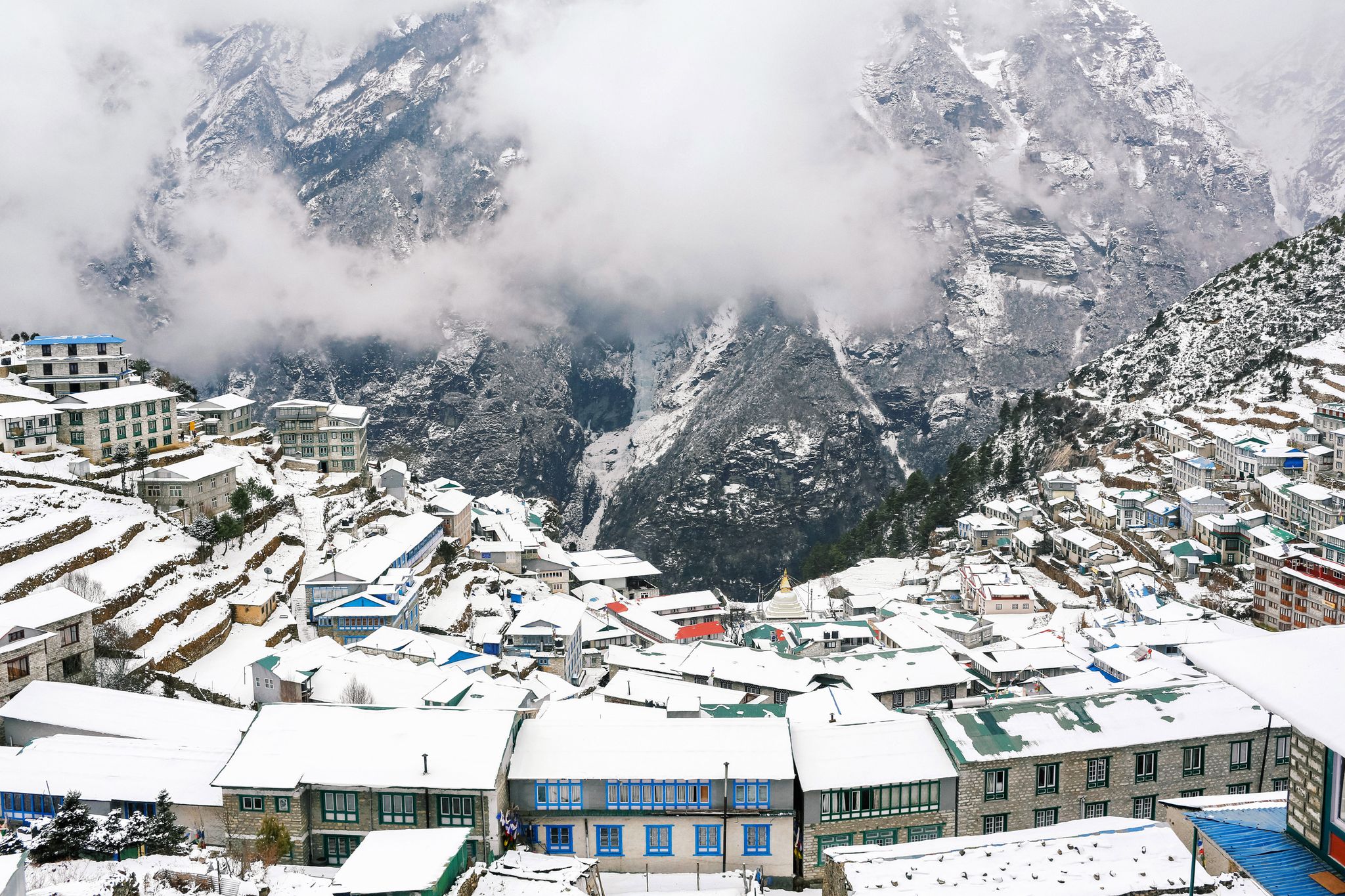
April fills the Khumbu with expedition season: yak trains hauling gear, Base Camp growing into its tent city, and the trail carrying the particular energy of people walking toward the top of the world. Trekkers to Everest Base Camp share lodges with climbing teams and reach a Base Camp that is alive rather than empty, a genuinely different experience from autumn's. The Annapurna routes run at full spring capacity, Thorong La included, and April is prime time for Upper Mustang as the windy kingdom warms.
Peak month means peak logistics: book Lukla flights and the well-known lodges weeks ahead, expect company at the bottleneck viewpoints, and use the crowd-dodging routes if solitude ranks high; Gokyo absorbs the same trip with half the traffic.
New Year, the Bhaktapur way
Mid-April brings Nepali New Year (the calendar turns to a new Bikram Sambat year around April 13-14), and with it the valley's most physical festival: Bisket Jatra in Bhaktapur. Multi-tonne chariots are hauled and, on the climactic days, effectively fought over by rope teams from rival neighbourhoods; a great pole is raised and toppled; nearby Thimi answers with sindoor-throwing processions. It is loud, crushed, sweaty, and magnificent, the medieval city doing exactly what its squares were built for. Go with patience, keep valuables minimal in the crowds, and see the Bhaktapur guide for the setting. City hotels around the New Year days deserve early booking.
Beyond the trails
Chitwan and Bardia trade comfort for sightings in April: the heat concentrates wildlife at water, making this excellent tiger-and-rhino season for those willing to start at dawn and rest at noon. Lumbini is hot but quieter than winter. And the cities layer festival season onto ordinary spring life; between New Year and the wedding season's band baja, April streets supply their own soundtrack.
Practicalities
Pack for spread: hot-weather clothing for cities and the Terai, the full layering kit for altitude, and sun protection everywhere as UV climbs. Book the peak-month bottlenecks early (Lukla, quality Thamel and Lakeside rooms, Chitwan lodges around New Year). Hydration discipline matters more as heat rises, and the water-safety rules apply doubly in the warm months.
An April shape that works
Two weeks uses the month best. Week one: the trek, booked months ahead, either the Poon Hill-plus extension for maximum bloom or the EBC route for expedition-season atmosphere, starting early in the week to keep buffer days against Lukla scheduling. Week two: descend into festival country, timing Bhaktapur for the Bisket Jatra days around the 13th-14th, then decompressing in Pokhara or Chitwan. One-week travelers must choose: bloom (Poon Hill loop plus a Kathmandu bookend) or festival (valley-based, with day trips and the New Year chaos as centrepiece). Either way, treat mornings as the viewing hours; April afternoons are for courtyards, momo plates, and letting the haze have the horizon.
Who April suits
Choose April for spring's full production: bloom, warmth, open passes, expedition energy, and a festival with chariots. Choose October instead if crystal air matters more than flowers, or February-March to trade some warmth for quieter trails. April is Nepal in its loudest spring voice; book the bottlenecks and let it sing.