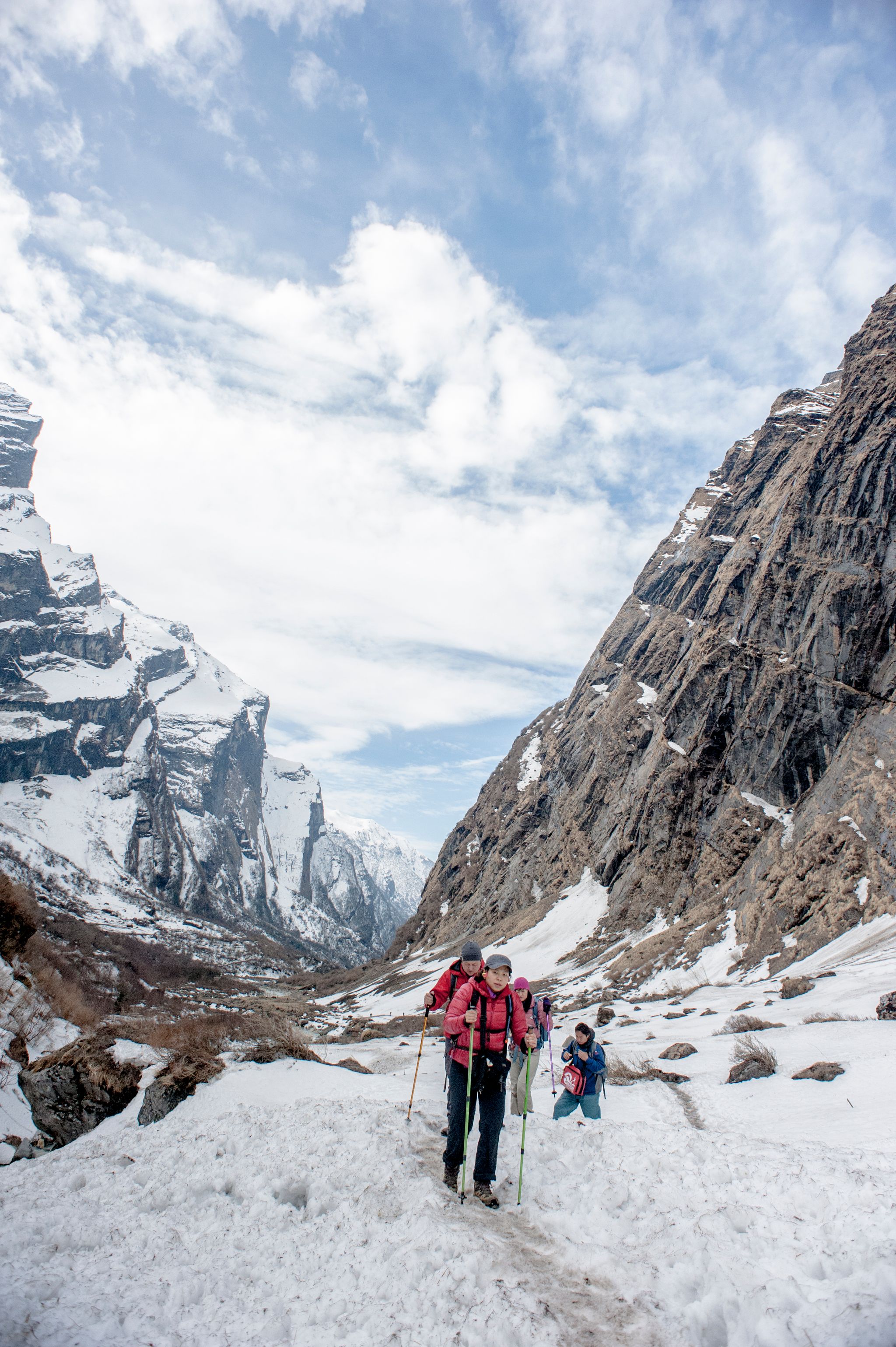
February is winter with the pressure easing. The days stretch visibly, afternoon sun carries real warmth, and by month's end the lower forests fire their first rhododendron blooms while the peaks still wear January's snow. Nepal stays in low season all month, which means the quiet and the discounts hold; the smart money books late February as a private preview of spring.
The weather: winter, softening weekly
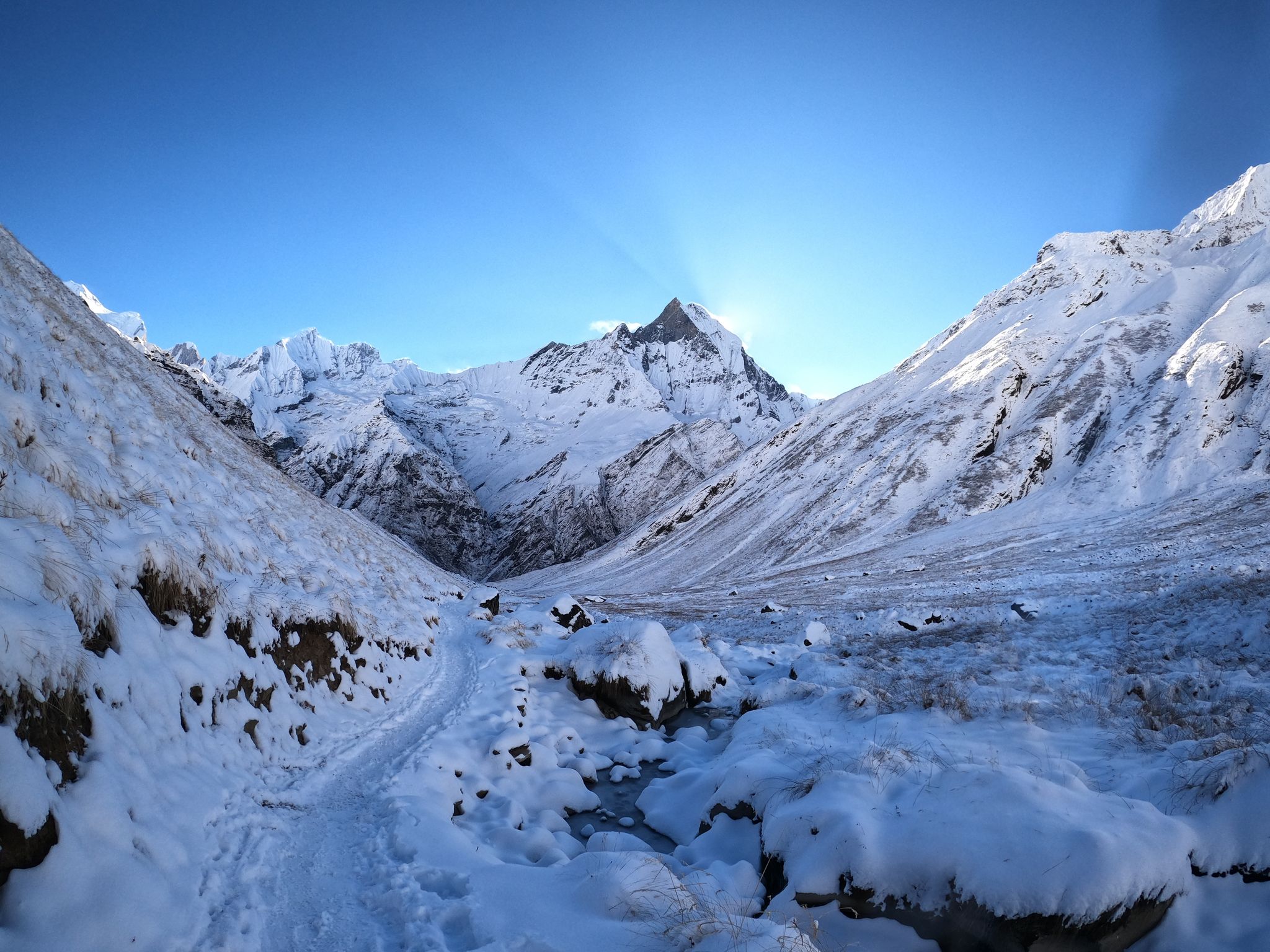
Kathmandu starts February around January's numbers and ends near 20°C afternoons, with nights climbing off the freezing floor; morning fog thins as the month goes. Pokhara turns pleasantly springlike by mid-month, and the Terai hits its comfortable sweet spot, warm days without the pre-monsoon furnace. At altitude, the split personality continues: brilliant lengthening days, hard-freezing nights, and snow holding above 4,000 m. Late February sometimes brings the first spring disturbances, brief storms that dust the hills and refresh the peaks; visibility stays strong overall, a notch below deep winter's glass but far ahead of April's haze.
Festivals: February's cultural hand
The month's lunar calendar often stacks two of Nepal's great gatherings; both dates shift each year, so verify.
- Losar, the Himalayan new year, unfolds over days of family feasts, monastery rituals, and fresh prayer flags. Boudhanath is its public stage: masked dances at the surrounding gompas, the dome newly whitewashed, and the evening kora at maximum festivity. Sherpa, Tamang, and Gurung communities each keep their own Losar traditions, and trekking regions like the Everest valley celebrate visibly.
- Maha Shivaratri (February or early March) is Pashupatinath's night: hundreds of thousands of pilgrims, sadhus arrived from across the subcontinent, bonfires, and an atmosphere unlike anything else in the Kathmandu year. Visit the temple precinct in the days before for the gathering storm of holy men, or brave the great night itself with patience for crowds.
Trekking: the pre-spring window
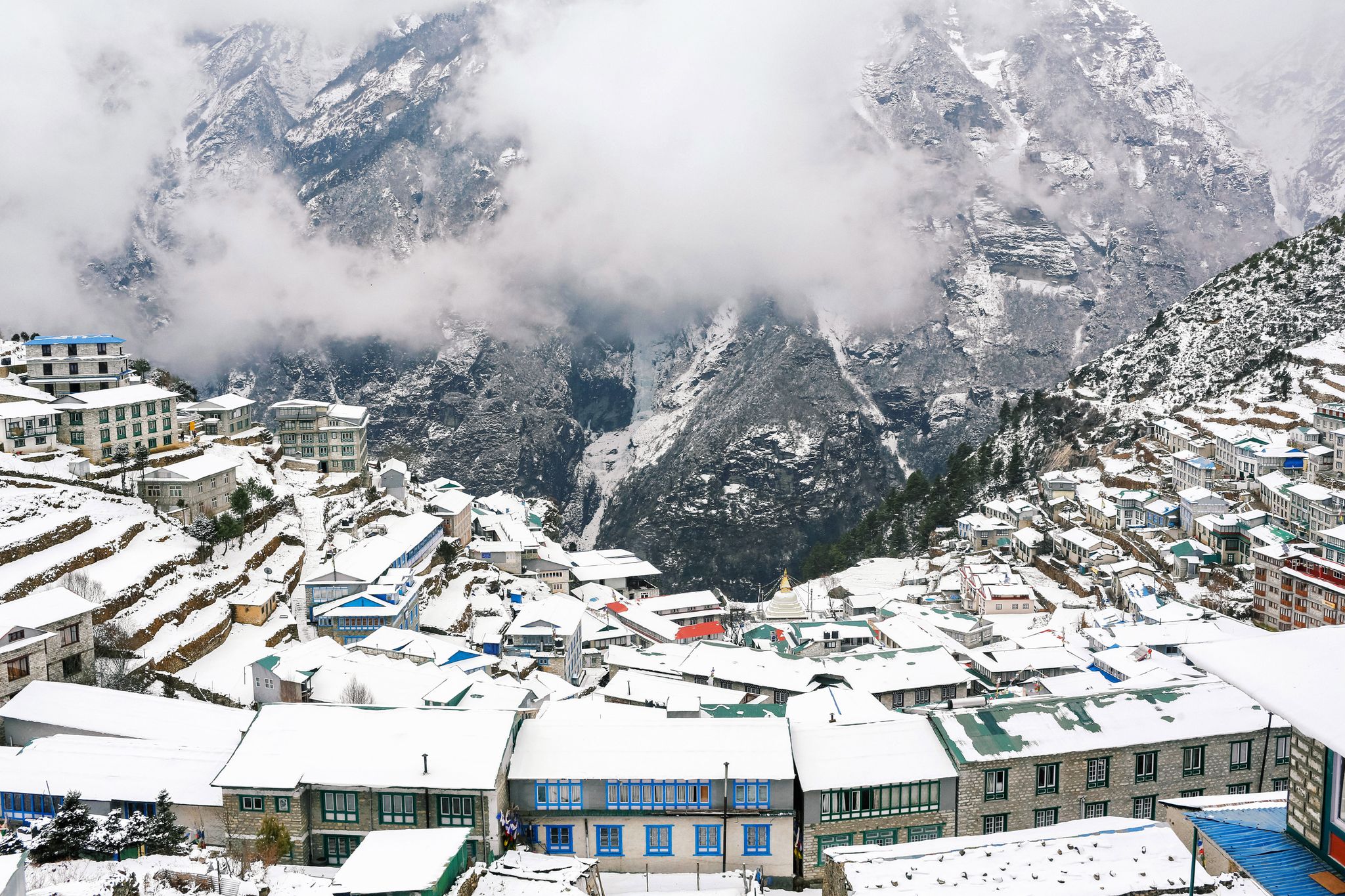
February trekking runs on January's altitude rules with a bonus at the end. Poon Hill, lower Mardi Himal, the Everest valley to Namche and beyond, and the valley-rim walks all deliver empty-trail winter clarity. Everest Base Camp in February belongs to the well equipped, and rewards them; the training logic matters more when margins are thinner. High passes stay effectively shut until spring consolidates the snowpack.
The bonus: the last week of February has become a quiet insider's slot. Start Poon Hill, Langtang-region alternatives, or even the EBC approach then, and you walk into early March's improving warmth just as the first spring trekkers arrive behind you. Lodges are open, rested, and glad to see you; the teahouse rhythm at its friendliest.
By late month, rhododendrons begin at low altitude, opening the show that March and April make famous. The forests between 2,000 and 2,800 m colour first; Ghorepani's slopes start their build toward full bloom.
Beyond the trails
City sightseeing keeps winter's advantages, crisp light and short queues across the Kathmandu Valley, while Chitwan remains in prime dry-season form, grasslands cut low and wildlife concentrated near water. February is also a fine month for the Everest mountain flight, with winter-grade clarity and easier booking than peak season. Photographers get a specific gift: late-winter light plus the first blossom colour, with almost no one standing in the frame.
Practicalities
Pack for two seasons: the layering system with the down jacket still non-negotiable for nights, but genuine warm-afternoon layers underneath. City rooms with heating remain worth the small premium early in the month. Low-season pricing holds throughout, and this is the last month it does: from March the trails and rates both climb. Fog risk in the Terai fades as the month warms; domestic flights run more reliably than in deep winter.
A February shape that works
Build the month around its two gifts, festivals and pre-spring trails. A proven ten-day pattern: Kathmandu for two or three days timed to whichever great gathering the lunar calendar delivers (Losar's monastery dances at Boudha, or the sadhu-filled run-up to Shivaratri at Pashupatinath), then out to the hills. Poon Hill's five-day loop slots perfectly in the second week, catching the first rhododendron colour low on the trail; alternatively, Pokhara plus a Mardi Himal taster keeps things gentler. Trekkers targeting Everest Base Camp should anchor the walk in the month's final week and carry the winter-grade kit regardless of the calendar saying spring is near. Domestic flights book easily all month, hotels negotiate, and nothing needs reserving far ahead except Shivaratri-window rooms near Pashupatinath.
Who February suits
Choose February to keep January's solitude with softer edges, to catch Losar or Shivaratri, to photograph peaks-plus-blossom, or to start a classic trek just ahead of the spring wave. Choose March if you want established spring warmth and don't mind company. The month-by-month guide sets every option side by side. February is the calendar's best-kept compromise: winter's clarity, spring's promise, and low-season prices on both.
For the whole cold season in one place, with the trek-by-trek verdicts and the Lhosar dates, see Nepal in winter.