May in Nepal is a month with a countdown running. Early on, the high trails are open, the passes walkable, and the world's strongest climbers are waiting at Everest Base Camp for their summit window; by month's end, the air has thickened, the afternoon storms rehearse daily, and the country leans toward the monsoon. Time it right and May offers real rewards the peak months cannot, including one of the great religious festivals and the best excuse all year to head for the rain shadow.
The weather: a month in two halves
Early May extends April's spring: warm stable mornings, trekking altitudes at their gentlest, high passes open. Late May belongs to the pre-monsoon: Kathmandu at 27-30°C and humid, the Terai furnace-hot at 35-40°C, haze at its annual thickest below 3,000 m, and afternoon thunderstorms building from rehearsal to routine. The first monsoon bursts typically arrive in eastern Nepal around month's end, sweeping west into June. Mornings remain the reliable window throughout: clear-ish, calm, and cool enough to move.
The summit month
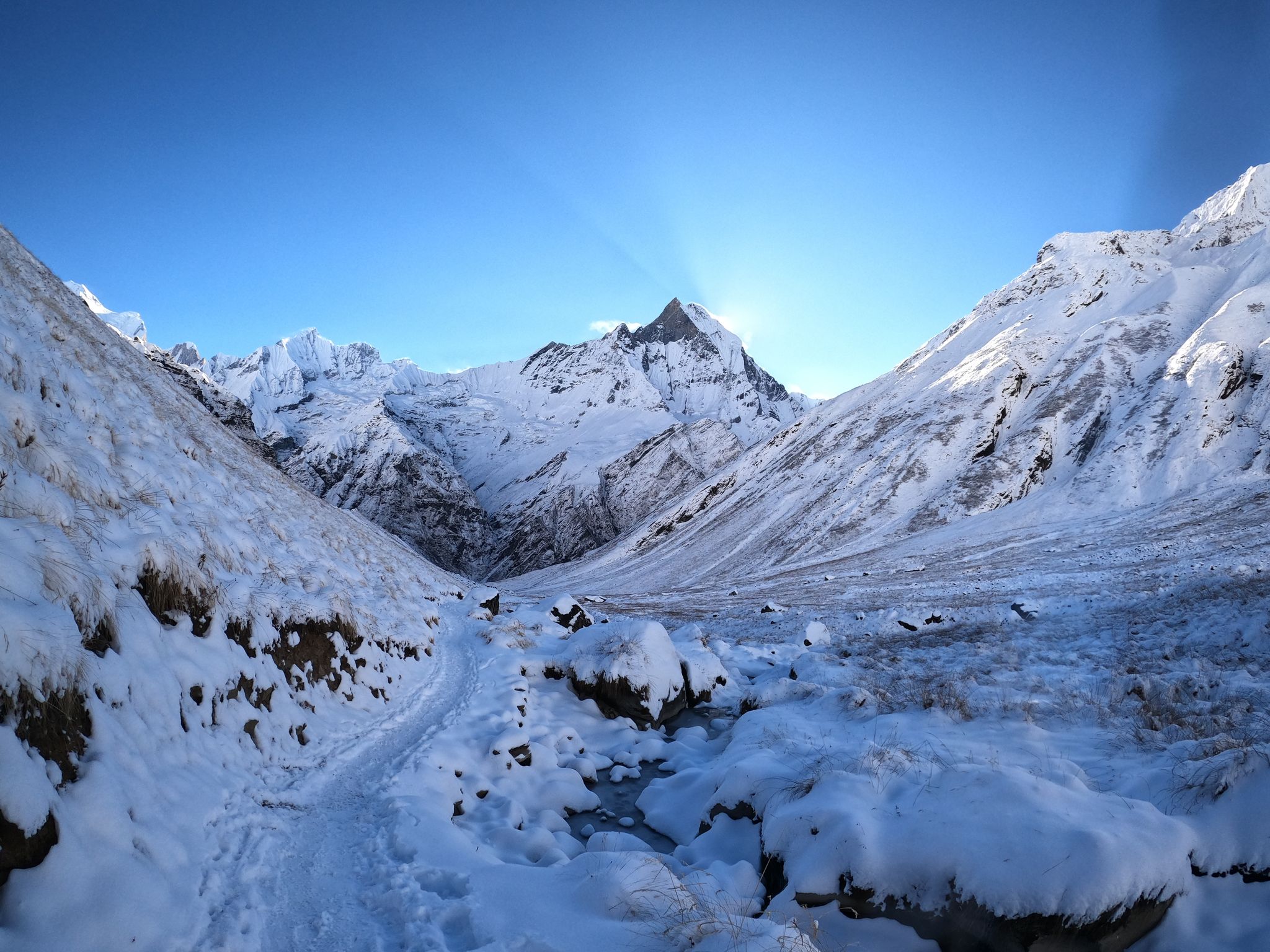
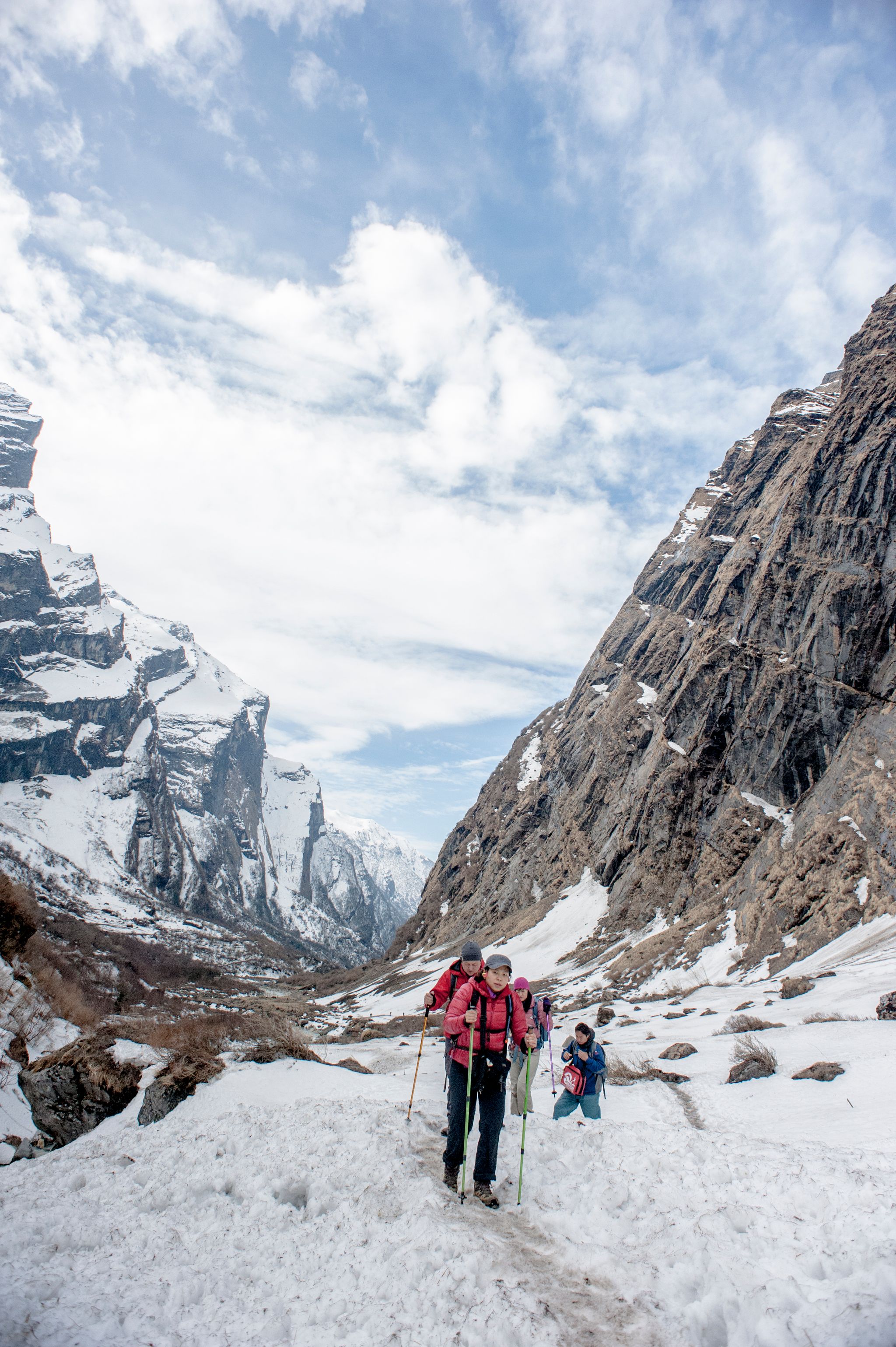
May is when Everest gets climbed. The jet stream lifts, brief windows of summit-grade weather open, and the expeditions that positioned all spring make their pushes, most in the classic mid-to-late May slots. For trekkers, early-May Khumbu is a front-row seat: Base Camp at maximum size, helicopters shuttling, lodges full of weather talk. The EBC trek itself remains in good condition early month; by late May, haze and building cloud argue for other plans. Ambitious trekkers eyeing the high passes should treat the first half of May as the closing bell of the spring season.
The rain-shadow move
May's smartest play is geographic: go where the monsoon can't. Upper Mustang enters its prime, warm days in the high desert and the Tiji festival usually falling this month (lunar calendar; verify), as the full Mustang guide details. The Jomsom-Muktinath corridor and Dolpo's fringes share the same dry logic. When the rest of the country's trails turn muddy, these stay dusty; that is the trade you want from late spring onward.
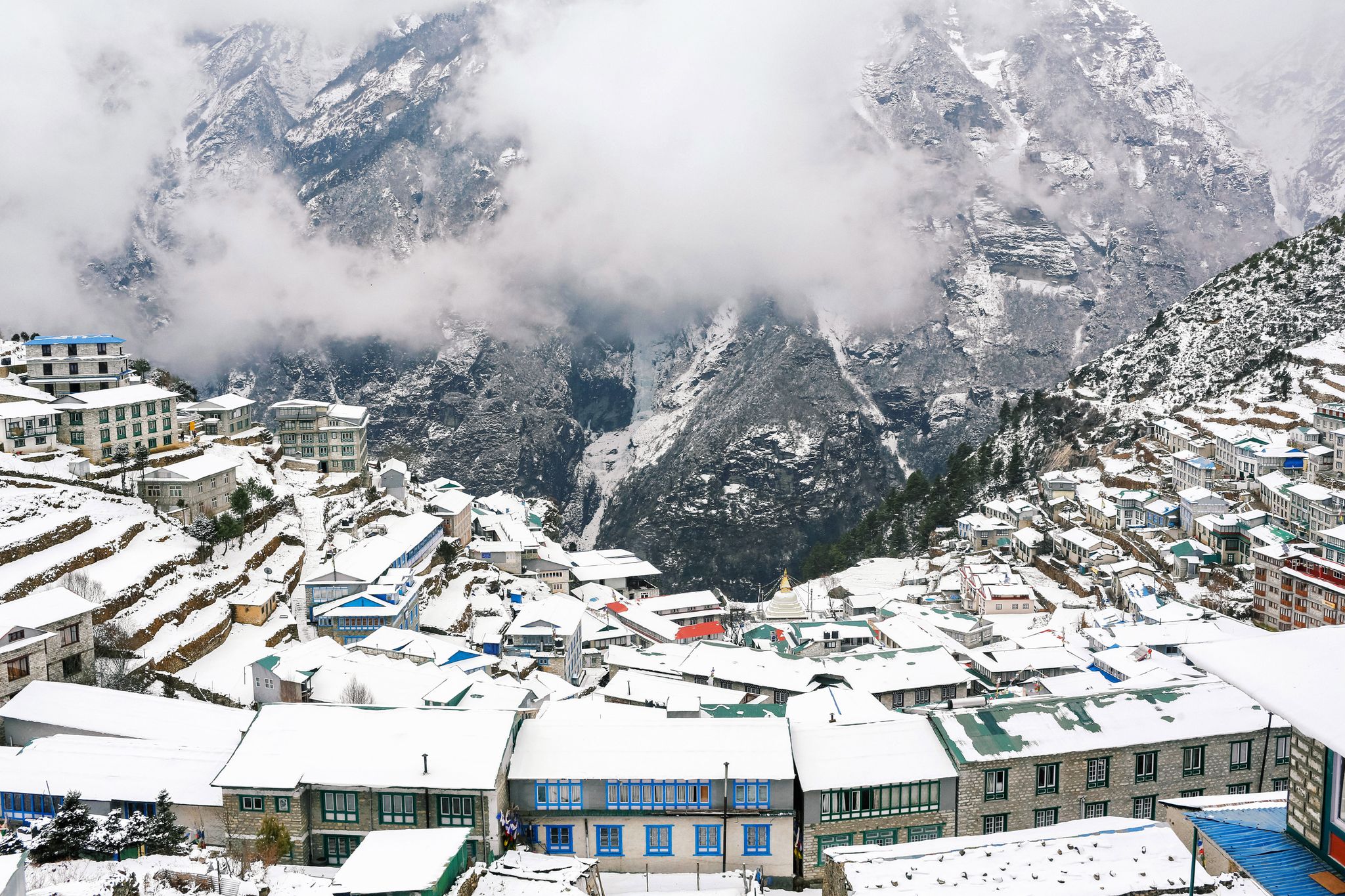
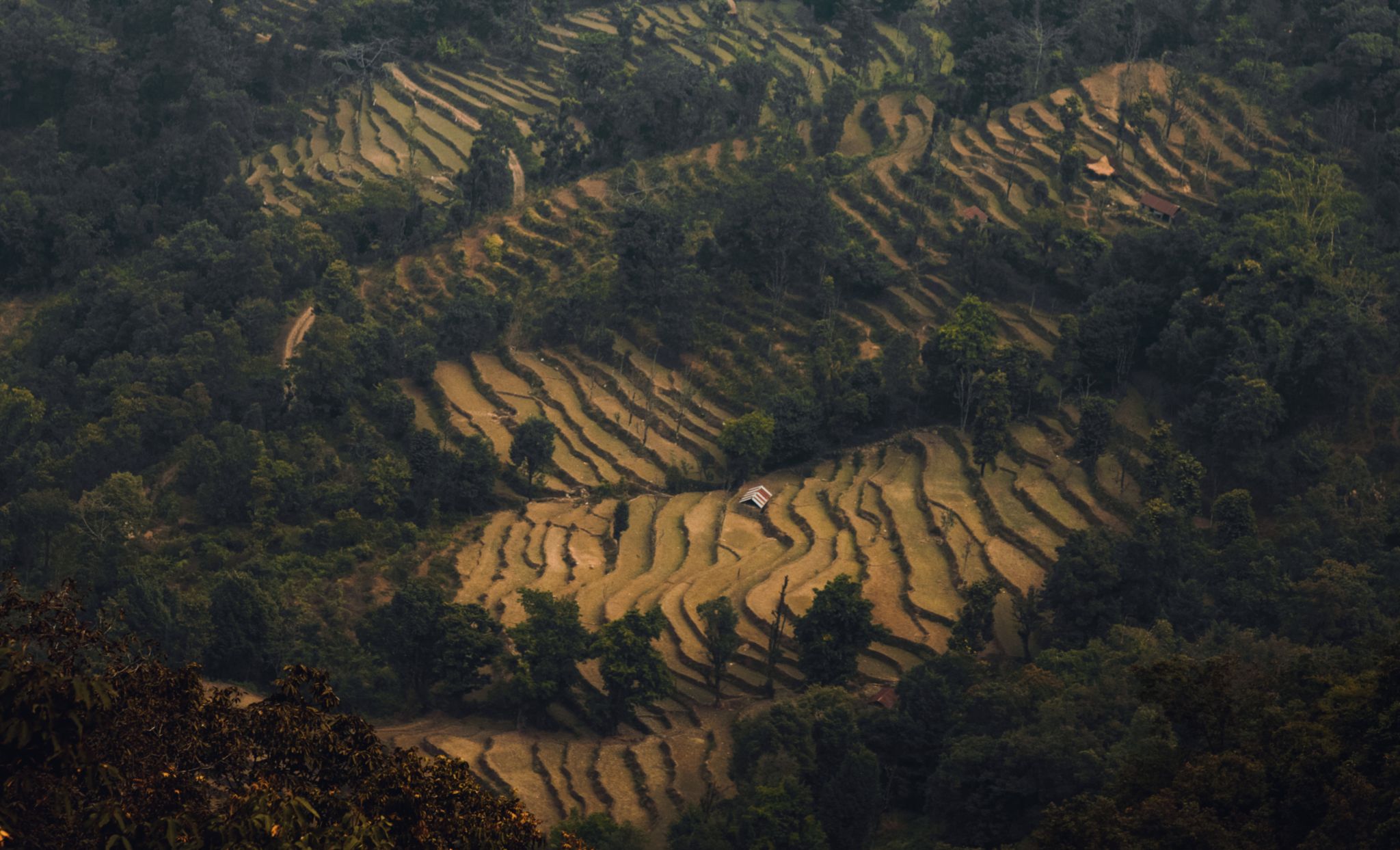
 Late spring on the terraces: fields prepped and waiting, the whole mid-hill economy watching the sky for the monsoon
Buddha Jayanti: the luminous full moon
The full moon usually landing in May is Buddha Jayanti, the Buddha's birthday, and Nepal holds the source material. Lumbini stages its greatest day: ceremonies at the Maya Devi temple, processions through the monastic zone, pilgrims from across the Buddhist world. In Kathmandu, Boudhanath and Swayambhunath glow with butter lamps and swell with circumambulating crowds; the stupas guide covers the sites, and this is their most alive evening of the year. Dates shift with the lunar calendar; verify, and book Lumbini rooms ahead if the festival is your anchor.
Green season previews
Late May flips the aesthetic switch: the haze breaks storm by storm, the hills green, and the landscape heads toward its monsoon lushness. Travelers who prefer atmosphere over panoramas start finding their season here: waterfalls waking up, rice terraces flooding for transplanting in the valleys, wedding-season bands in the streets, and tourist quarters easing toward low-season prices. Chitwan stays productive for wildlife in the heat (dawn starts mandatory), and the cities remain fully workable for culture-first itineraries between afternoon showers.
Practicalities
Book high treks for the first half of the month and build storm-buffer into any flight-dependent plan; afternoon weather cancels more aviation as May ages. Pack for heat and rain both: sun protection, light layers, and a real rain shell, with the packing list as the base. Hydration and food-and-water care matter most in the warm months. Prices soften through the month everywhere except Mustang's season and the Buddha Jayanti window at Lumbini.
A May shape that works
Sequence the month's countdown deliberately. First half: the altitude piece, an early-May Khumbu trek amid summit season, or the Mustang jeep-and-walk circuit while Tiji's dates often land. Second half: come down and go cultural, timing Lumbini or the Kathmandu stupas for the Buddha Jayanti full moon, then finishing warm and easy in Pokhara or Chitwan with dawn starts and shaded afternoons. Travelers arriving late in the month should flip the logic entirely: skip the classic panoramic treks, lean into Mustang, cities, and green-season atmosphere, and price-shop everything, because the low season's discounts start here. Whichever half you get, mornings carry the trip; plan the things that matter before noon and give the storms their afternoon stage.
Who May suits
Choose May for the summit-season Khumbu (early), for Mustang and the rain shadow, for Buddha Jayanti, or for warm, green, uncrowded travel with storms as theatre. Choose April for the same spring with clearer margins, or wait for autumn if panoramic clarity is the whole point. The month-by-month guide holds the full comparison. May is the year's closing act before the rains, and it knows how to exit: with a summit window, a festival of lamps, and thunder in the wings.