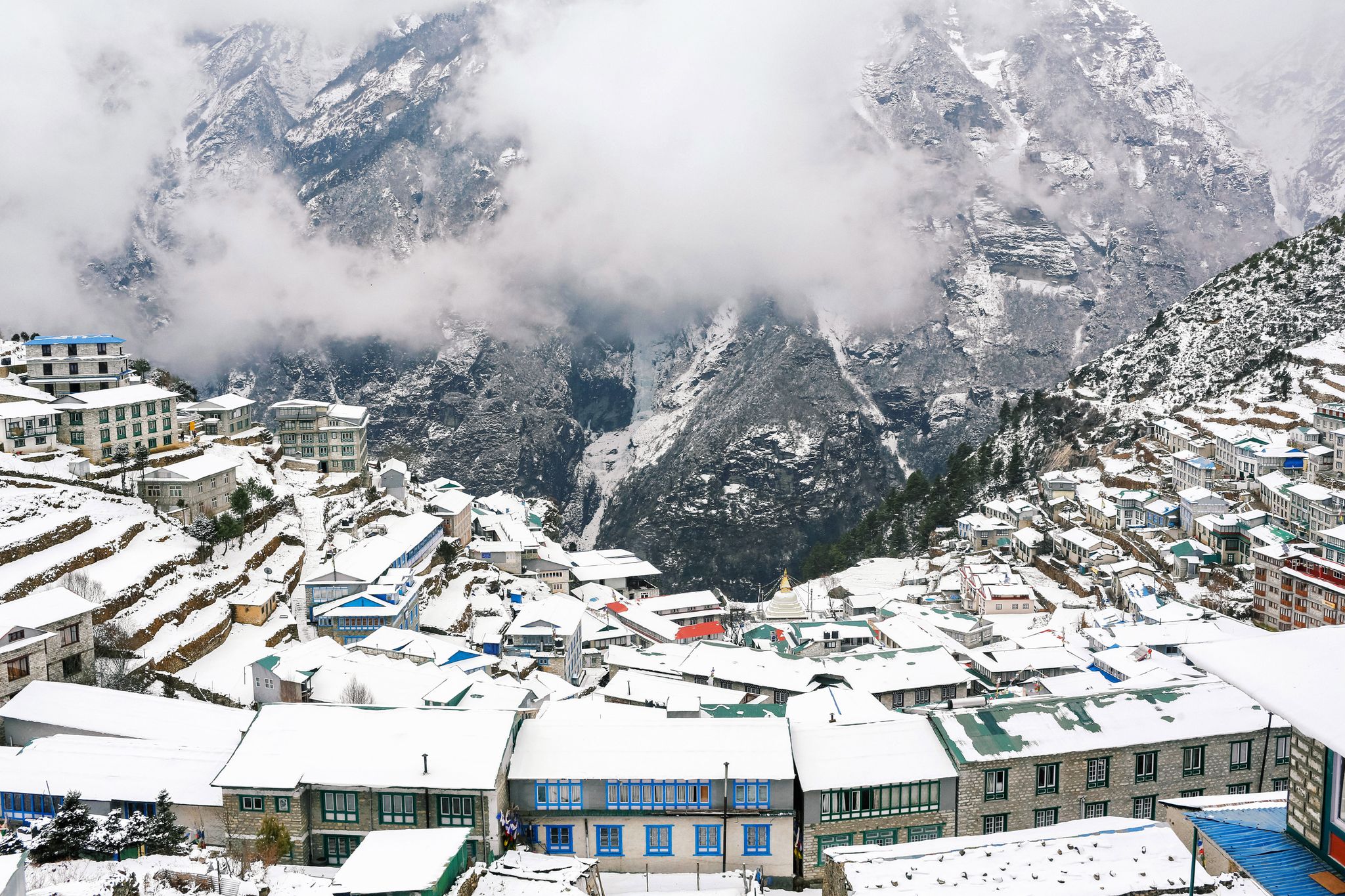
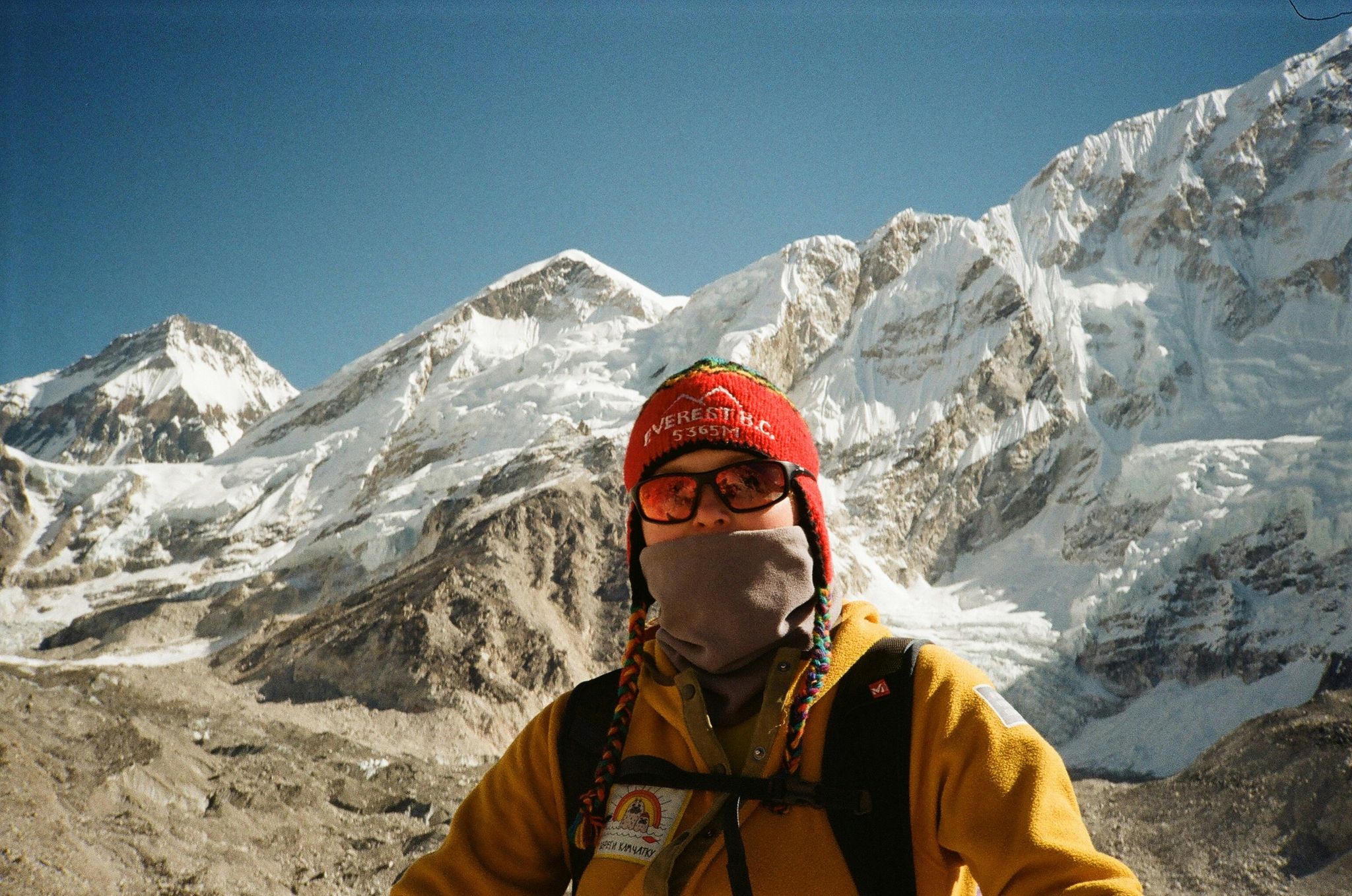
Everest Base Camp in winter is the same trail with the volume turned down. The suspension bridges are empty, the dining rooms at Namche hold a dozen people instead of a hundred, and the mountains sit in the driest, clearest air of the year. What you trade for that is cold that reorganises every day, a few closed lodges above Lobuche, and ten hours of daylight to fit the walking into. Everything below is about December to February on the classic route: what the thermometer says, what is open, how the days change, and the gear that makes it work.
Winter at a glance
| December | January | February | |
|---|---|---|---|
| Namche Bazaar (3,440 m), day / night | 6-10°C / -5 to -10°C | 4-8°C / -8 to -12°C | 6-10°C / -6 to -10°C |
| Dingboche (4,410 m), day / night | 3-8°C / -10 to -15°C | 1-6°C / -12 to -18°C | 3-8°C / -10 to -15°C |
| Gorak Shep (5,164 m), day / night | -4 to 2°C / -15 to -20°C | -6 to 0°C / -18 to -25°C | -4 to 2°C / -15 to -20°C |
| Lodges above Lobuche | One or two open | One or two, reduced menus | Reopening late month |
| Lukla flights | From Kathmandu, reliable mornings | From Kathmandu, storm risk | From Kathmandu |
| Crowds | Low after the holiday week | Lowest of the year | Low, rising in the last week |
| Passes (Cho La, Kongma La, Renjo La) | Closed or expert-only | Closed | Closed until March |
Figures are typical ranges for planning, not forecasts, and wind chill on the exposed moraine above Lobuche makes every night number feel colder.
What is open and what closes
The Khumbu does not shut for winter; it thins. Lukla, Phakding, Namche, Tengboche, Pangboche, and Dingboche run close to normal, with fewer menus and more stove-side evenings. Above Dingboche the picture changes. Lobuche and Gorak Shep usually keep one or two lodges open through December and January, with shorter menus and water that arrives in a bucket rather than a tap, since the pipes freeze. Hot showers disappear. Lodges off the main trail, at Thagnak and Dzongla on the Cho La route or Lungden on the Renjo La side, often close entirely, and the three high passes are out of the question without winter mountaineering experience. The EBC and Gokyo loop is a spring or autumn plan.
A guide who phones ahead is worth more in winter than any other season; they know which lodge is open at Gorak Shep this week. Agencies also discount winter departures by roughly 15-25%, and the EBC cost breakdown figures apply with that reduction.
 Kala Patthar in winter: the clearest Everest you will ever see, and the coldest place you will ever stand
How winter changes the days
Daylight. Roughly ten hours. Lodges serve breakfast at 7, you walk by 8, and you want to be indoors by 3:30 pm, when the sun drops behind the ridges and the temperature falls ten degrees in twenty minutes. The 12-day schedule in the standard itinerary still fits, but there is no slack for late starts.
Ice. Three sections ice over in most winters: the shaded climb past the Thukla memorials, the moraine between Lobuche and Gorak Shep, and the Kala Patthar path. Microspikes weigh 300 grams and turn each of them from a worry into a walk. Pack them.
Kala Patthar. The dawn climb that defines the trek in October becomes a test of frostbite judgement in January, often below minus 20°C with wind. Many winter trekkers climb in the afternoon for sunset instead, when the air is warmer and the light on Everest is just as good, then sleep. Base Camp itself is empty in winter: no expedition tents, just the moraine, the prayer flags, and the painted rock.
 Base Camp without the tents: in winter the glacier is yours
Water and batteries. Fill bottles with hot water at night and sleep with them. Keep the power bank and phone inside the sleeping bag; a lithium battery at minus 15°C reads empty. Carry a filter or tablets, because buying boiled water above Lobuche gets expensive when fuel is being hauled up through snow.
Altitude. Cold does not change the acclimatisation rules, but it hides the symptoms, since everyone feels bad on a minus 20 night. Keep the rest days at Namche and Dingboche (how to spend the Namche day), drink more than you want to, and read the altitude sickness guide before you fly.
A December walk to Base Camp, from Lukla to the frozen moraine (Melissa Young)Which winter month
December is the practical choice: lodges are still mostly open, the air is clear, and the first three weeks are quiet before the Christmas-New Year week brings a small bump of holiday trekkers. January is the coldest and emptiest, for people who want the Khumbu to themselves and own the gear for minus 25. February warms slowly; the last week is effectively early spring, with lodges reopening and the first pre-season groups arriving. The December and January month pages cover the rest of the country in each, and Nepal in winter weighs the season as a whole.
The flights
Winter is the one season when Lukla flights leave from Kathmandu's own domestic terminal rather than Ramechhap, since the peak diversion ends in late November, and clear, calm mornings make them more reliable than in any other month. The exception is a winter storm, which can ground flights for a day or two and leave snow on the Lukla runway. Book the first departure of the day, keep two buffer days before your international flight, and read the Lukla flights guide for the baggage and rebooking rules.
Winter gear, beyond the normal list
Add these to the standard packing list: a sleeping bag rated to minus 20°C or colder (rent one in Thamel if yours is not), a down jacket with real loft rather than a town puffer, microspikes, a balaclava or full-face buff, insulated gloves plus liner gloves for camera work, chemical hand warmers for the Kala Patthar hour, a sleeping-bag liner for the extra few degrees, glacier-grade sunglasses, and a thermos. Boots must be insulated and broken in; frostbitten toes are the winter injury that ends treks.
Should you go?
Go in winter if you want Everest without the queues, clear skies nearly guaranteed, and lodge prices at their lowest, and if you already own cold-weather gear and are honest about your tolerance for minus 20 nights. Do not go if the trek is your first time at altitude, if you need the Gokyo or Cho La extension, or if a closed lodge at Gorak Shep would wreck the plan. In between, the lower Khumbu in winter, Namche to Tengboche and Dingboche and back over a week, is one of the best short treks in Nepal and none of the hard parts apply.
For the region's villages and what each is like to sleep in, the Everest guide has the detail, and for the cost of a wrong decision at 5,000 m, make sure your insurance covers winter trekking to 5,545 m and helicopter evacuation.