The number you see first is almost never the number you pay. Agency adverts quote the package, and blog posts quote what the writer spent in a cheaper year. Neither tends to include the hot shower at Lobuche or the tip envelope on the last night. This breakdown lists every line on a 2026 Everest Base Camp budget, for independent and guided trekkers, including the small charges that quietly add up. Figures are in US dollars (rupees where you pay in rupees) and move every season, so treat them as a planning range and verify before you book.
The short answer
| Style | Typical total, 12-day trek, per person | What it looks like |
|---|---|---|
| Independent | USD 1,100-1,400 | You book the flight, carry your pack, and choose lodges as you go |
| Independent + porter-guide | USD 1,500-1,800 | One local helper who carries some weight and knows the lodges |
| Guide + porter (self-arranged) | USD 1,700-2,100 | A licensed guide plus a porter shared between two |
| Agency package | USD 1,400-2,500 | Flights, permits, guide, rooms, usually meals; porter often extra |
| Comfort lodges | USD 3,500+ | Heated rooms and en-suite bathrooms where they exist |
All figures exclude international flights, the Nepal visa, and insurance. Group size matters most for the guided rows: one guide split between four trekkers costs each of them a quarter as much.
The fixed costs
You pay these whatever style you choose.
| Item | 2026 cost | Notes |
|---|---|---|
| Kathmandu-Lukla flights | ~USD 200-225 each way | Foreigner fare; in peak weeks departures move to Ramechhap, a 4-5 hour pre-dawn drive (add ~USD 15-25 for the shared transfer) |
| Sagarmatha National Park fee | NPR 3,000 + 13% VAT (~USD 25) | Paid at the Monjo checkpoint |
| Khumbu Pasang Lhamu municipality fee | ~NPR 2,000-3,000 (~USD 15-22) | Paid at Lukla or Monjo; no TIMS card needed in this region |
| Kathmandu nights | ~USD 20-60 a night | Two before the trek and one or two after, because Lukla weather delays are routine |
Domestic fares dipped after a July 2026 fuel-price cut, but they move with every fuel revision. Both permits are explained in the permits guide.
Food and beds on the trail
Tea house rooms stay cheap, a few dollars a night and sometimes nearly free low down, on the understanding that you eat dinner and breakfast where you sleep. Food is where the money goes, and it climbs with the trail. A dal bhat that costs NPR 600-800 in Phakding costs NPR 1,000-1,200 in Namche and NPR 1,300-1,600 at Gorak Shep, where every grain arrived on a porter's back or a yak's. Most trekkers spend USD 30-40 a day on three meals, tea, and water, rising toward USD 45 above Dingboche. The trekking food guide explains why dal bhat, with its free refills, stays the best value on any menu.
 Namche Bazaar: the last place with bakeries, ATMs, and gear shops, and where prices start to climb
The extras nobody budgets for
Above Namche, almost everything that plugs in or heats water carries a fee. Rough 2026 prices, rising with altitude:
- Charging: NPR 200-500 per device per charge (a power bank halves the bill)
- Hot shower: NPR 300-700, often a bucket rather than a shower
- Wifi: an Everest Link card, roughly NPR 2,000-3,000 for a data allowance that works in most villages
- Boiled or filtered water: NPR 100-400 a litre; a filter bottle or purification tablets save more money than anything else on the trek
- Snacks: a chocolate bar at Gorak Shep can cost NPR 400-500
Add these up and a careful trekker spends USD 5-10 a day on extras. A heavy phone user with daily showers can double that.
Guides and porters
A licensed guide costs about USD 25-35 a day, usually including their own food and bed when arranged through an agency; if you hire directly, confirm whether their meals are on you. A porter costs about USD 20-30 a day and carries around 20-25 kg, often split between two trekkers. A porter-guide, one person who carries a lighter load and knows the route, runs USD 25-30 a day and is the budget compromise many independent trekkers choose. Tips are part of the wage in practice: roughly USD 5-10 a day for a guide and USD 3-7 for a porter, handed over on the last evening (tipping guide).
Over 12 days, a guide and a shared porter add roughly USD 550-700 per trekker before tips. That is most of the gap between the first and third rows of the table above, and our guide vs no guide comparison covers what it buys besides a lighter pack.
Is a guide legally required? As of 2026, not here. Nepal's 2023 rule requiring guides in national parks has not been applied in the Everest region, where the local municipality still issues its permit to independent trekkers. Some agencies report tougher questioning at Monjo this season, so check before you fly.
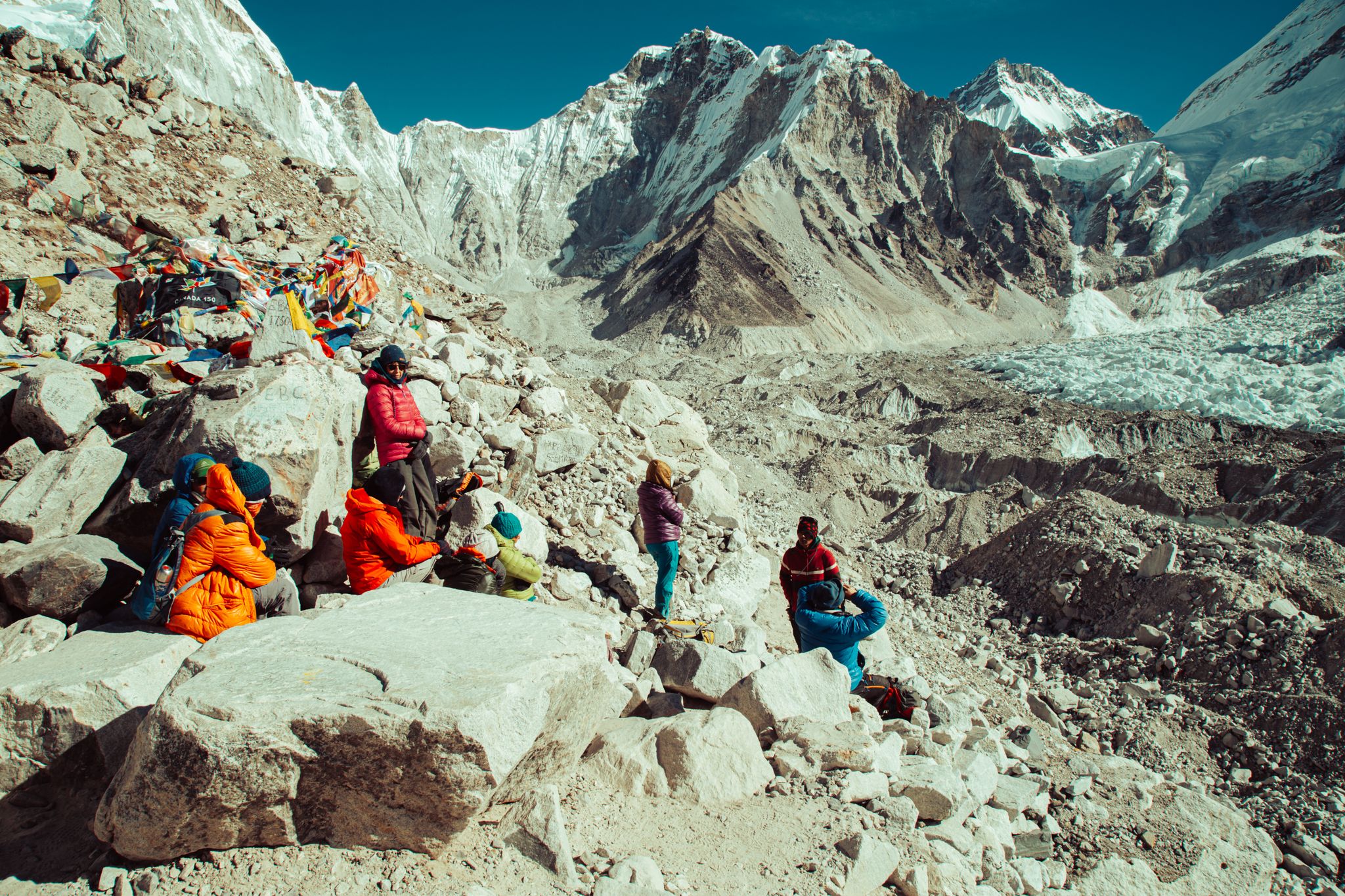
One trekker's real EBC spending, line by line (Pahaadi Ghoomketu)Reading an agency quote
Packages look cheaper than self-arranged guides because they bundle, and dearer than independent trekking because they include people. The useful comparison is line by line. Most include flights, permits, the guide, and rooms, and many include three meals a day. Most exclude porters (or share one between two), drinks, showers, charging, wifi, tips, and insurance. A 12-day package at USD 1,400 that excludes meals can end up costing more than one at USD 1,700 that includes them. Ask for the exclusions in writing.
Be wary of quotes far below USD 1,000 for the full trek with flights. The saving comes from somewhere, usually the guide's pay or the porter's load. The scams guide covers the fake-rescue schemes worth knowing about before you pick an operator.
Where to save, and where not to
Save on water (a filter bottle), charging (a power bank), and food (dal bhat over pizza). Rent a down jacket and sleeping bag in Thamel for a dollar or two a day instead of buying, and share a guide with other trekkers where you can.
Do not save on insurance that covers 5,500 m and helicopter evacuation (insurance guide), the buffer days in Kathmandu, the porter's wage, or the acclimatisation days on the 12-day itinerary. Those two extra nights of food and beds are the cheapest insurance on the mountain.
If the total still looks steep, the Everest region guide and our honest is it worth it piece help with the decision. And if twelve days is the obstacle rather than the money, the helicopter tour is the expensive half-day alternative.


