Two hours after leaving a Kathmandu hotel you can be standing on Kala Patthar, 5,545 m up, with the summit of Everest filling the sky in front of you. That is the pitch of the Everest Base Camp helicopter tour, and the pitch is accurate. What the brochures skip is the price list beneath the headline number and the fact that the helicopter rarely touches Base Camp itself. They also skip the ten minutes of thin air your body has not been asked to handle before. The rest of this page is the fine print, starting with the timetable.
What the tour actually is
The standard product is a half-day round trip from Kathmandu in a small helicopter (five passenger seats). The route follows the trekking trail in fast-forward:
| Time (approx.) | Stop | Altitude | What happens |
|---|---|---|---|
| 6:00-6:30 am | Kathmandu domestic terminal | 1,400 m | Weight check, briefing, take-off |
| ~7:15 am | Lukla | 2,860 m | Refuel; a look at the famous sloping runway |
| ~7:45 am | Pheriche | ~4,370 m | Passengers wait here while the helicopter shuttles small groups higher |
| ~8:15 am | Kala Patthar | 5,545 m | 5-10 minutes on the ground; Everest, Nuptse, and Pumori in view |
| ~8:45 am | Hotel Everest View | 3,880 m | 30-45 minutes of breakfast on the terrace |
| 10:30-11:00 am | Kathmandu | 1,400 m | Land, transfer to hotel |
Timings shift with weather and shuttling, so treat the table as the shape of the morning. Total time is four to six hours, of which about two and a half is flying.
The full flight, Lukla refuel to Kala Patthar and back (Gorakh Bista)The flying is the part nobody undersells. After Lukla the helicopter climbs the Dudh Koshi gorge, crosses above the suspension bridges you would spend two days walking between, and banks past Namche Bazaar's horseshoe of lodges. Then Tengboche monastery slides underneath, Ama Dablam takes over the right-hand window, and the moraine of the Khumbu glacier opens up toward Base Camp.
 Namche Bazaar from above: trekkers take two days to reach it from Lukla, the helicopter takes a few minutes
What it costs in 2026
Prices are quoted in US dollars and move with aviation fuel, so verify before booking. The ranges below are what operators and agencies were quoting for autumn 2026:
| Option | Price | Notes |
|---|---|---|
| Shared (group-joining) seat | USD 1,250-1,800 per person | Fixed departure, up to 5 passengers, you fly with strangers |
| Private charter | USD 3,300-4,900 per helicopter | Up to 5 passengers; the whole aircraft, your schedule |
| Park and airport fees | ~USD 45-55 per person | Sagarmatha National Park entry, municipality fee, airport tax; often excluded |
| Hotel Everest View breakfast | ~USD 30-35 per person | Optional; frequently excluded from the headline price |
Two things follow from that table. First, the real cost of a shared seat is closer to USD 1,400-1,900 once the excluded extras are added, so ask for the all-in figure in writing. Second, a private charter split five ways lands at roughly the same price per head as a shared seat, with the bonus that everyone on board gets the Kala Patthar landing (more on that below). Groups of four or five should price the charter first.
Where you land, and where you don't
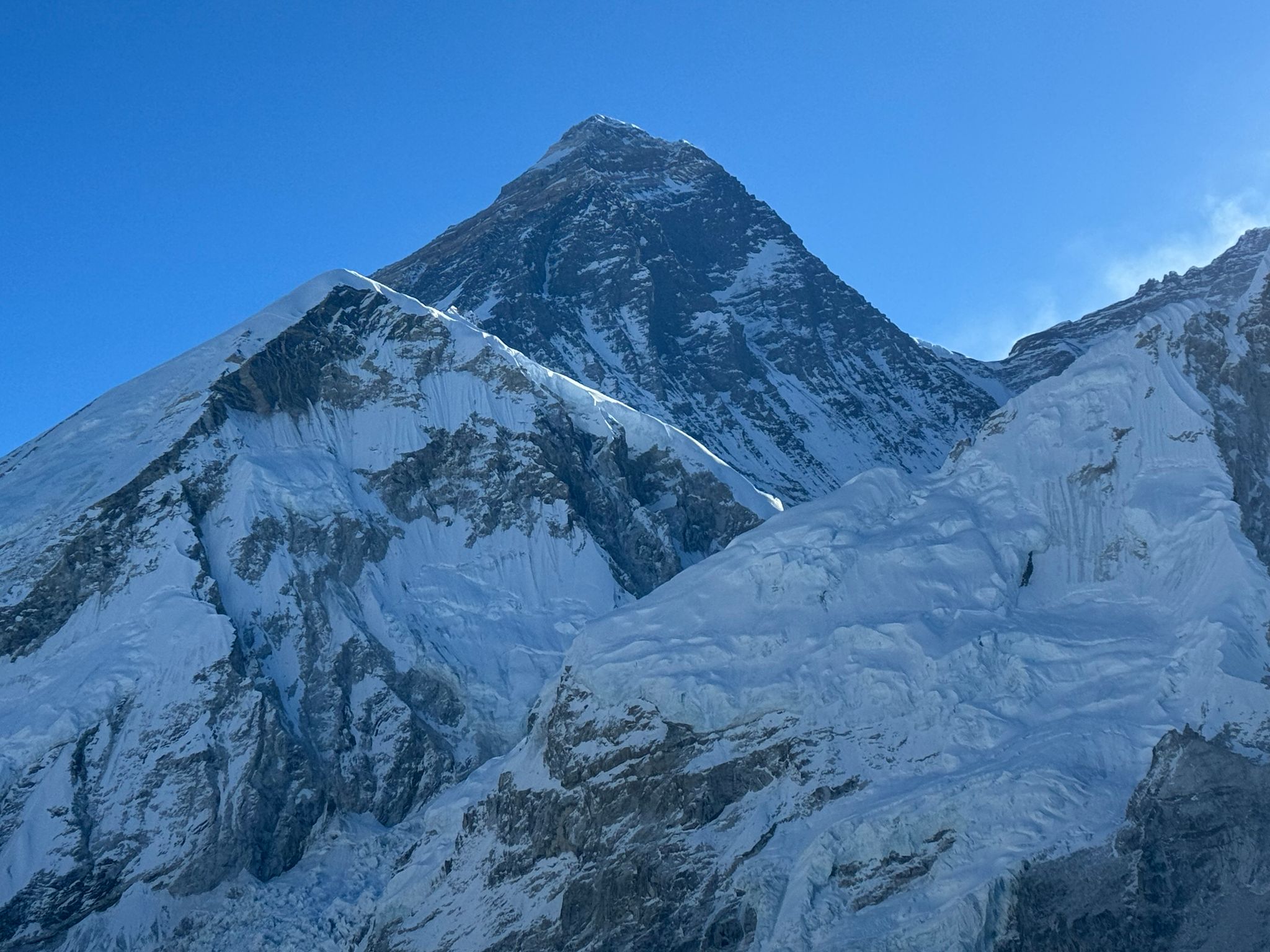
Everest Base Camp itself is on the Khumbu glacier, a shifting field of ice and rubble with no usable helipad outside the spring expedition season, and even then landings are reserved for rescues and expedition logistics. Tours fly low over the tents (or the empty moraine, outside April-May) and land instead at Kala Patthar, the dark hump above Gorak Shep that trekkers climb at dawn on the twelve-day itinerary. It is the better place to be anyway: Base Camp has no view of the summit; Kala Patthar has the classic one.
 Kala Patthar is the brown ridge in front of Pumori; the helicopter sets down on top of it for a few minutes
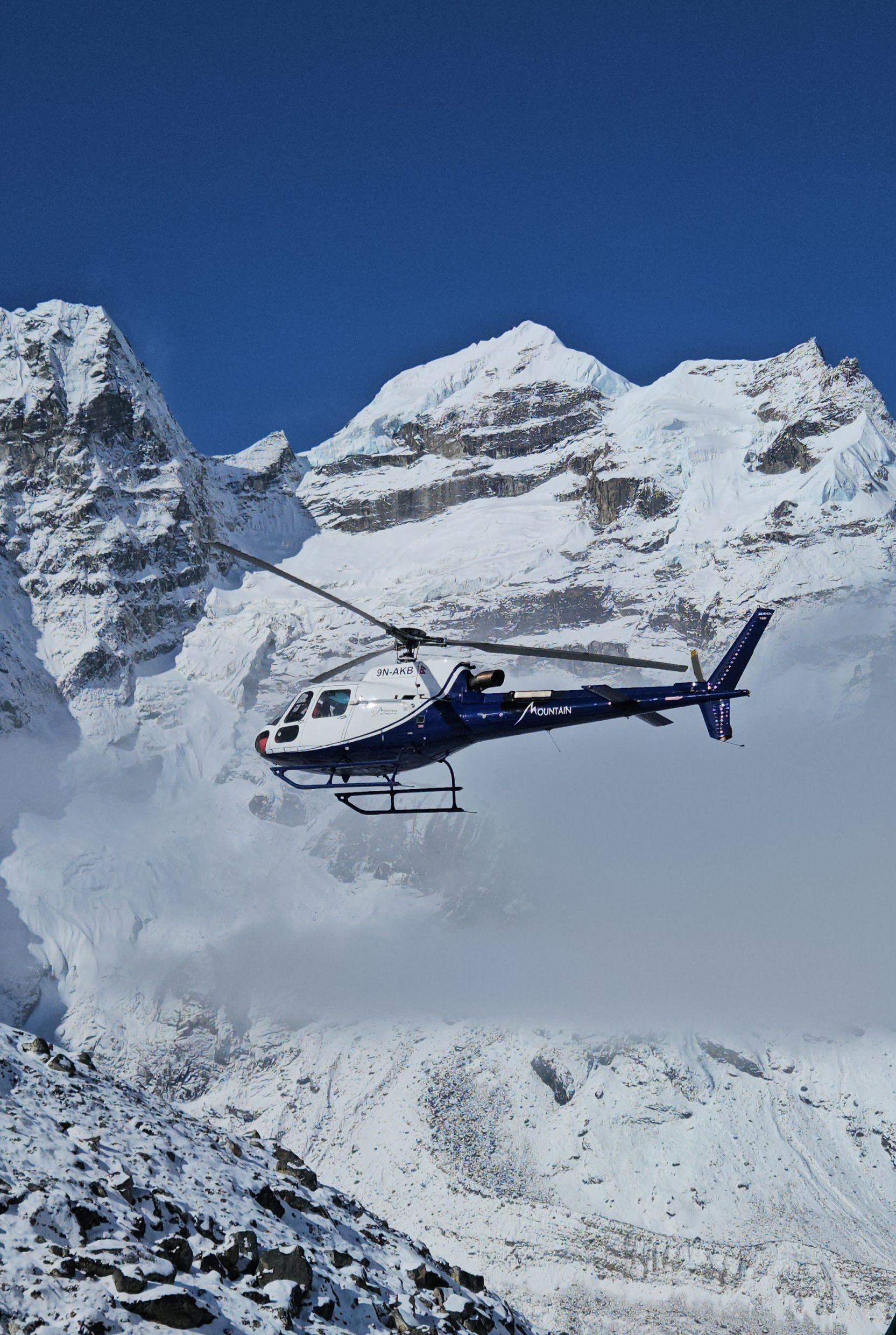
The catch is thin air. At 5,545 m a helicopter carrying five passengers and full fuel cannot lift off safely, so operators run a shuttle: the group waits at Pheriche or Dingboche while the pilot takes two or three passengers at a time up to Kala Patthar, waits five to ten minutes, and brings them down for the next pair. Bad weather, a heavier-than-average group, or a pilot who does not like the wind can mean a shortened landing or a flyover only. Some operators have gone further in 2026 and offer the Kala Patthar landing on private charters only, with shared flights getting Pheriche plus the Base Camp flyover. That is a big difference in what you are buying, so confirm exactly which landings your ticket includes before you pay.
The second landing, at Hotel Everest View above Namche, is the one everybody gets. Breakfast on the terrace with Everest, Lhotse, and Ama Dablam across the valley is the photograph most people take home, and at 3,880 m you can enjoy it without your head pounding.
The altitude catch
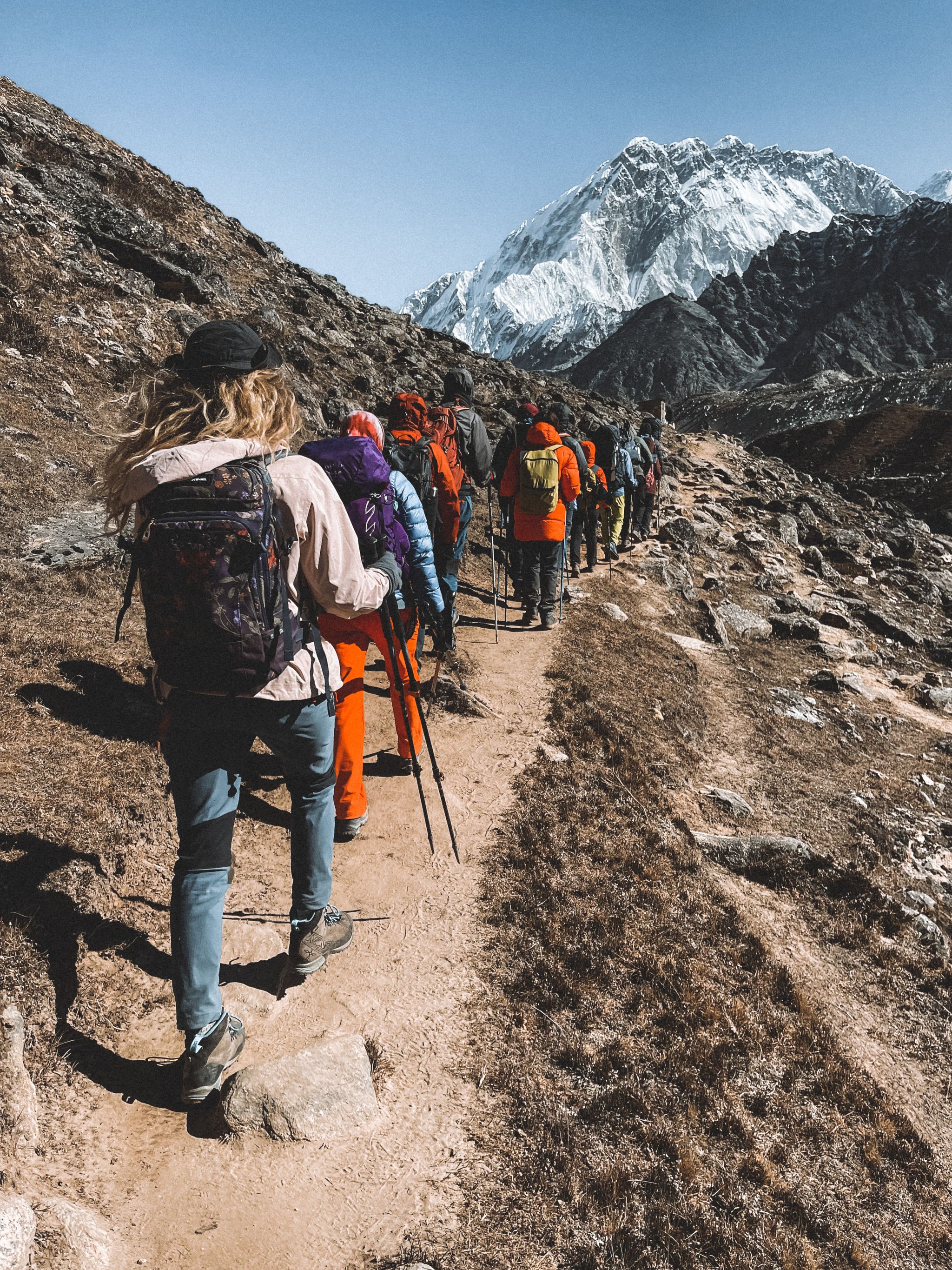
Trekkers take eight days to reach Kala Patthar. You will take two hours, with no acclimatisation at all. That is why the ground time is capped at ten minutes and why the helicopter carries oxygen. Most healthy adults feel light-headed and breathless for those minutes and are fine again by Pheriche. A minority feel awful. If you have a heart or lung condition, are pregnant, or are traveling with small children, talk to a doctor beforehand and consider asking for the Everest View stop only. Our altitude sickness guide explains what the symptoms mean; the short version for a heli tour is that descent is the cure and it is minutes away.
Do not drink the night before, and eat something before the 5:30 am pickup. Both make the thin-air minutes noticeably easier.
Weather, season, and the Ramechhap advantage
Helicopters need clear air at Kathmandu, Lukla, and the Khumbu at the same time, which is why every tour departs at first light and why October to early December and March to April are the reliable months. Winter mornings are the clearest of all, and the cold at Kala Patthar is brutal for ten minutes rather than dangerous; monsoon flights (June to September) are frequently cancelled. If weather scrubs the flight, operators reschedule to the next morning or refund, so book it early in your trip. October is the sweet spot, with the caveat that seats sell out around Dashain.
One practical edge over the Lukla plane: helicopters leave from Kathmandu's own domestic terminal year-round, while fixed-wing Lukla flights shift to Ramechhap (a 4-5 hour pre-dawn drive) in peak weeks. The airport guide covers the terminal routine.
Is it worth it?
It depends on what you are comparing it with.
- Against the trek, no. Twelve days on foot through Sherpa villages is a different experience and the tour is a viewing, not a trek. If you have the time and fitness, walk it.
- Against the mountain flight, the helicopter costs six to eight times more and delivers something the plane cannot: the ground under your boots at 5,545 m, and Everest from below rather than level with the window. The mountain flight review is the honest case for the cheaper option.
- For travelers who cannot trek, whether through time or knees, it is the only way to stand in the high Khumbu, and the people who book it for that reason rarely regret it. It is a fixture on comfort-first itineraries in our older travelers guide.
- For trekkers, the hybrid is worth knowing about: walk in over eight days, then fly out from Gorak Shep or Pheriche instead of retracing the trail. Shared heli-out seats are sold on the spot at Gorak Shep and cost a fraction of the full tour; prices vary, so ask around.
Booking without getting burned
Nepal has a handful of licensed helicopter operators and hundreds of agencies reselling their seats. Booking through a Thamel agency is normal and the markup is usually modest; booking direct with an operator is also fine. Either way, get the all-in price, the exact landings, the weight rules (passengers over about 100 kg should say so in advance), and the weather policy in writing.
Two cautions. Nepal's helicopter sector has a long-running insurance-fraud problem involving fake trail evacuations (arrests followed in 2026); it is a rescue-side issue, but a reason to book an established company. And check that your travel insurance covers a brief visit to 5,545 m; many standard policies do not, and a tour company's "emergency oxygen" is not a medical plan.
For the wider region, the Everest guide covers Namche, Tengboche, and the valley you will be looking down on, and the permits guide explains the park fee you are paying without ever showing a permit.