Nepal is one of Asia's great shopping destinations - not for malls, but for living craft: pashmina looms, bronze casters, thangka studios, and paper workshops that have supplied the Himalaya for centuries. It's also full of factory-made lookalikes sold at handmade prices. This guide covers what's worth buying, how to tell real from fake, where to shop, and how to bargain without being a bore.
Pashmina: the flagship buy
True pashmina (fine Himalayan cashmere) is Nepal's most famous export and its most faked souvenir. The real thing is matte, feather-light, and warm, with an honest price tag; the shiny, slippery USD 5 "pashminas" hanging by the hundred are viscose. Check composition labels (100% cashmere, or honest silk-cashmere blends), buy from dedicated pashmina shops rather than street hangers, and treat price as information: genuine shawls cost real money because goats, hand-looms, and skill are involved. Verify current price ranges in-store - quality tiers vary widely.
Singing bowls: hammered vs spun
The famous singing bowls come in two kinds: hand-hammered (irregular surface, complex warm tone, each one unique) and machine-spun (smooth, uniform, brighter and simpler in sound). Neither is a scam - but they should be priced differently. Play several before choosing: a good bowl sustains and layers its tone, and the one that speaks to you in the shop is the one you'll actually use at home. The serious workshops around Patan's craft quarter and reputable Thamel dealers will happily demonstrate the difference; "antique" bowls are nearly always artificially aged, so pay new-bowl prices.
Shopping Thamel and the night market, with prices (Grishma Udayawar)Thangka: art with apprenticeships
Thangka - the intricate Buddhist scroll paintings - range from student exercises to museum-grade masterworks, and price follows the hours: fine detail (look at faces, gold work, line steadiness under a loupe) can mean months of work. Buy from studios where you can watch painters at work (Patan, Bhaktapur, and around Boudhanath), ask about the artist and iconography - the symbolism is the point - and be wary of "old monastery thangkas": genuine antiques are export-restricted, and street versions are tea-stained reproductions.
The rest of the honest list
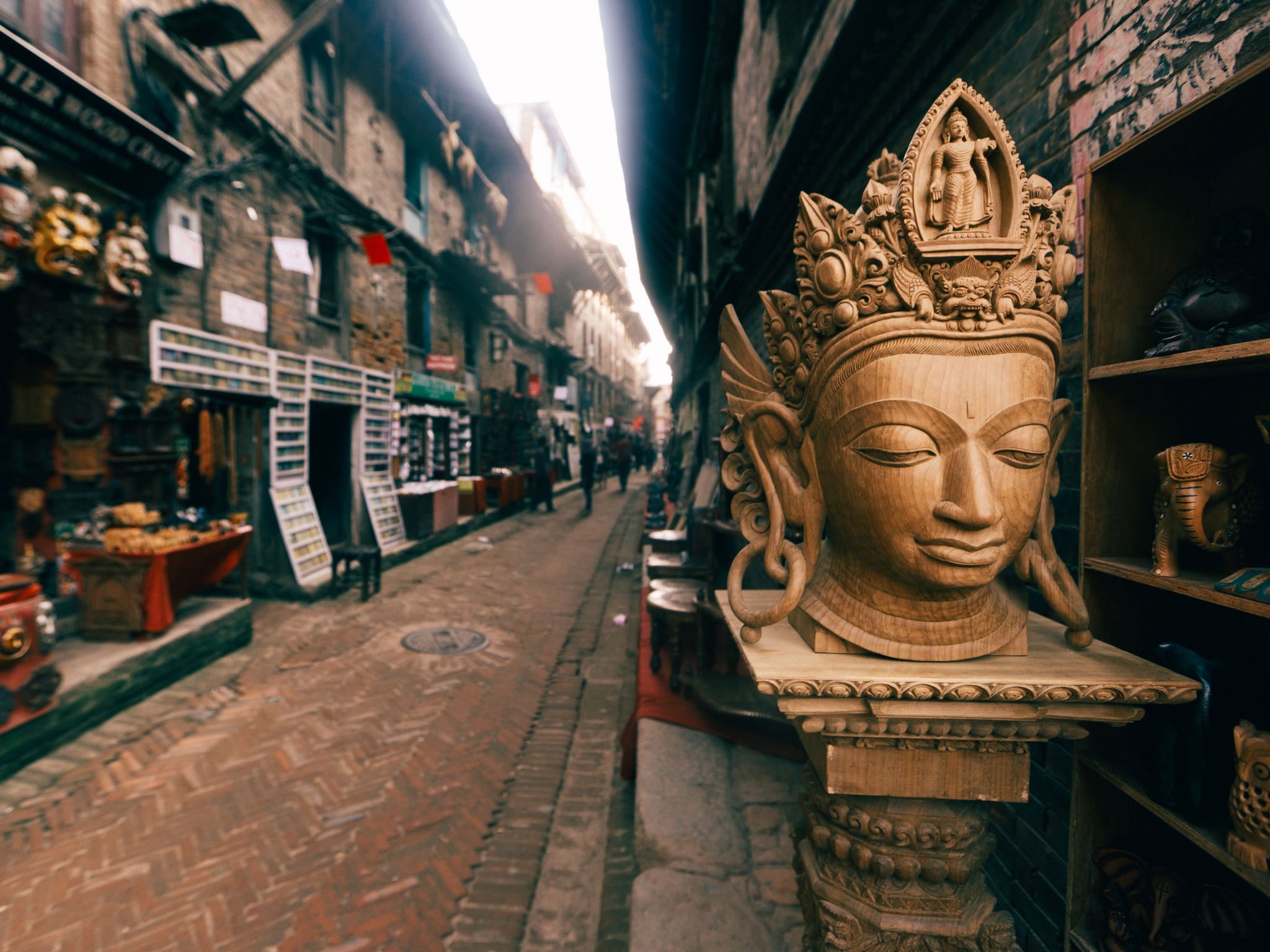
 Kathmandu's market streets - copperware, fabrics, and crafts stacked to the eaves
- Dhaka fabric & topis - the handwoven geometric cloth of the traditional dress; best from Palpa and the eastern hills. (Wondering what to actually wear as a traveler? See what to wear in Nepal.)
- Ilam tea & Nepali coffee - the best consumable souvenirs; buying guidance in our tea & coffee culture guide.
- Khukuri knives - the curved Gurkha blade; buy from reputable dealers (Dharan-made is the benchmark), and pack it in checked luggage only.
- Lokta paper - handmade Himalayan paper as journals, lampshades, and cards; light, beautiful, and genuinely local.
- Felt and woollens - bags, slippers, toys from women's cooperatives.
- Mithila paintings - the vivid Terai folk art, best bought from the women's cooperatives in Janakpur where the tradition lives.
- Jewellery - silver, turquoise, coral, and the beaded pote of married women; hallmarks are rare, so buy for beauty at the price asked, not as investment.
- Trekking gear - Thamel's open secret: convincing knock-offs at a tenth of brand prices (fine for duffels and fleeces) beside genuine branded shops (buy real for boots and shells - see the packing list).
Where to shop
| Place | Best for |
|---|---|
| Thamel (Kathmandu) | Everything touristic; gear, pashmina, bowls - bargain |
| Asan & Indra Chowk | Local markets - fabric, spices, beads, real prices |
| Patan craft quarter | Bronze, thangka studios, quality metalwork |
| Bhaktapur | Woodcarving, pottery square, juju dhau |
| Boudha | Tibetan crafts, thangka, prayer items |
| Fair-trade shops (city-wide) | Fixed prices, cooperative-made goods |
Bargaining, fairly
In markets and souvenir shops, bargaining is expected. Open below the ask, smile, and meet somewhere fair. Two rules keep it decent: don't grind a craftsperson over what a coffee costs at home, and don't start negotiating unless you actually intend to buy. Fixed-price and fair-trade stores mean what the tag says. Prices for handmade work that seem "too high" are usually just the cost of hands - the money guide covers cash, cards, and the practicalities.
Shipping, weight, and getting it home
A few logistics save regret. Weight adds up fast - singing bowls and bronzes are dense, so check your airline's limits before committing to the big statue. Reputable shops in Thamel and Patan arrange shipping for larger pieces; use established dealers, get receipts and photos, and accept that sea freight takes months. Keep purchase receipts for anything valuable - they smooth both Nepali customs and arrival at home. And carve the trip's buying into two passes: browse early to learn prices, buy late so you're not hauling a bronze Ganesh over a trekking pass.
What to leave in the shop
Endangered-species products (shahtoosh, ivory, certain furs) are illegal to buy and to import home. Genuine antiques and religious artefacts need export clearance that casual purchases won't have - assume "ancient" street finds are reproductions and pay accordingly. And anything blade-like flies checked, never carry-on (airport guide).
Shop with a little knowledge and Nepal's markets become one of the trip's pleasures - you're not buying trinkets, you're carrying home the work of living workshops, and your money lands in the hands that made the thing. Pair the hunt with the Kathmandu guide, and leave space in the duffel; everyone does.