Of the Kathmandu Valley's three ancient royal cities, Patan - officially Lalitpur, "the city of beauty" - is the connoisseur's choice. Its Durbar Square is arguably the most elegant ensemble of Newar architecture anywhere; its museum is the best in the country; and unlike its bigger sibling across the river, Patan still works as a living craft city, where the ring of hammers on bronze drifts out of family workshops as it has for centuries. Here's how to see it properly.
Durbar Square: the masterpiece
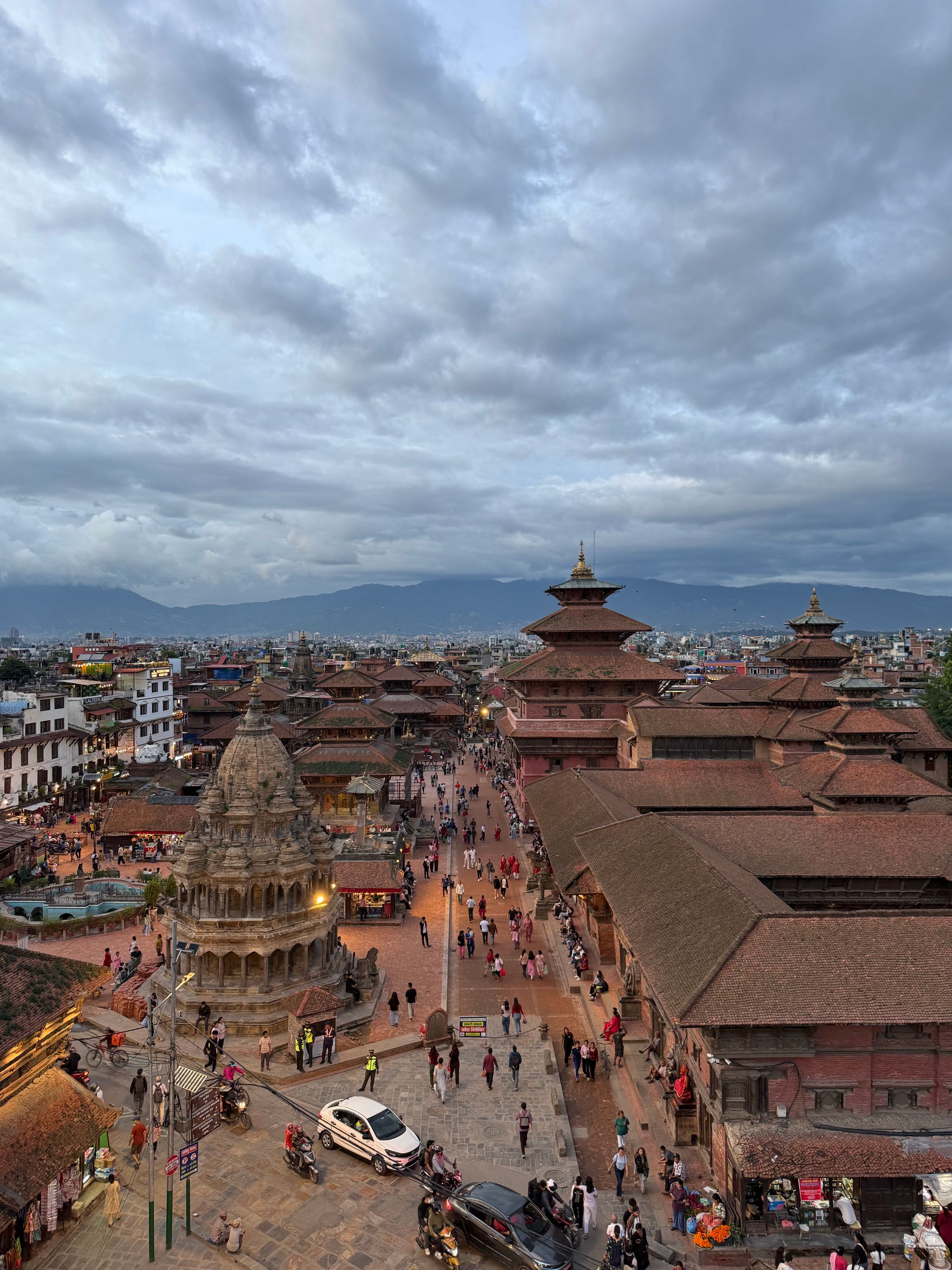
Patan's Durbar Square is compact and dense - a plaza of tiered pagoda temples, stone shikharas, and the long brick facade of the former royal palace. The star is the Krishna Mandir, a 17th-century temple carved entirely from stone in a valley that builds in brick and timber - its friezes tell the Mahabharata and Ramayana in stone, and devotees still queue here at Krishna Janmashtami (usually August; the festival context is in our Nepal in August guide).
 Krishna Mandir - a stone shikhara temple in a city of brick and timber, Patan's icon
Come early morning for worshippers and soft light, or late afternoon when the brick glows. The square took damage in the 2015 earthquake and its restoration - much of it by local craftspeople using traditional methods - is itself part of the story; watching stone carvers and woodworkers rebuild their own heritage is one of the quiet privileges of visiting now.
The Patan Museum: Nepal's best
Housed in the old palace's Keshav Narayan Chowk, the Patan Museum is widely regarded as the finest museum in Nepal - a beautifully lit, intelligently explained collection of bronzes and sacred art inside a restored royal courtyard. Even museum-skippers tend to love it. Give it 1-2 unhurried hours - the labels genuinely teach - and finish with tea in the garden cafe behind. It's the single best primer on the Hindu-Buddhist iconography you'll see everywhere else - which our symbols guide decodes on the street.
The hidden courtyards
Patan's old town is honeycombed with bahals - Buddhist monastery courtyards tucked behind unassuming doorways:
- Hiranya Varna Mahavihar (the Golden Temple) - a dazzling gilded courtyard shrine a few minutes north of the square; active, atmospheric, and small enough to absorb slowly.
- Mahaboudha - the "temple of a thousand Buddhas," a terracotta shikhara covered in Buddha tiles, hidden in the lanes southeast of the square.
- Kumbheshwar - one of the valley's rare five-tiered pagodas, north of the square.
Wandering between them through backstreets - past water tanks (hitis), shrines, and courtyard life - is the real Patan experience. The deeper tradition behind the bahals is covered in our Buddhism in Nepal guide.
The city of artists
Patan has been the valley's metalworking centre for a millennium - the great bronzes of Tibet's monasteries were often cast here. In the lanes around Mahaboudha and Oku Bahal you can watch lost-wax bronze casting and repoussé work in open workshops, and buy directly from the families who make statues, singing bowls, and ritual objects. Quality varies with price honestly here more than in Thamel; this is the place for a serious souvenir. Thangka painting studios cluster nearby.
Lalitpur - a 2,000-year-old city still alive (Flow Travellers)A half-day walking route
Patan rewards wandering, but if you want a spine to hang it on:
- Start at the Durbar Square as it opens - temples, the palace facade, and the morning puja traffic.
- Patan Museum for 1-2 unhurried hours, coffee in the garden cafe after.
- North to the Golden Temple through the market lanes; step into any open bahal doorway you pass - the courtyards are the point.
- South-east to Mahaboudha and Oku Bahal, pausing at the metal workshops en route.
- Finish on a rooftop back at the square for a late Newari lunch as the light warms the brick.
Add Kumbheshwar temple and the northern stone waterspouts if your legs allow - nothing in old Patan is more than fifteen minutes from anything else.
Eating in Patan
Patan is a stronghold of Newari food. Around the square and in the lanes you'll find samay baji sets, choila, bara, and honest dal bhat; several courtyard cafes and rooftop restaurants ring the Durbar Square itself for a view with lunch. Try the local juju dhau-style yogurt and, if you're brave, the rice-beer chyang. Primer on all of it in the Nepali food guide.
Practicalities
- Getting there: 20-30 minutes by taxi or ride-hailing from Thamel (getting around Nepal); easy to combine with central Kathmandu sights.
- Tickets: Durbar Square charges a foreigner entry fee (keep the ticket for re-entry; verify current price); the museum is ticketed separately and worth every rupee.
- Time: half a day minimum; a full day to do it justice.
- Etiquette: dress modestly, shoes off in shrine rooms, walk clockwise, ask before photographing worship (what to wear).
- Stay? A night in a restored courtyard guesthouse buys you the square at dawn - magical and empty.
Patan compresses everything that makes the Kathmandu Valley extraordinary - architecture, faith, craft, and food - into a walkable square kilometre. Pair it with the other royal cities via our Bhaktapur guide and the Kathmandu guide, or slot it into the 7-day itinerary as the cultural highlight it deserves to be.