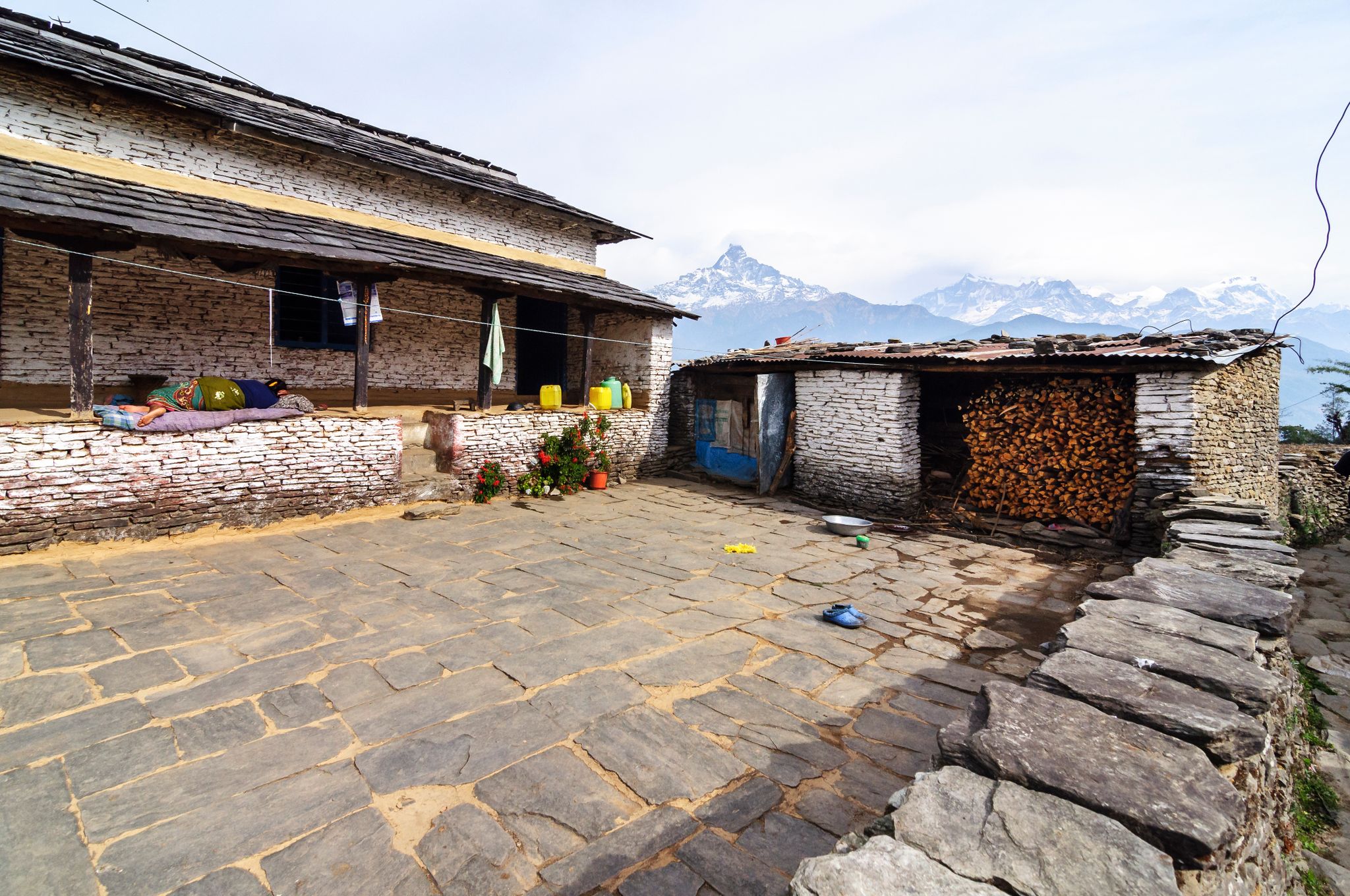

Two questions arrive in our inbox more than any other: "I have three days in Pokhara, which trek?" and "what should it cost?" This page answers both. It compares every worthwhile walk of one to six days that starts within two hours of the city, on the things that decide the choice: how hard, how high, what the lodges are like, whether you need a guide, and what a package costs against doing it yourself. We sell nothing, organise nothing, and earn nothing from any agency or platform named here.
The treks compared
| Trek | Days | Top altitude | Difficulty | Lodges | Package (per person) | Best for |
|---|---|---|---|---|---|---|
| Australian Camp | 1 to 2 | 2,060 m | Easy | Good, with views | USD 40 to 90 day, 100 to 180 overnight | Families, a taster, the day after a flight |
| Panchase | 2 to 3 | 2,500 m | Easy to moderate | Basic community lodges | USD 150 to 250 | Quiet forest and a 360° viewpoint |
| Poon Hill (Ghorepani) | 3 to 4 | 3,210 m | Moderate, many steps | Excellent | USD 250 to 450 | First trek, the classic sunrise |
| Mohare Danda | 4 to 5 | 3,300 m | Moderate | Community lodges, quiet | USD 300 to 500 | Poon Hill views without the crowds |
| Mardi Himal | 4 to 5 | 4,200 m viewpoint | Moderate to hard | Good to High Camp, basic above | USD 350 to 600 | Close-up Machhapuchhre, a real ridge |
| Khopra Ridge | 5 to 6 | 3,660 m (4,660 m at Khayer Lake) | Moderate to hard | Community lodges | USD 450 to 700 | Dhaulagiri wall, few trekkers |
Package prices are 2026 agency and platform ranges for a guided trek with transport, permits and lodge rooms, usually without meals; they fall with group size and rise with a porter, a private jeep or a Pokhara hotel bundled in. Do-it-yourself with a freelance guide runs 40 to 50 percent less.
One day: Australian Camp
A taxi to Kande on the Baglung road, then ninety minutes of stone steps to a grassy ridge with a row of lodges facing Annapurna South, Hiunchuli and Machhapuchhre. Sleep there for the sunrise and walk down through Dhampus village to Phedi the next morning, or go up and down in a day. No altitude to speak of, no permit checked for the day hike, and a lodge room with a view for the price of a Lakeside pizza. It is the walk for the day after you land, and for a family with children. Our Australian Camp guide has the timings and the bus.
Two to three days: Panchase
West of the lake, the Panchase ridge rises to 2,500 metres through oak and rhododendron forest to a viewpoint that takes in Dhaulagiri, the Annapurnas, Manaslu and Phewa Lake at once. Start from Bhumdi or Kande, sleep in a community lodge at Bhanjyang, climb to the summit for dawn, descend to the lake. Quiet, because the lodges are basic and nobody markets it. Carry a sleeping bag in winter.
Three to four days: Poon Hill, the classic
The trek most people mean when they say "a short trek from Pokhara". Drive to Nayapul, walk up the river to Tikhedhunga or Ulleri, climb the 3,000-odd steps to Ghorepani in the rhododendron forest, and leave the lodge at 4:30 am for the 45-minute climb to Poon Hill at 3,210 metres, where the sun comes up on Dhaulagiri, Annapurna I and Machhapuchhre. Three days returns the way you came. Four days continues along the ridge to Tadapani and down through Ghandruk, the big Gurung village, which is the better trek and only one day longer. Lodges are the best on any short route, with hot showers, bakeries and electricity. In spring the forest is red; in late autumn the sky is cleanest.
 Ghandruk, the Gurung village on the four-day Poon Hill loop. The extra day over the three-day version buys this.
The catch is the steps. Day one climbs them and day three descends them, and knees notice both. Poles help, and so does the four-day loop, which spreads the descent. Full route tables are in the Poon Hill guide.
Four to five days: Mohare Danda, the quiet Poon Hill
South-west of Ghorepani, the Mohare Danda community trail climbs through villages to a 3,300-metre ridge with the same Dhaulagiri-to-Annapurna sunrise as Poon Hill and perhaps a tenth of the people. Lodges are run by the villages and were built with Mahabir Pun's community-wifi projects, so they are simple, solar-powered and welcoming. Start at Galeshwor on the Beni road, finish via Ghorepani or Tikot. Take it if you have read about Poon Hill's crowds and want the view without them.
Four to five days: Mardi Himal, the ridge
Mardi Himal is the one that has changed most in a decade, from a camping route to a lodge trek. From Kande or Phedi it climbs through forest to Forest Camp and Low Camp, breaks out onto a bare ridge at High Camp (3,580 m), and ends at a viewpoint around 4,200 metres with Machhapuchhre close enough to feel. The walking is harder than Poon Hill: long ridge days, exposed in wind, and enough altitude on the last morning that you must take it slowly. Lodges are good to High Camp and basic above. Five days is the comfortable length; four means a long final day. The Mardi Himal guide has the stages.
Five to six days: Khopra Ridge
The best short trek for people who have done Poon Hill. From Ghandruk or Tadapani the route climbs to Dobato and then to Khopra Danda at 3,660 metres, a community lodge on a ridge that faces the whole Dhaulagiri wall with Annapurna South behind you. A hard day trip from the lodge reaches Khayer Lake at 4,660 metres, a sacred tarn below Annapurna South, which turns a moderate trek into a hard one. Few trekkers, big views, village-run lodges. Six days from Pokhara, five without the lake.
What you need regardless of trek
- Permits: the Annapurna Conservation Area Permit, NPR 3,000, plus a TIMS card issued through a registered guide or agency. Day hikes to Australian Camp are not checked; everything from Poon Hill up is. Details and current prices in the permits guide.
- A guide: required for independent trekkers in the Annapurna area under the Nepal Tourism Board's 2023 rule. Budget USD 25 to 35 a day, plus USD 20 to 25 for a porter if you want one. A porter-guide, who carries a modest load and leads, is the budget option at around USD 25 to 30.
- Lodges and food: rooms USD 3 to 10 a night, meals USD 5 to 8 each and more with altitude, so a self-funded day costs about USD 25 to 35 before the guide.
- Transport: local bus to Kande or Nayapul for pocket money; a private jeep USD 25 to 50 each way.
- Gear: layers, a shell, decent shoes and poles; rental in Lakeside is cheap. The packing list covers it.
- Altitude: only Mardi's viewpoint and Khayer Lake go high enough to matter. Sleep low, go up slowly on the last morning, and read the altitude guide if you have never been above 3,000 metres.
Package or do it yourself?
A package buys you a guide who already knows the lodges, transport arranged, permits in hand and someone to call if a knee gives out, for roughly double the bare cost. Arranging it yourself means walking into a Lakeside agency the day before, hiring a licensed guide for a daily rate, buying the permit in Pokhara and paying for lodges as you go. For a first trek with three days to spare, the package is usually the better use of the time. For anyone staying a while, the freelance route is cheap, flexible and puts the money in a guide's pocket directly. Either way, read how to book a trek in Nepal before you pay, and sleep the night before at a hotel that stores your bag; our where to stay in Pokhara guide says which.