Every lodge in Pokhara will sell you a trek, and most of them start higher and harder than you need. Australian Camp is the other answer: a grassy ridge at 2,060 m an hour's drive from Lakeside, with the whole Annapurna wall across the valley and a lodge terrace to watch it turn pink from. Two hours of stairs, one cold night, one sunrise, a morning walk down through Dhampus, and you are back for lunch. The stages are below, with the day-trip and overnight versions.
The route at a glance
| Stage | From and to | Altitude at end | Hours | Notes |
|---|---|---|---|---|
| Drive | Pokhara Lakeside to Kande | 1,770 m | 0.75-1 | Taxi or the Baglung-road bus; ask for "Kande" |
| 1 | Kande to Australian Camp | 2,060 m | 1.5-2 | Stone steps through forest; one tea stop |
| 2 | Australian Camp to Pothana | 1,900 m | 0.5-0.75 | Easy ridge walk; ACAP checkpoint at Pothana |
| 3 | Pothana to Dhampus | 1,650 m | 1.5-2 | Rhododendron and terraces into a Gurung village |
| 4 | Dhampus to Phedi | 1,130 m | 1-1.5 | Steep stairs; knees feel it |
| Drive | Phedi to Pokhara | 820 m | 0.5-0.75 | Taxis wait at Phedi in season |
Walk it in this direction. Kande to Australian Camp is the shorter climb and puts you on the ridge for sunset and sunrise, while the long staircase comes at the end, downhill. Reverse it and you climb the Phedi stairs instead, a thousand steps that have ended more than one family outing early.
Stage 1: Kande to Australian Camp
The trail leaves the road at Kande, beside a cluster of tea shops, and climbs almost at once. It is stone steps nearly the whole way, laid for porters and mules, through a forest that opens every few minutes onto the Pokhara valley behind you. A tea house halfway up marks the point where most people stop pretending they are not out of breath. After about 90 minutes the trees end and the ridge arrives all at once: a meadow, a line of lodges, and the mountains.
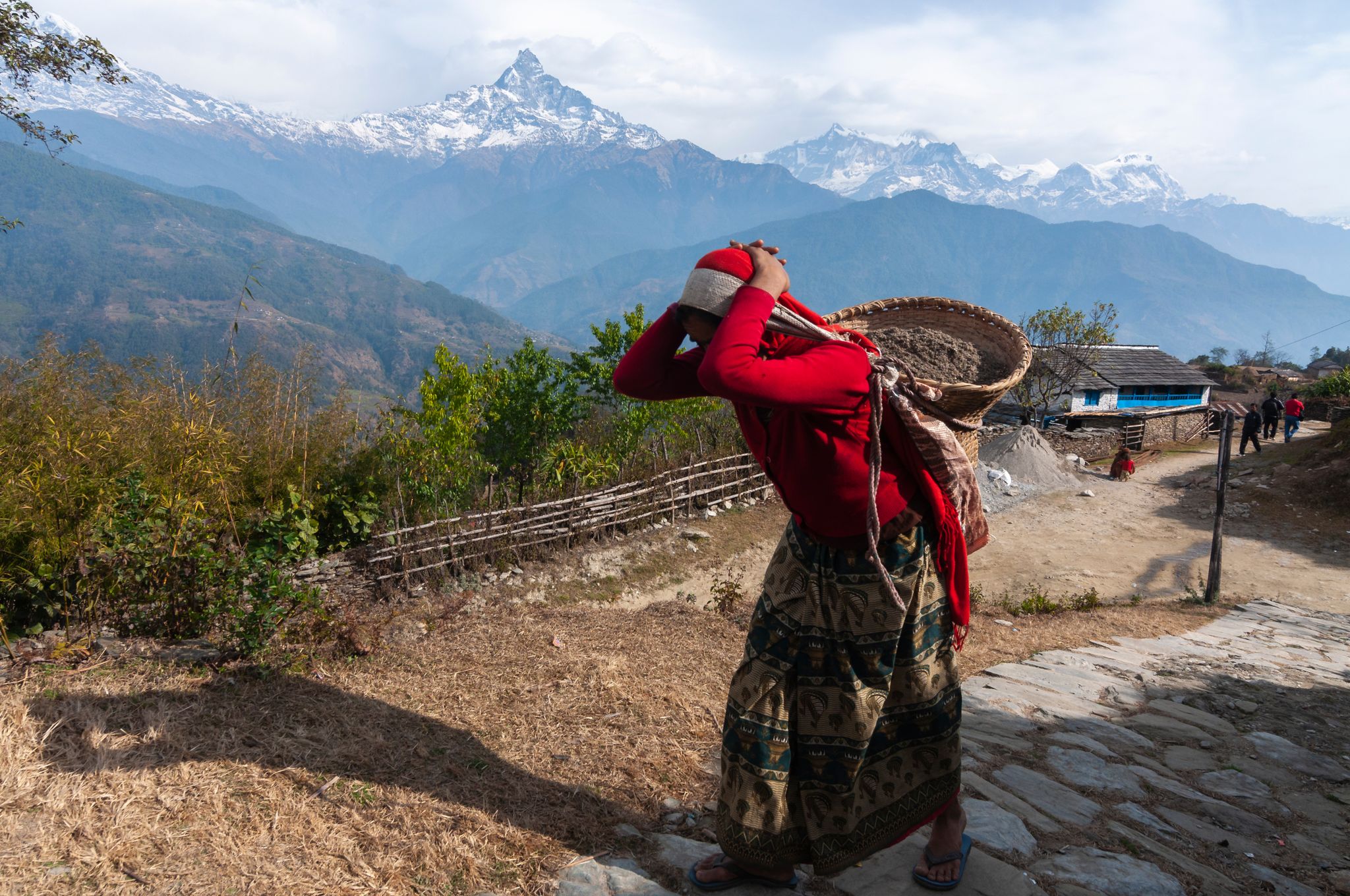
 The wall you wake up to at Australian Camp: Annapurna South, Hiunchuli, and Machhapuchhre, here seen from Ghandruk across the valley
The name comes from an Australian aid team that camped on the ridge decades ago, or so the lodge owners say, and the "base camp" in some signboards is marketing: nothing is climbed from here. What the ridge has is position. Annapurna South (7,219 m) and Hiunchuli fill the north, Machhapuchhre's fishtail stands to the right, and on a clear morning the line runs east through Annapurna II and IV to Lamjung Himal and the far bulk of Manaslu.
The Kande to Australian Camp walk and the lodge terrace at dawn (noted by lulu)The night and the sunrise
Half a dozen lodges and a few tented camps share the meadow. Rooms are simple, roughly NPR 1,000-2,500 depending on the season and whether you want a bathroom attached; verify current prices and bring cash, since there is no ATM past Lakeside. Dinner is dal bhat or the usual lodge menu, eaten in a dining room that warms up when the stove goes on. Nights are cold, 5-8°C below Pokhara and near freezing in December and January, so pack a down jacket even in October.
Set an alarm for 30 minutes before sunrise and step outside. First light reaches Annapurna South before anything else, then slides down to Machhapuchhre, and the whole wall is lit by the time tea arrives. You will not be alone; you also will not be driving up Sarangkot in a taxi queue. For how the two viewpoints compare, see the sunrise viewpoints guide.
Stage 2 and 3: Pothana and Dhampus
From Australian Camp the ridge trail wanders half an hour to Pothana, a few lodges and the ACAP checkpoint, where your permit is inspected and recorded. Pothana is also the junction for Mardi Himal: the trail to Deurali and Forest Camp leaves the ridge here, which is why the two walks share a road-head at Kande.
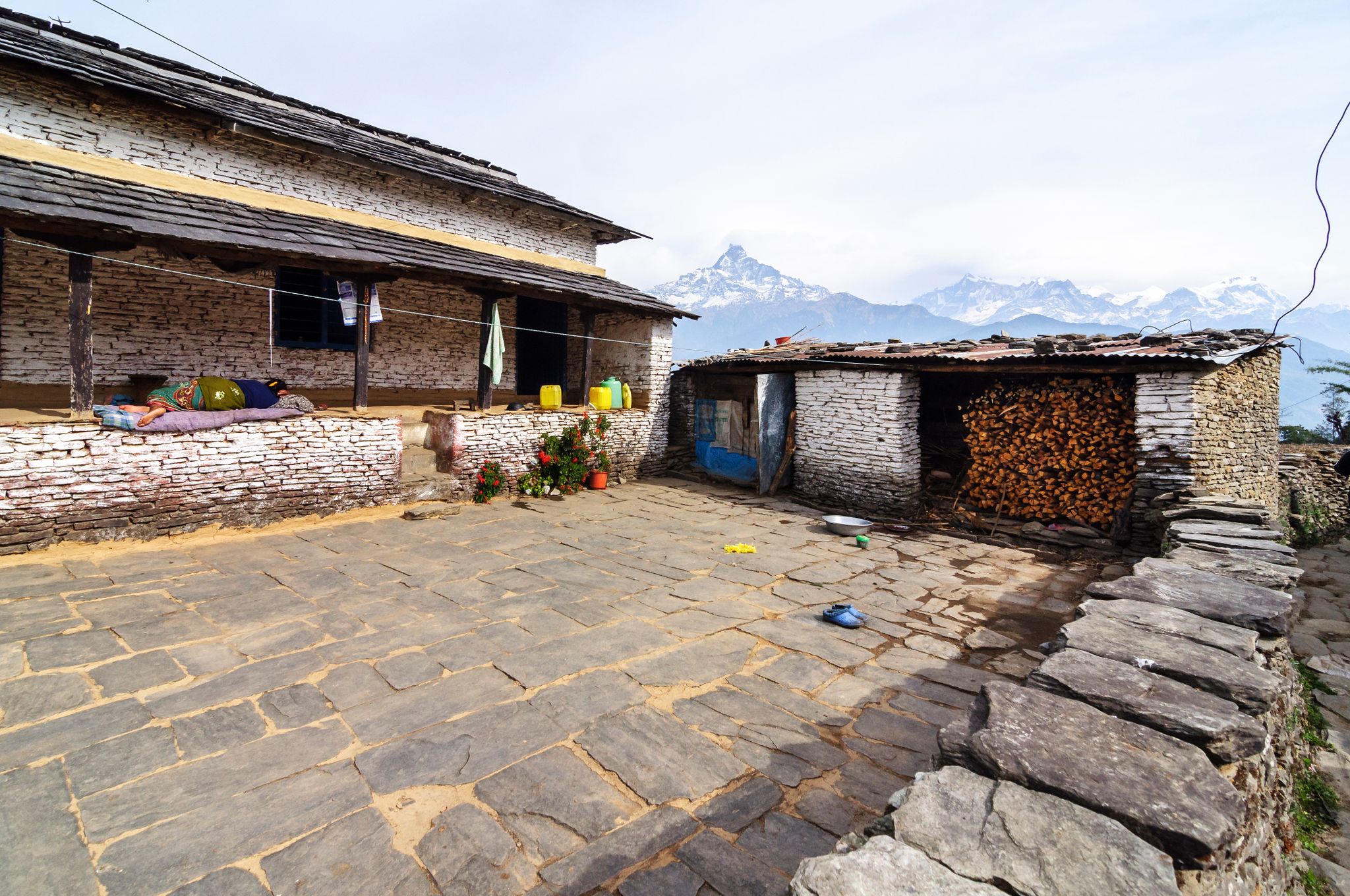
The descent to Dhampus drops through rhododendron, then terraces, into one of the Annapurna foothills' larger Gurung villages: stone houses with slate roofs, courtyards where grain dries in the sun, and the mountains still over every rooftop. There are lodges here too, and some people spend the night in Dhampus instead of Australian Camp to be closer to village life; the sunrise is almost as good and the beds slightly better.
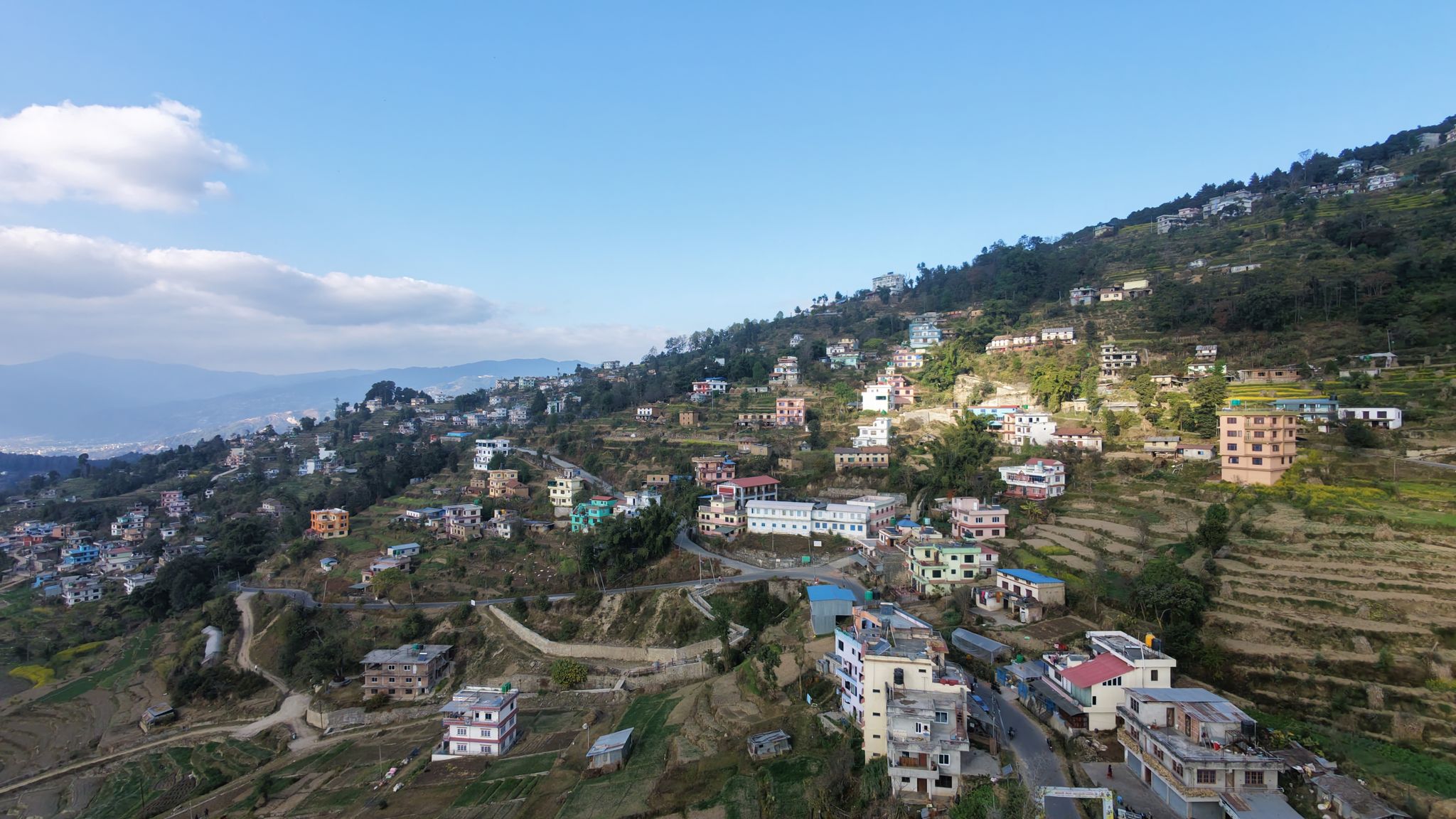
 Annapurna South above a hillside village on the Kaski ridges, the view Dhampus serves with breakfast
Stage 4: down to Phedi
The last stage is the stairs. From the lower edge of Dhampus a flagstone staircase drops nearly 500 vertical metres to the road at Phedi, where taxis and the occasional bus wait in season. Poles help; so does taking it slowly. Twenty minutes after the last step you can be back in a Lakeside cafe with the Annapurnas, now small and distant, over the lake.
Permits, costs, and timing
The whole loop lies inside the Annapurna Conservation Area, so the official requirement is the ACAP permit (NPR 3,000 for foreigners, bought at the Nepal Tourism Board office in Pokhara; the permits guide explains the process). The checkpoint sits at Pothana, and reports differ on whether the Kande to Australian Camp leg alone is checked. Buy it anyway: it is cheap, it funds the trail, and it also covers Poon Hill and Mardi Himal if the ridge gives you ideas. Whether a TIMS card is still required on short Annapurna walks has been unsettled since the 2023 rule changes; the NTB counter will tell you the current position.
Budget roughly USD 40-60 per person for an overnight, covering transport, the room, meals, and tea, plus the permit. A guide is not needed for navigation, since the trail is obvious and signed, but hiring one for a day supports a local and adds the names of every peak.
Best time: October to December for the clearest mornings, March and April for rhododendrons and warmer nights. Winter works too, with frost on the meadow and a near-certain view. The monsoon brings leeches and cloud; skip it. Nepal in winter covers the cold-season version.
Making it longer
Two easy extensions turn the overnight into a three or four-day foothills loop. From Pothana, climb to Deurali and Forest Camp on the Mardi Himal ridge for a real high camp. Or from Dhampus, drop to Landruk and cross the Modi Khola to Ghandruk, the big Gurung village on the Poon Hill side, and walk out to Nayapul: two more days, two more sunrises, and a taste of the Poon Hill trek without its stairs.
Australian Camp is the walk this site recommends to anyone with one spare night in Pokhara and no appetite for altitude. It appears in our 10-day itinerary as the swap for the trek, and in the hiking in Nepal guide alongside the other short walks worth a day.