Ten days is where a Nepal trip stops being a sampler and starts being the real thing. A week forces you to choose between the mountains and the jungle; two weeks lets you do a proper trek. Ten days sits in between and, planned tightly, covers the three experiences that first-time visitors rank highest: the medieval cities of the Kathmandu Valley, a sunrise above the Annapurnas, and a rhino seen from a jeep in Chitwan. This is that plan, built around the transport times that decide whether it works.
The route at a glance
| Day | Base | What you do |
|---|---|---|
| 1 | Kathmandu | Arrive, Thamel, evening in the old town |
| 2 | Kathmandu | Boudhanath, Pashupatinath, Patan |
| 3 | Pokhara | Morning flight, Phewa Lake, Lakeside |
| 4 | Ulleri | Drive to Nayapul, trek to Ulleri |
| 5 | Ghorepani | The stone staircase to Ghorepani |
| 6 | Pokhara | Poon Hill sunrise, walk out, drive back |
| 7 | Chitwan | Sarangkot sunrise, drive to the Terai |
| 8 | Chitwan | Full day in the national park |
| 9 | Kathmandu | Fly back, Bhaktapur afternoon |
| 10 | Depart | Swayambhunath, shopping, airport |
The shape is a loop: cities, hills, jungle, city. Two domestic flights save two full days of road and are the single best money spent on this route.
A day-by-day 10-day Nepal itinerary on video (Trip Knocking)Days 1-2: Kathmandu
Land, clear the visa on arrival, and take a prepaid taxi to Thamel or, if you would rather sleep somewhere quieter, Patan or Lazimpat (the where-to-stay guide weighs the neighbourhoods). Do nothing ambitious on day one. Walk the lanes and eat momos, then sleep early; the second day is a long one.
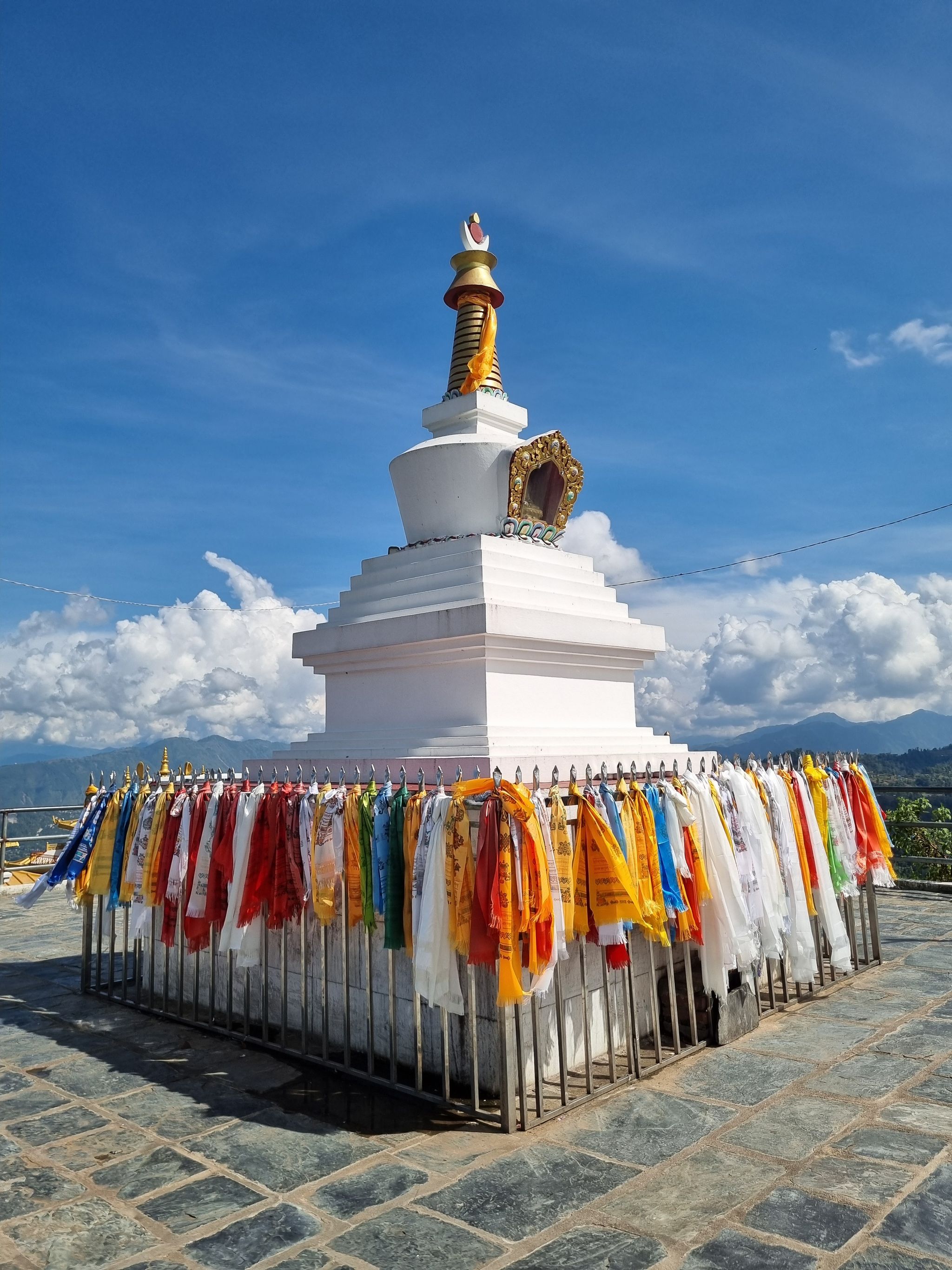
Day two starts at Boudhanath before the tour buses, when pilgrims are circling the stupa with prayer wheels spinning. Continue to Pashupatinath on the Bagmati, then cross the river in the afternoon to Patan, the valley's artists' city, whose Durbar Square and museum are the best single afternoon in Kathmandu. Our Patan guide has the route through the courtyards; the stupas guide covers etiquette at the morning stop. Kathmandu's own Durbar Square can wait for day ten.
Day 3: Fly to Pokhara
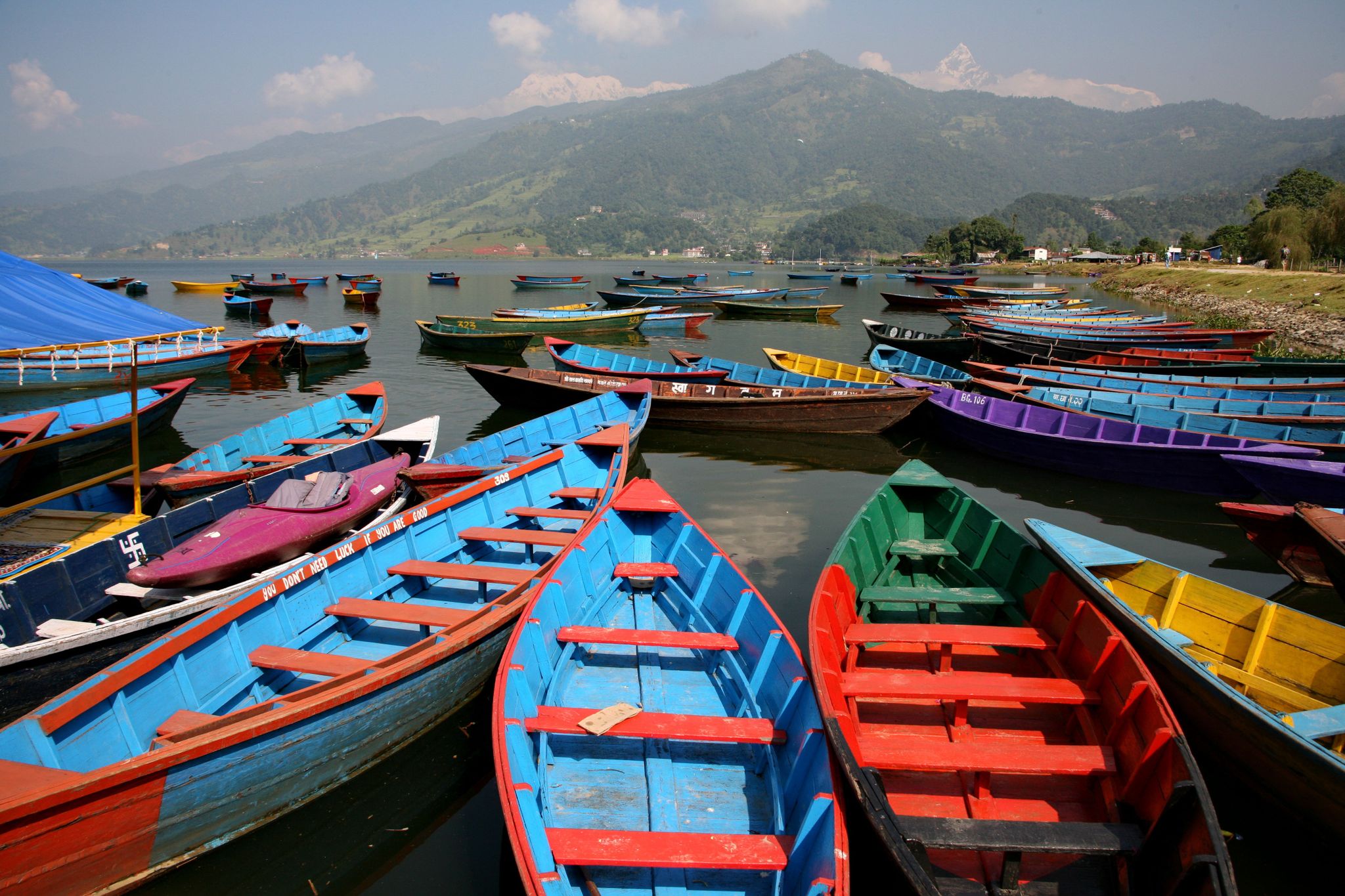
The 25-minute flight west follows the Himalayan wall; sit on the right for the mountains. Pokhara moves at half Kathmandu's pace, and day three is for adjusting to it: rent a rowing boat on Phewa Lake, visit the island temple, and buy or rent any trekking gear you still lack from the Lakeside shops (poles, a down jacket for the Ghorepani nights). Sort your ACAP permit and TIMS card at the Pokhara tourist office this afternoon; the permits guide explains both. Lakeside north is the quieter end for sleeping (Pokhara stays).
Days 4-6: The Poon Hill trek
This is the three-day version of the classic four-day loop, and it works because Poon Hill's summit sits on the way up rather than at the far end.
Day 4. A 1.5-hour drive to Nayapul, then a gentle walk up the Bhurungdi Khola to Ulleri (1,960 m). The last hour is the famous staircase, some 3,000 stone steps; taking them in the afternoon cool is the reason to sleep in Ulleri rather than the villages below. 4-5 hours.
Day 5. Oak and rhododendron forest, waterfalls, and a steady climb to Ghorepani (2,870 m), a lodge village on a ridge with Dhaulagiri filling the western sky at sunset. 5-6 hours. Go to bed early; you are up at 4:30.
Day 6. The 45-minute climb to Poon Hill (3,210 m) in the dark, then sunrise: Dhaulagiri, Annapurna South, Machhapuchhre, and a hundred kilometres of ridgeline turning from grey to gold. Back to Ghorepani for breakfast, then the long descent to Nayapul (5-6 hours, hard on the knees; poles earn their keep) and the drive to Pokhara. A late-afternoon lake swim or a Lakeside beer closes the trek.
 The sunrise you climbed for: Machhapuchhre catching first light above the Pokhara valley
If you have a spare day to add anywhere, add it here and walk out via Tadapani and Ghandruk instead, as in the full Poon Hill guide. If you want fewer people on the trail, Mardi Himal fits the same four days.
Days 7-8: Chitwan
Day seven starts with a 5 am taxi to Sarangkot for a second sunrise, this time with the Annapurnas reflected in the lake below, then the 4-5 hour drive south to Chitwan National Park. The road drops through the Seti gorge and along the Trishuli, past the rafting put-ins; a half-day raft on the way is possible if you leave Sarangkot promptly (rafting guide). Arrive at Sauraha in time for sunset over the Rapti River and the evening Tharu cultural show.
Day eight is the park proper. A jeep safari at dawn (rhino sightings are close to guaranteed; tigers and sloth bears are luck), a dugout canoe drift past gharial crocodiles, and a guided jungle walk in the afternoon. Book the jeep the night before through your lodge, and choose a lodge on or near the river rather than in the village centre (Chitwan stays). If you are wondering whether Bardia's wilder park is worth the extra distance, it is not on a ten-day clock; the Chitwan vs Bardia comparison explains when it would be.
 The greater one-horned rhino, Chitwan's headline resident, on a morning jeep safari
Days 9-10: Back to Kathmandu and out
The 20-minute flight from Bharatpur airport, itself 20 minutes from Sauraha, gets you to Kathmandu by mid-morning; the alternative is a 5-7 hour drive. Spend the afternoon in Bhaktapur, the best-preserved of the valley's three old kingdoms and 40 minutes east of the airport road, then return to Kathmandu for the night. The Bhaktapur guide covers the squares and the juju dhau.
Day ten depends on your flight time. A morning at Swayambhunath and Kathmandu Durbar Square, then last-minute pashmina and tea in Thamel before a prepaid taxi to the airport with three hours in hand. Day nine's flight from Bharatpur is the buffer for this schedule: if it is cancelled and you drive instead, you lose Bhaktapur, not your flight home.
The transport that makes it work
- Kathmandu to Pokhara: fly (25 min, roughly USD 100-130; verify current fares). The tourist bus takes 6-8 hours and eats day three.
- Pokhara to Nayapul and back: private jeep or taxi, about 1.5 hours each way; agencies bundle it with a guide and porter.
- Pokhara to Chitwan: tourist bus (5-6 hours, cheap) or private car (4-5 hours, a few dozen dollars split between passengers).
- Chitwan to Kathmandu: fly from Bharatpur (20 min) or bus (5-7 hours). Book the flight early in peak season.
Never put a domestic flight on the same day as your international departure. The getting around Nepal guide compares every option with costs.
What it costs
- Backpacker: about USD 450-650 (buses, basic lodges, an unguided trek, a mid-range safari package)
- Mid-range couple: about USD 1,300-2,000 for two (both flights, a guide and porter, a riverside lodge in Chitwan)
- Comfort: USD 2,500 and up per person (boutique hotels, private car, premium safari lodge)
Full daily figures are in the budget guide. Prices move; verify current rates.
Swaps and seasons
No interest in the jungle? Replace days 7-8 with a night in Bandipur on the road back east and an extra day in Pokhara. No interest in trekking? Two nights in Pokhara plus an Australian Camp overnight gives you the mountain morning without the stairs. This itinerary runs in every season: October to November and March to April for the clearest skies, December to February for cold clear mornings and empty trails, and the monsoon with lower expectations of the mountain views (Chitwan floods in July-August; check park status). The best time to visit guide weighs the months, and the planning hub walks through visas, insurance, packing, and permits in order.
With a week, use the 7-day itinerary; with two, the 14-day version adds the full Poon Hill loop and slower days everywhere.