
Two small Himalayan nations, one mountain range, and two completely different philosophies of travel: Nepal throws its doors open - cheap, chaotic, endlessly free-range - while Bhutan curates every visit with guides, itineraries, and a daily fee designed to keep tourism "high value, low volume." Choosing between them isn't about which is better; it's about which kind of trip you want. Costs, trekking, culture, logistics - compared properly below.
The philosophies
Nepal is an independent traveler's country. Land, get a visa on arrival, and go where you like: teahouse treks, local buses, street food, spontaneous plan changes. The infrastructure is built by decades of backpackers and trekkers, and the country meets every budget from hostel to palace.
Bhutan deliberately limits and shapes tourism. Visitors pay a Sustainable Development Fee (around USD 100 per person per day - verify current rates) and generally travel with a guide on planned itineraries. The reward: near-empty dzongs, unspoiled valleys, and a country that feels genuinely apart from the modern rush.
Cost: no contest
Nepal is among the best-value destinations on earth - comfortable travel at USD 30-80 a day, treks at teahouse prices, and luxury for a fraction of Western rates (full budget breakdown). Bhutan's daily fee alone exceeds many travelers' entire Nepali daily budget before hotels, food, and transport are added. If budget drives the decision, the decision is made.
Trekking: Nepal's home game
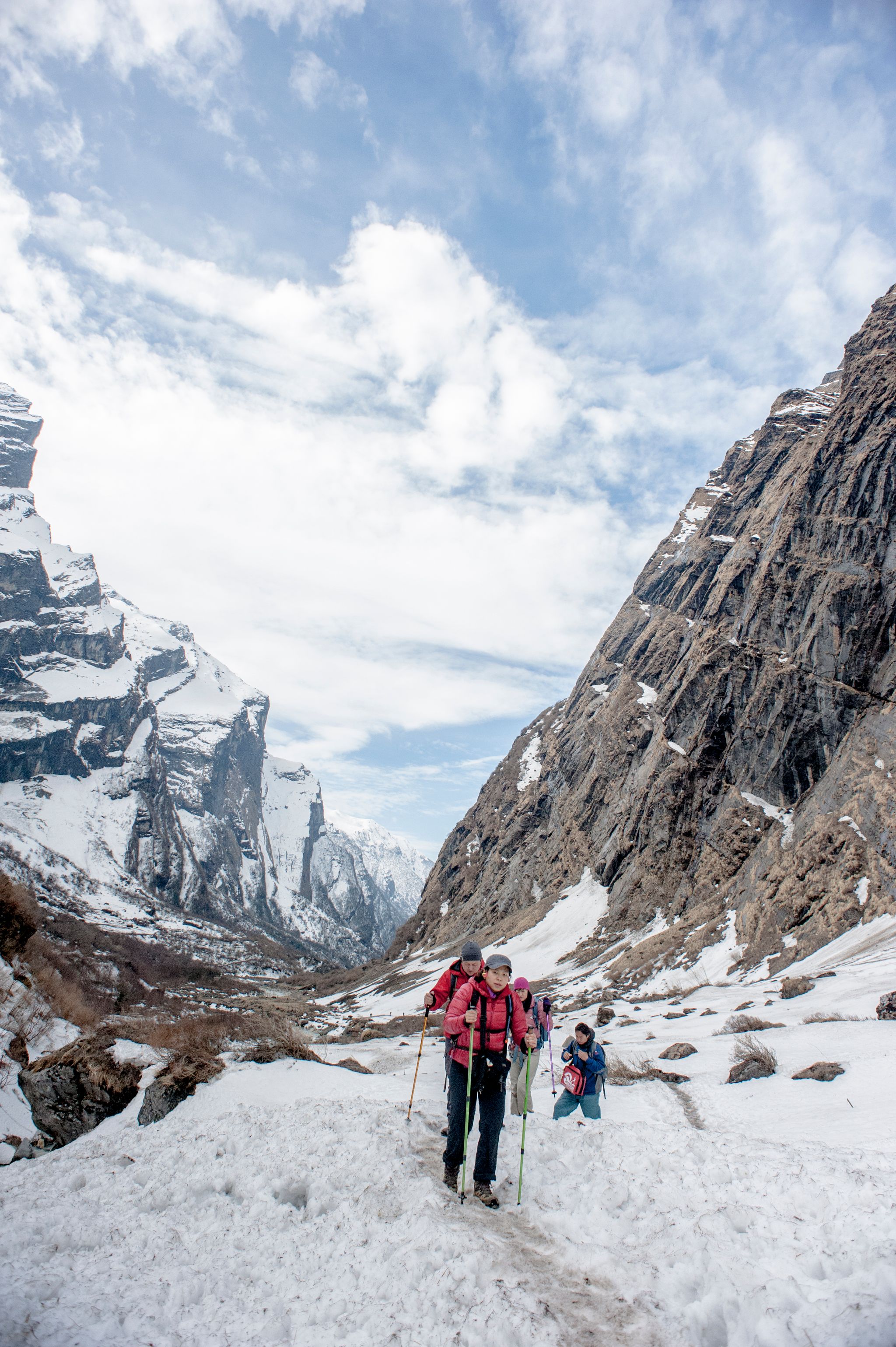
Nepal owns the trekking crown: eight of the world's ten highest peaks, the teahouse system that makes multi-week routes walkable with a daypack (tea house vs camping), and options for every level - from Poon Hill to Everest Base Camp to the Three Passes. Bhutan's treks are gorgeous and gloriously empty - the Druk Path, Jomolhari, and the brutal 25-day Snowman - but all are camping expeditions with mandatory guides at Bhutanese prices. Serious trekkers go to Nepal; trekkers seeking silence and exclusivity (with the budget for it) consider Bhutan.
Culture: depth vs preservation
Both are deeply Buddhist-Hindu Himalayan cultures, expressed differently:
- Nepal is a living collision - medieval Newar cities (Kathmandu, Bhaktapur, Patan), the birthplace of the Buddha, Hindu temples beside stupas, and a festival calendar that never stops (Dashain and Tihar). It's dense, noisy, and utterly alive.
- Bhutan is preservation as policy - mandatory national dress in public buildings, fortress-monasteries (dzongs) still running the districts, Gross National Happiness as state doctrine, and the cliff-hanging Tiger's Nest as the icon. It's serene, intact, and carefully presented.
Crowds, ease, and the feel of it
Nepal's popular trails and squares are busy in season - the price of openness. Bhutan is quiet by design; you may have a dzong courtyard to yourself. Conversely, Nepal offers freedom no Bhutan itinerary can - wander, linger, change plans, eat where locals eat. Bhutan's structure removes hassle but also serendipity.
Head to head
| Factor | Nepal | Bhutan |
|---|---|---|
| Daily cost | $ (30-80 comfortable) | $$$$ (fee + costs) |
| Visa | On arrival, easy | Pre-arranged + daily fee |
| Trekking | World's best network | Beautiful, limited, guided |
| Travel style | Independent, flexible | Guided, curated |
| Crowds | Busy in season | Deliberately few |
| Icons | Everest, Kathmandu Valley, Lumbini | Tiger's Nest, dzongs |
| Time needed | 1 week to months | 4-8 curated days |
Food, stays, and the daily texture
The trip feels different day to day. In Nepal you choose every meal and bed from an enormous range - street momos to boutique heritage hotels (food guide, new hotels) - and the texture is lively, improvised, occasionally chaotic. In Bhutan your operator handles hotels (a rising crop of superb lodges at the top end) and most meals are set menus built around chillies and cheese (ema datshi is the national dish); the texture is calm, scheduled, and smooth. Neither is wrong - one is a journey you steer, the other a story curated for you.
When to go - for either
Happily, the two share a calendar: October-November and March-April are prime for both, with clear mountain air and festival seasons (Nepal's Dashain and Tihar; Bhutan's tshechu dance festivals - verify current dates for both). The monsoon soaks both countries June-August, though Nepal keeps its rain-shadow trekking card. If combining them, one autumn or spring window covers the pair - details in our best time to visit Nepal guide.
So which first?
Choose Nepal first if you want trekking, budget flexibility, independent travel, longer trips, or the widest range of experiences - mountains, jungle, medieval cities, and the room to improvise. (Here's how to plan that trip.)
Choose Bhutan first if exclusivity, serenity, and a short, curated cultural immersion matter more than cost - and the daily fee reads as a feature (fewer tourists) rather than a barrier.
Or do both: the Kathmandu-Paro flight links them in under an hour, past the high Himalaya. Two weeks flexible in Nepal plus four to six curated days in Bhutan is the classic combination - Nepal for the adventure, Bhutan for the epilogue. Whichever way you lean, time it with the best season, and know that the mountains themselves take no sides - the same white wall of the Himalaya crowns them both, and no traveler has ever regretted standing under it from either direction.