On the night of Laxmi Puja the Kathmandu Valley goes quiet in a particular way. Traffic thins and shutters come down early. Then every doorway and temple step fills with small flames. Tihar, the five-day festival of lights, is the gentlest of Nepal's big celebrations and the easiest for a visitor to walk into. In 2026 it runs from November 7 to 11, at the start of the clear, dry peak of autumn, and the valley's old towns are the best places in the country to see it.
Our Dashain and Tihar guide explains what each day means. This page is the practical layer: which evening to be where, what visitors are expected to do, and how the festival changes getting around.
Tihar 2026, day by day
| Date | Day | What happens | Where to be |
|---|---|---|---|
| Fri, Nov 6 | Dhanteras (eve) | Shoppers buy metal pots and gold for luck | Asan and New Road markets |
| Sat, Nov 7 | Kag Tihar | Food left out for crows at dawn | Rooftops; a quiet day for sightseeing |
| Sun, Nov 8 | Kukur Tihar + Laxmi Puja | Dogs garlanded by day; lamps and Laxmi worship at night | Any street by day; the old towns after dark |
| Mon, Nov 9 | Gai Tihar | Cows honoured; public holiday | Village edges and the Bhaktapur outskirts |
| Tue, Nov 10 | Govardhan Puja + Mha Puja | Ox worship; Newar self-blessing and the Nepal Sambat new year | Bhaktapur, Patan, Kirtipur; processions in central Kathmandu |
| Wed, Nov 11 | Bhai Tika | Sisters give brothers the seven-colour tika | Family homes; streets quiet until afternoon |
The official 2083 BS calendar puts Kukur Tihar and Laxmi Puja on the same day this year, which is unusual. Several published schedules still show the lamps on November 9, so confirm with your hotel before planning the big evening.
Laxmi Puja night: where the lights are
Laxmi, goddess of wealth, is invited into every house on the Laxmi Puja evening, and the invitation is literal. Families sweep the threshold and draw a rangoli or mandala on the ground, then lay a trail of red footprints from the door toward the household shrine. Oil lamps (diyo) go on every ledge that will hold one. Shops do the same, and in Kathmandu that means the jewellers and cloth merchants of the old bazaar put on the brightest show.
 Cotton wicks lit from one flame: a household's first lamps on Laxmi Puja night
Old Kathmandu. Walk from Asan through Indra Chowk to New Road between about 6 and 9 pm. The lanes are thick with families and marigold sellers, firecrackers go off at every junction, and the shopfronts glow gold. It is crowded but good-natured. Keep your bag in front and your camera strap on.
Bhaktapur. The best single place to spend Laxmi Puja, provided you sleep there. Day-trippers leave by late afternoon; after dark, Taumadhi Square and the lanes toward Dattatreya fill with lamps and bhailo singers, and you have the medieval town nearly to yourself. The Bhaktapur guide covers the squares, and the places to stay fill early for this week.
Patan. Mangal Bazaar and the courtyards off Durbar Square light up house by house. Patan is 20 minutes from Thamel, so it works as an evening trip if Bhaktapur is full. Our Patan guide has the route through the courtyards.
Thamel lights up too, with strings of LEDs and restaurant specials, but it is the least interesting version of the night. Go one lane further in.
Kukur Tihar: the day of the dogs
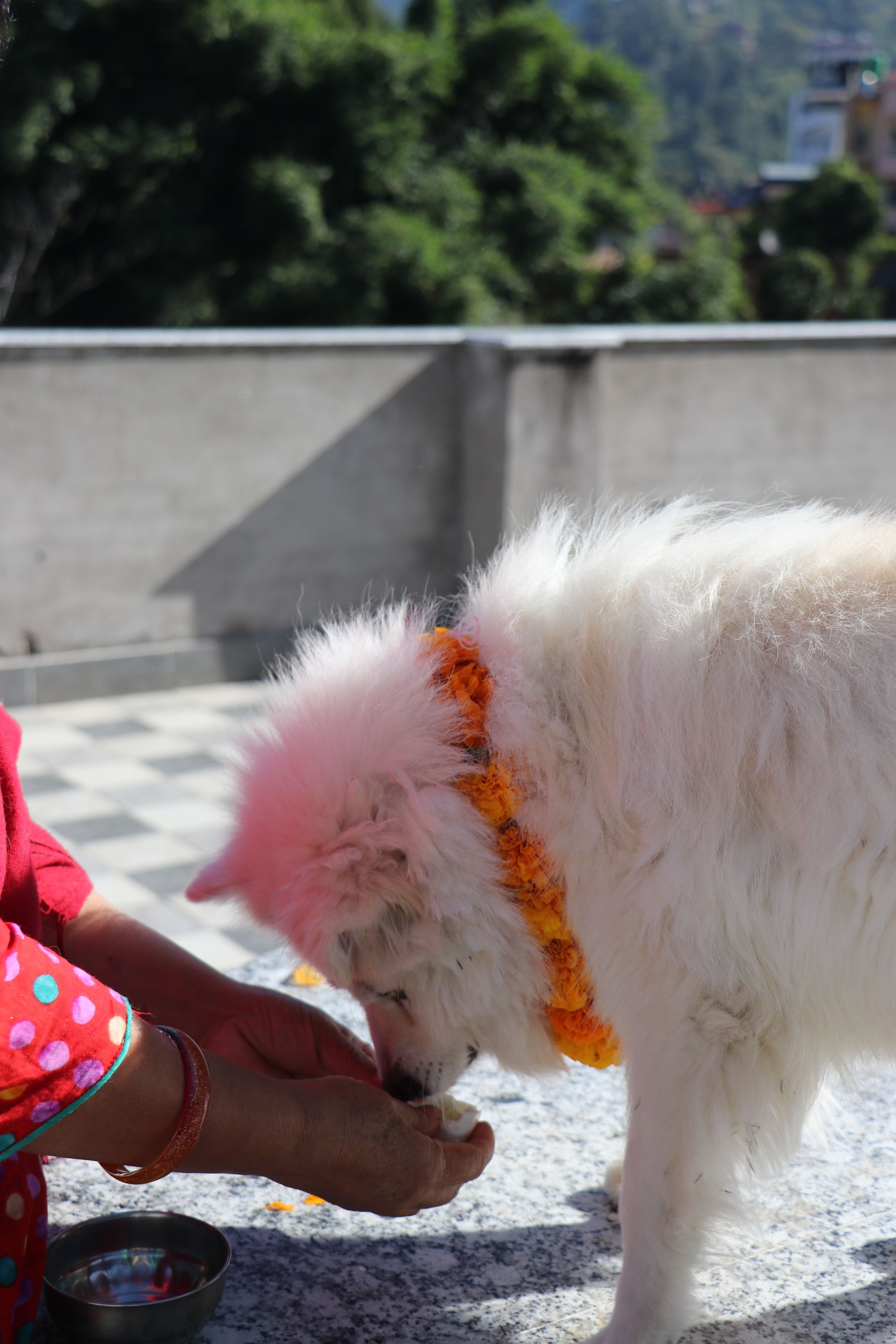
On the morning of November 8, every dog in the valley, pampered pets and temple-step strays alike, gets a marigold garland and a red tika, then a feast. It is the Tihar image that travels the world, and it takes no planning to see: walk any neighbourhood before noon. Animal-welfare groups and the police dog-training school in Kathmandu often hold their own ceremonies, which local media cover; check the news that week if you want an organised event.
Two small courtesies. Ask before photographing someone's own dog during the puja itself. And resist the urge to feed garlanded street dogs, which by midday have eaten more sel roti and boiled eggs than any dog should.
Mha Puja and the Newar new year
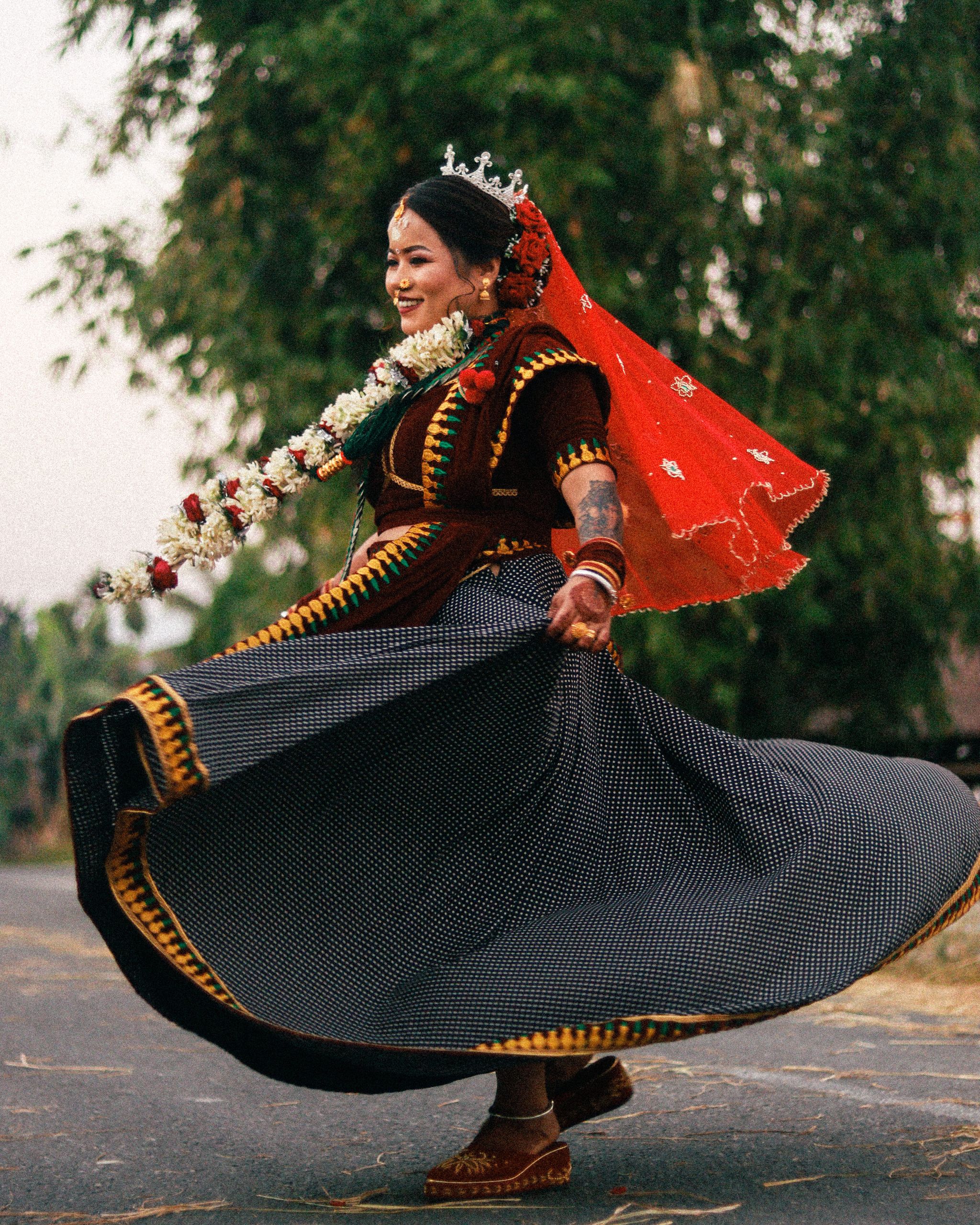
On November 10 the valley's Newar community performs Mha Puja, worship of one's own body and spirit for the year ahead. Each family member sits before a mandala of rice, beans, and coloured powder, receives blessings, and is handed a garland and a sagan, the ritual food offering of egg, fish, meat, and rice wine. It is a private household ritual, so do not expect to watch one unless you are invited. The new year it marks, Nepal Sambat 1147, is public: processions and brass bands fill the streets of central Kathmandu, Patan, and Bhaktapur during the day, with half the crowd in traditional Newar dress.
 A Mha Puja mandala: each family member sits before one of these for the new year blessing
If a Newar family does invite you, sit where you are placed, accept what is offered with your right hand, and dress as you would for a temple (the dress code guide has the short version). Nobody expects you to know the ritual.
Deusi-bhailo: what to do when the singers arrive
From Laxmi Puja onward, groups go door to door singing bhailo (traditionally girls, on the first nights) and deusi (traditionally boys, on the later ones), call-and-response songs that bless the household. Guesthouses and hotels get visits too. The etiquette is simple. Listen to the end and put a cash offering on the plate they carry, usually a few hundred rupees; ask your host what is normal that year. Groups are often raising money for a youth club or a community project, and some will add a short dance if the audience is enthusiastic.
Carry small notes for the whole week. The money guide covers where to break large ones.
A foreign visitor's Tihar in Nepal, lamps to Bhai Tika (Nepali Tanguy Dai)Bhai Tika and getting around
Bhai Tika on November 11 is the family day. Sisters apply a seven-colour tika to their brothers, garland them with makhamali flowers, and pray for their long life; brothers give gifts or money in return. Streets stay quiet through the morning, with this year's auspicious time (saait) listed at around 11:39 am (verify locally), and shops reopen in the afternoon.
For travel, Tihar is far easier than Dashain. Most businesses in Kathmandu and Pokhara keep running, with short closures on the main days (November 9 and 11 are public holidays). The pressure points are domestic flights and long-distance buses in the two or three days before Bhai Tika, when people travel to their sisters' homes. Book those early, and avoid scheduling a Kathmandu-Pokhara hop or a Lukla flight for the morning of November 11. Firecrackers run late on the Laxmi Puja nights, so light sleepers should ask for a courtyard-facing room.
If your trip covers more of autumn, Nepal in November explains what the rest of the month looks like, and the wider Kathmandu guide has everything outside festival week. Sending wishes home? The greeting card maker makes a Tihar card with your name in Nepali script.